Every gardener knows the feeling of planting in spring and wondering whether any of it will come up. For Katie and Chris, the hosts of the YouTube channel North To Alaska, the problem this season turned out to be the opposite. After putting thousands of seeds in the ground months ago, they found that nearly the whole garden was ready at the same moment.
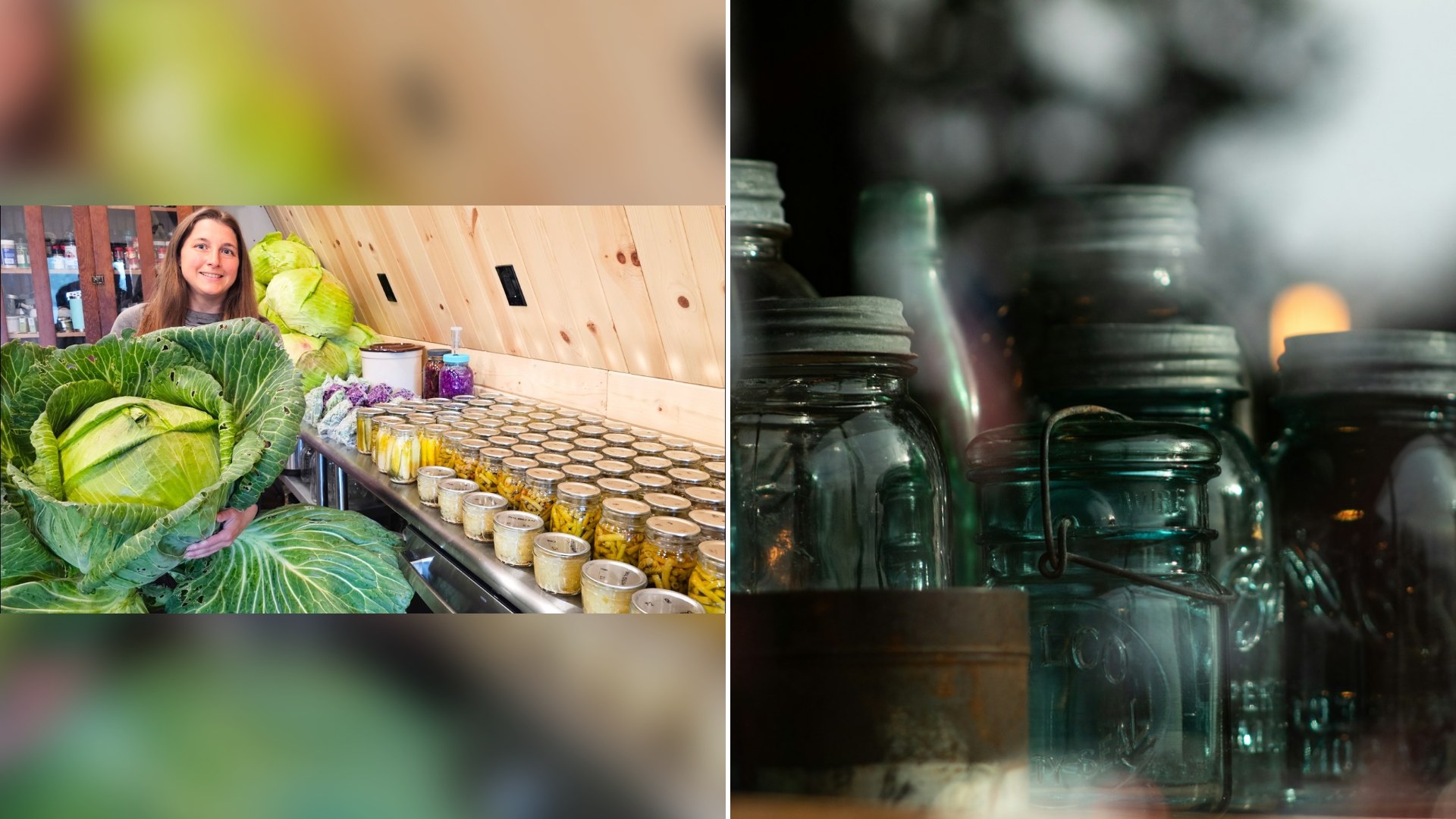
In a long harvest and canning episode on the channel @northtoalaska2022, Katie narrates a few busy weeks of putting food away for winter. In her words, “practically the entire garden is coming in at once,” with beans, cucumbers, peppers, cauliflower and enormous cabbages all asking for attention together. The episode is a working tour of what that looks like in a cabin kitchen that, she mentions, does not have finished cabinets yet.
Dill Pickles And Relish First
The first stop is cucumbers. Katie says she soaks them in cold water in the fridge for 12 to 18 hours before canning. This year she used dill infused vinegar, made after the dill came in early. She crushed the dill into heated vinegar and let it sit in the fridge for a little over a month. The pickle spears go into jars with half an inch of headspace and process for 10 minutes after a rolling boil. Relish is hot packed with extra brine for acidity and also processed for 10 minutes.
A Rainy Day In The Bean Rows
When the weather turned wet, she harvested beans in the greenhouse. She names three varieties, Royal Burgundy, which are purple until cooking turns them green, Provider, and Blue Lake bush beans, which were still young because many of the seeds never germinated. She raw packs the beans tightly into hot jars with an inch of headspace, adds half a teaspoon of salt per pint, removes air bubbles, vents steam for 10 minutes and pressure cans for 20.
The first harvest produced a satisfying number. “We got a total of 39 pints of green beans,” she says. She adds that last season, three harvests together gave only 57 pints, so this year’s early haul felt like a good sign.
Cauliflower, Spruce Tips And Slugs
Cauliflower came next, a snowball variety that she harvests, blanches, cools in an ice bath and freezes. She also shows spruce tip syrup and spruce tip vinegar, two preserves made from the new growth of spruce trees. She says the syrup fermented about two months and then simmered for roughly 20 minutes until it coated a spoon, and she describes the taste as very sweet, bright, citrusy and honey like. The vinegars are stored with plastic lids so the acid does not rust metal ones, and she plans to use one as a marinade and the other as a household cleaner.
Later in the harvest, the slugs arrived. Katie says they came late this year because of a long winter and a late start. Beer traps worked, she says, but the cost and upkeep made hand picking the better choice. She twists cabbage stems off instead of cutting them, and she reports that the purple cabbage had slug damage, though less than the green.
Cabbage By The Pound
The cabbage section is where the numbers get big. Katie picks the red cabbage first, 24 heads in all, for about 45 pounds. She makes sauerkraut in a two gallon crock, using 12 and a half pounds of cabbage and three tablespoons of salt per five pounds, plus a half gallon jar. She shreds extra for coleslaw and vacuum seals about six freezer bags. She also tries a small batch of kimchi, which she says they have never eaten before, made with green onions, carrots, ginger, garlic and a blended paste of Asian pear, onion, fish sauce and Korean red pepper.
When Chris joins in for the green cabbages, two of them tip the scale at about 23 and a half pounds and 20 and a quarter pounds. Katie had guessed 19. She also explains how they keep rabbits out, with a two foot roll of chicken wire set one foot up and bent in an L shape underground. In two weeks, she says, the rabbits were down to a single feral one. The green cabbage becomes more than 32 pounds of sauerkraut in a food grade five gallon bucket with an airlock, plus pork dumplings that go into the freezer.
Why Plant So Much For Two People
Katie answers the obvious question directly. She says she is aiming for roughly 715 homemade meals a year. She notes that last year they pulled in nearly 100 pounds of carrots, while this year she expects only 15 to 20. Scraps from the harvest go to the chickens and goats. She also explains why she cans so much instead of freezing it. Freezer space is saved for meat, because peak harvest overlaps with moose season, so only peas, peppers, broccoli, cauliflower and some cabbage go in the freezer. The jars live in Ball boxes behind a framed knee wall, with the newest food at the back.
Despite heavy rain this summer, she says the harvest was decent, and the root crops are still a couple of weeks away.
Lessons For Your Own Garden
You do not need an Alaskan homestead to borrow a few ideas from this harvest.
Plan for overlap. If several crops ripen together, line up your jars, lids and salt before the picking starts. Katie’s harvest is a reminder that a busy week can fill a whole kitchen.
Follow tested recipes. Home canning relies on correct headspace, processing times and acidity. Low acid vegetables such as green beans need a pressure canner, and it is wise to confirm times and altitude adjustments with a trusted extension service guide.
Rotate your stock. Putting the newest jars at the back and using the oldest first keeps the pantry fresh and reduces waste.
Protect the crop early. Fencing that extends underground, hand picking pests and keeping traps cleaned out can save far more produce than the effort costs.
Track your numbers. Katie compares pints and pounds from year to year. A simple notebook of what you planted, when it came in and how much you preserved will help you plant better next season.
A Pantry Built Jar By Jar
What stands out in the episode is how ordinary the work is. There are jars, scales, cabbages and hungry slugs, and at the end of it a cabin pantry that is a little fuller than it was. For gardeners who have ever stared at an overgrown row and wondered how to handle it all, the hosts of @northtoalaska2022 offer a practical answer, which is to start with the cucumbers and keep going.
Leave a Reply