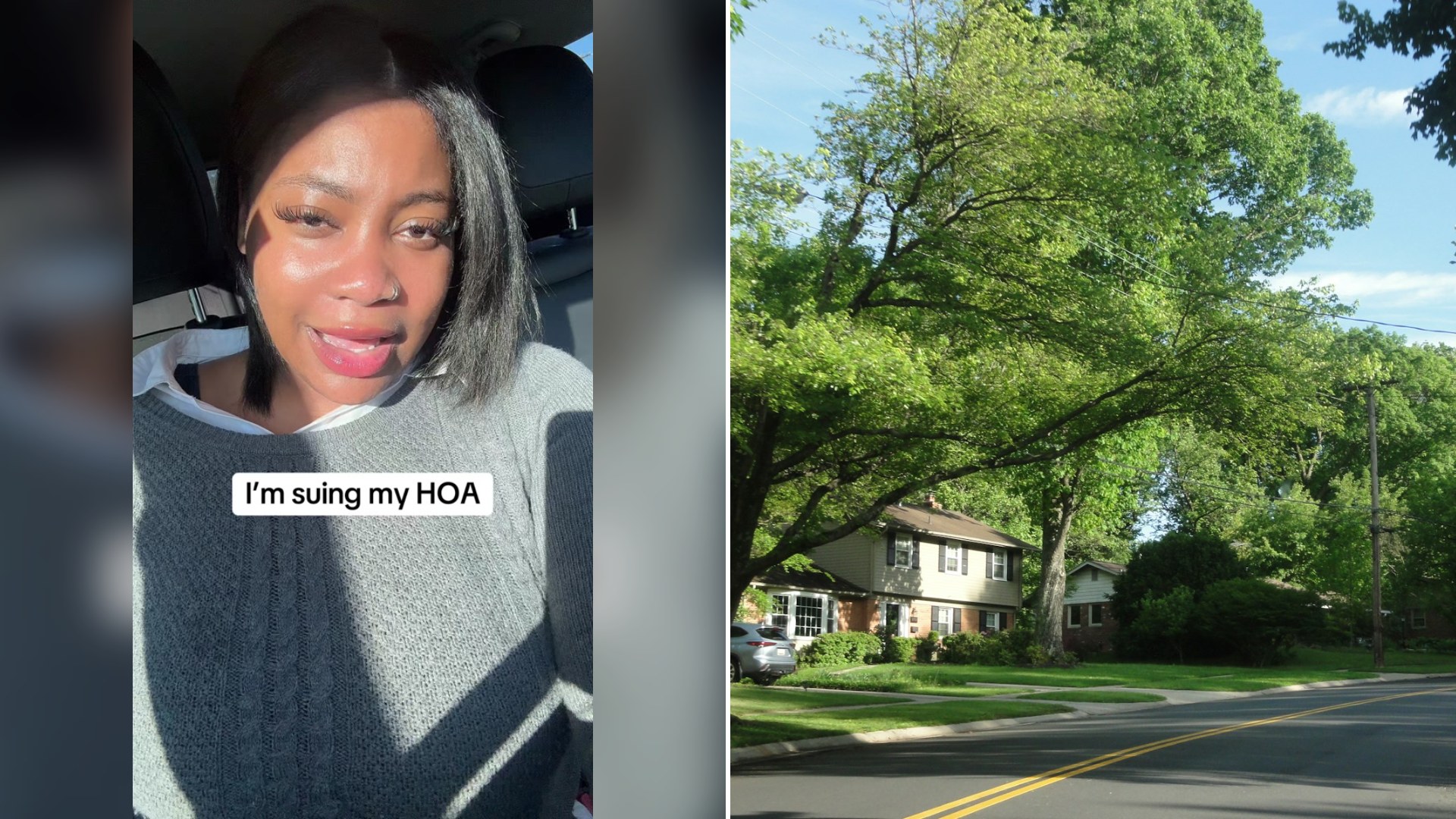
Disputes with a homeowners association can feel like fighting city hall from your own driveway. A homeowner behind @dailydoseofdaja shared an update in an ongoing series about her fight with her association, saying she has taken it to small claims court and that newly released meeting minutes touch on whether owners in her position can serve on the board. Her claims are her own, and the association is not named.
@dailydoseofdaja
The Lawsuit, As She Describes It
She says she is suing her homeowners association in small claims court for $20,000, which she says is the maximum her county allows. The association charged her an assessment of $22,000, so by the numbers she gives, she expects to absorb a gap of roughly $2,000 herself. Her words on that: it is not fine, but it is fine for now. She says the court date is next month.
Her plan, she says, was to join the association board at the next vote, in June, and then dissolve the association. She says many of her neighbors are interested in that idea.
What The Minutes Say
The twist in her update is the meeting minutes. She says the newly released minutes include a note that concern had been raised about whether owners who owe money or are suing the board should be eligible to serve on it. According to her reading on camera, the minutes describe that kind of restriction as unwise and perhaps illegal and certainly not in the best interest of the association, and say legal advice will be sought.
She says she responded with a furious reply, telling the board that changing the bylaws solely because they dislike a community member cannot be done, and that any lawyer would say so. She repeats that nothing in the bylaws lets them block her, and she sums it up this way: “you can’t just change the bylaws because you don’t like me.” She adds that she plans to sell her house anyway.
Separately, she says she only just learned that the association was sued in October 2025 over a broken contract with a vendor and settled the case, and she says the suit was for $16,000. She asks why that was not mentioned in the minutes and complains that dues money is used to settle suits but cannot be applied to her assessment. Those are her statements, and the association has not been named or heard from here.
Why Assessments Spark Fights
A special assessment is a one time charge that an association can levy on owners, usually for a major repair or an unexpected expense, when reserves fall short. Amounts like $22,000 can be a heavy blow to a household budget. Because the rules for assessments live in the governing documents and in state law, the details vary widely, and disagreements often turn on whether the board followed its own procedures.
The following general information is not legal advice, but it reflects common steps owners take when they disagree with a charge.
Practical Steps If You Disagree With An Assessment
Read your governing documents. The declaration, bylaws and rules explain who can approve an assessment, whether owners must vote, and what notice is required. Many disputes come down to whether a required step was skipped.
Ask for an itemized explanation in writing. You are generally entitled to know what the money is for. Ask for the budget, the reserve study and the vendor contracts behind the charge.
Request records. Many states give owners the right to inspect association financial records and meeting minutes. Put the request in writing and keep a copy.
Attend meetings and speak up. Boards often respond better to a calm, documented question at an open meeting than to a heated email. Follow the process for adding items to the agenda.
Keep everything. Save notices, letters, emails and receipts, and keep notes of dates and conversations. Good records matter in any dispute.
Consider mediation. Many associations and states offer mediation or alternative dispute resolution, which can be faster and cheaper than court.
Talk to a lawyer who handles community association law. Even a short consultation can help you understand your rights and your state’s rules, including deadlines for filing a claim.
Small Claims, In Brief
Small claims court is built for people to represent themselves, with simpler procedures and lower fees than regular civil court. Each state sets its own cap on the amount you can sue for, and it can be as low or as high as the figure she mentions, so check your own state’s limit. You usually need to show evidence, such as documents, photos and records, and to explain your case clearly. Claims that exceed the cap may need a different court, and some areas require you to pursue other steps first.
Running For The Board
Joining the board is a way many owners take to influence decisions. Eligibility rules are set in the bylaws and in state law, and some associations require owners to be current on dues. If you plan to run, read the bylaws, learn the nomination deadline and talk to your neighbors. Boards owe duties to the whole community, and meetings are generally where owners can ask questions.
If a dispute does end up in front of a judge, calm and organized evidence tends to carry more weight than strong feelings, so a clear timeline with dates, amounts and copies of notices is worth preparing in advance.
At the time of her update, the court date she describes was still ahead, and the outcome is not known. Whatever happens, her story is a reminder to know your governing documents, keep careful records and ask questions early.
Leave a Reply