Pull up to a first estimate in a shiny new pickup and some homeowners will start doing math in their heads. Is this contractor charging too much? Is that truck paid for with my money? A contractor posting at @bdbrinc says that is the wrong way to size up a builder, and he laid out a ten point argument to make his case.
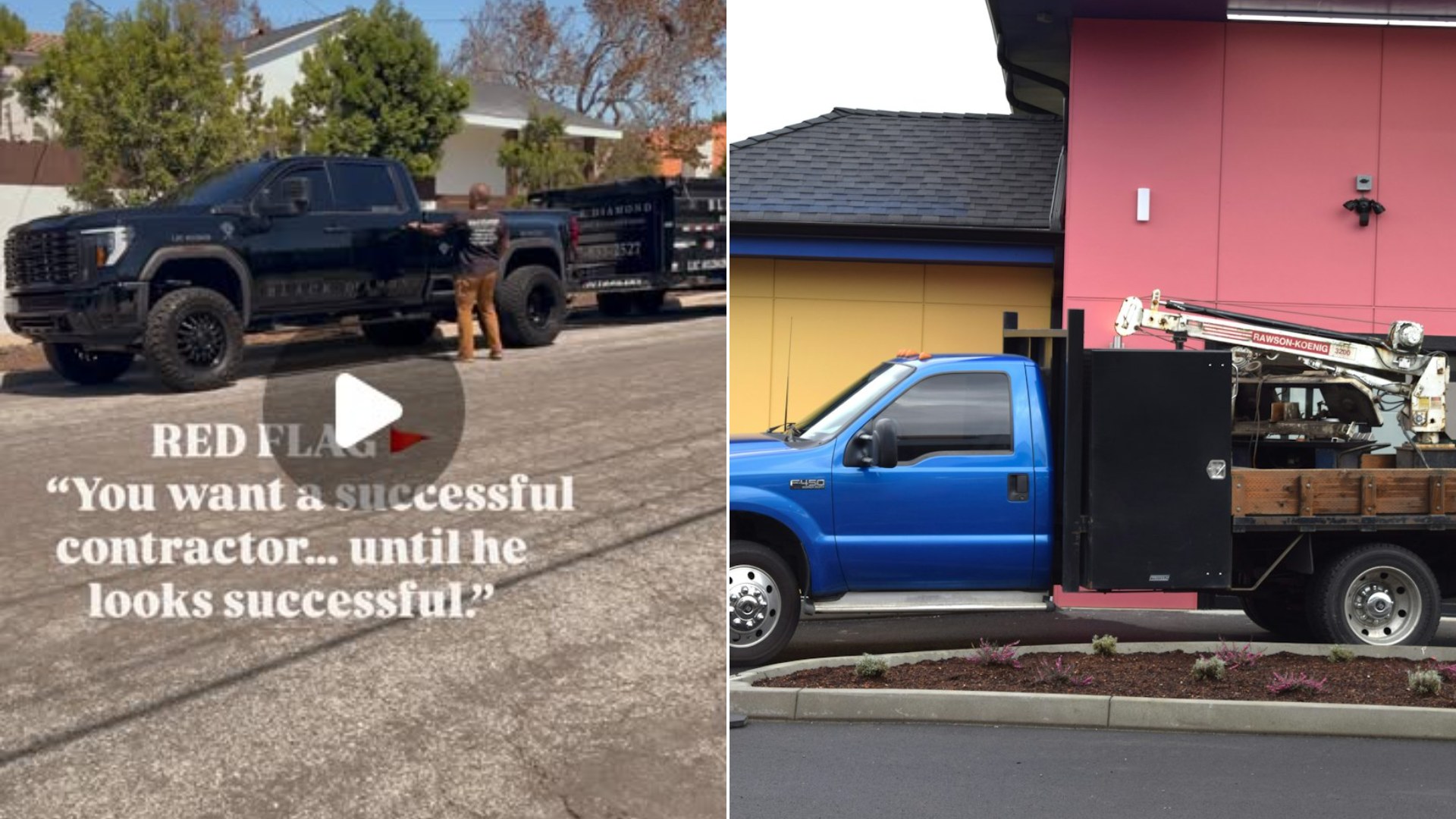
The post comes from a contractor business account, so keep in mind that this is one tradesman’s argument, not a neutral study. Still, it struck a nerve, and the comments show plenty of people on both sides. Here is a walk through his points, followed by some balanced advice on how to hire well no matter what is parked out front.
The Contractor’s Ten Points
According to the caption, here is the case he makes:
- A nice truck can be a sign of a successful business. He says good contractors stay busy, manage money well and reinvest.
- Looking sharp is professionalism, not a red flag.
- You are hiring a business owner, not just a tradesman. He points to jobs, employees, subcontractors, permits, schedules, clients and finances.
- Success usually comes from satisfied customers, through referrals, repeat clients and reputation.
- The expensive truck is also a tool, since it hauls equipment, materials and trailers.
- You should want your contractor to be financially stable. One who is struggling to make payroll or buy materials, he says, can become your project’s problem.
- A professional appearance builds confidence, such as showing up clean, organized, prepared and on time.
- Do not confuse success with overcharging.
- Years of experience should show somewhere, and success should not be hidden.
- Judge the contractor by the project, not the parking lot. He suggests looking at the license, communication, references, previous work, organization, contract and finished product.
The video itself is just a short clip with music and no spoken words, so the full list lives in the caption. That final point is arguably the most useful, and the one that even his critics might agree with.
What the Comments Say
Viewers had plenty to add, and not everyone was convinced. One commenter, who described being a property developer, said he shows up in a little van and offers a better price than someone arriving in a Bentley. Another said they judge quotes this way too, and that the best quote and the best work they ever got came from a man driving a 2005 Toyota Tacoma. A window contractor shared that he once showed up in a company polo and the homeowner remarked that anyone who looks like him must charge a lot. And one more offered a bit of friendly advice: show up in the nice truck if you like, just do not wear the Rolex to the first estimate.
Those reactions point to something many homeowners and contractors quietly agree on. First impressions matter, and people do draw conclusions from them, fair or not. The truck is simply one more clue, and often a misleading one in either direction.
How to Vet a Contractor Without Looking at the Truck
Whether you think the nice truck is a good sign, a warning sign or no sign at all, there are steps that many consumer guides suggest taking before you hand over a deposit. Here is a simple checklist, and the requirements for each item can vary by state, so it is worth checking with your local licensing office.
- Check the license. Many states and cities require contractors to be licensed for certain kinds of work. Ask for the number and look it up with the issuing office.
- Ask for proof of insurance. Liability insurance and, where it applies, workers’ compensation can protect you if something goes wrong on your property. Ask to see the certificate rather than taking a verbal yes.
- Call references. Ask for recent customers with projects similar to yours, and ask what happened when problems came up, not just whether the finished work looked good.
- Look at past work. If possible, see a finished project in person or review photos with dates.
- Get several written bids. Comparing at least two or three helps you see what is normal in your area. Make sure each bid covers the same scope of work.
- Insist on a written contract. It should spell out what will be done, materials, timeline, total price and how changes are handled.
- Be careful with payment schedules. Many advisers suggest payments tied to completed stages of work, and caution against paying the full amount up front. Rules on deposit limits differ by state.
- Notice the communication. Does the contractor return calls, explain things clearly and answer questions without getting defensive?
Where He Has a Point, and Where Homeowners Are Right to Be Careful
There is some common sense in the contractor’s argument. A business that is financially healthy is more likely to pay its crew and suppliers on time, which can keep your project moving. A contractor who cannot afford materials can leave you waiting. At the same time, a pricey vehicle on its own proves nothing. It could be financed, borrowed or simply a matter of taste, and homeowners are right to focus on documents and track record they can verify.
The contractor himself seems to land in the same place with his tenth point: judge the work, the paperwork and the people, not the parking lot. That is advice that serves homeowners just as well as it serves builders.
So the next time a contractor pulls up for an estimate, by all means notice the truck, then put it out of your mind and ask for the license, the insurance, the references and a written contract. Those four things tell you far more than a paint job ever will.
More from Willow and Hearth
- Inspector Nearly Cuts His Hand on the Railing of a $1.7 Million Home, and That Is Only the Start of the Hidden Defects He Uncovers Room by Room
- He Says He Scared Off Thieves By Charging At Them Waving His Arms Like An Orangutan, Then Leaving His Off Grid Land Unsecured Cost Eight Years Of Progress
- She Tore Up The Carpet To Reveal Hardwood Stairs, Hit Day Six Of Scraping Paint, And Now Says The Mistakes May Cost $8,000 To Fix
Leave a Reply