Every first home comes with a list of jobs, and every first time homeowner eventually reaches the one where they say, how hard can it be? The creator behind @jakecartermusic reached that moment with a new stud wall, a stack of plasterboard and a very honest sense of humor about how it went.
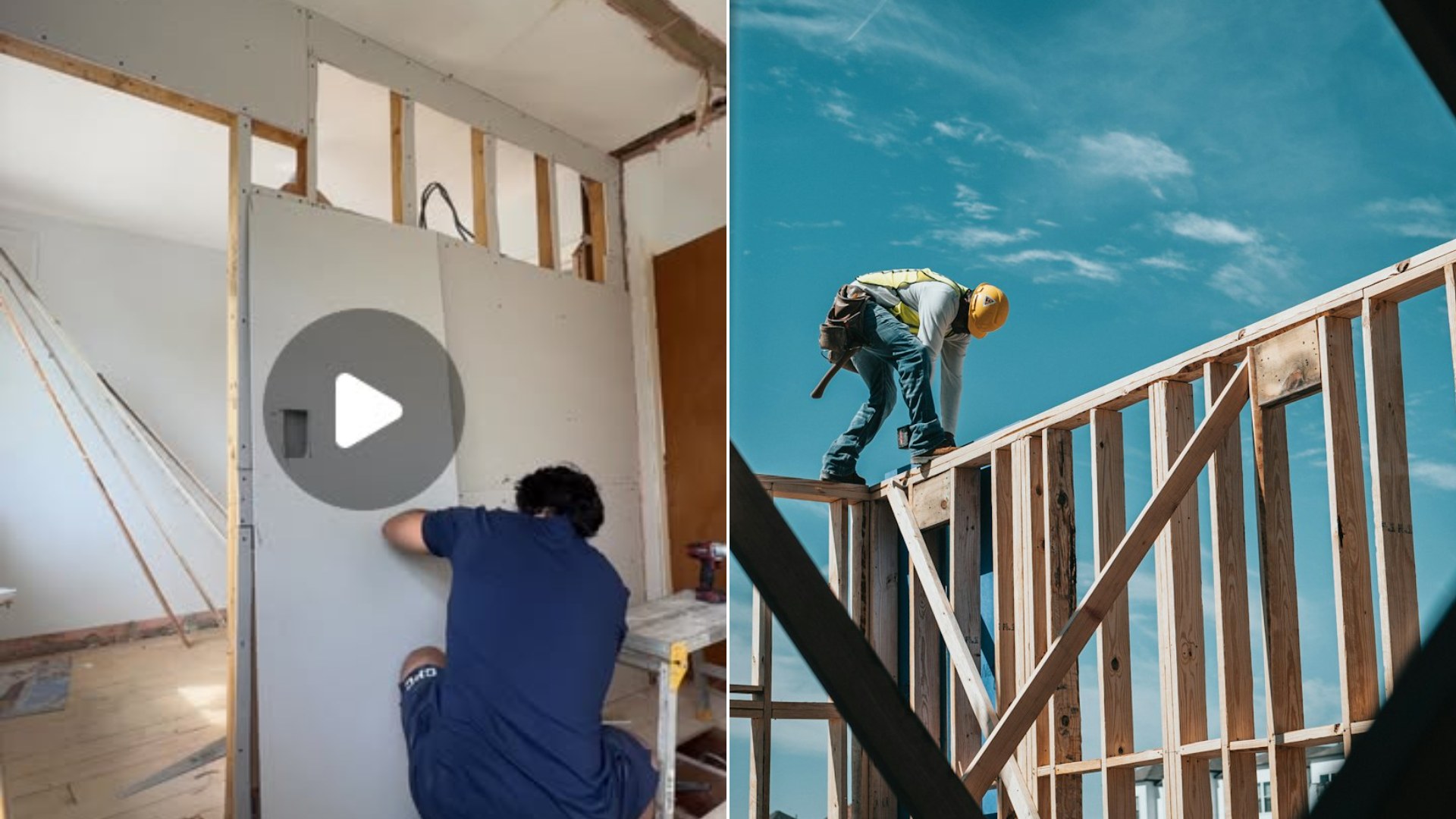
He describes the clip as another episode in his home renovation diary. This time, he is putting plasterboard, which is what many Americans call drywall, onto a new stud wall in what will become either their bedroom or a walking wardrobe. Being a British creator, he uses British terms, and we have kept his wording here. His hope, he says, is that his wife leaves him a little space for his clothes.
The Metal Splinter Problem
The funniest line in the video is also the one that will make every beginner nod. He says plasterboard screws give you tiny metal splinters, and that he spent more time pulling metal out of his hands than he did putting screws into the wall. Anyone who has handled a box of screws without gloves may know the feeling.
The good news is that the story has a happy ending. His wall is up, nobody lost a thing, and he is calling it a professional job. He signs off by inviting viewers to follow along for home renovations and what he calls questionable DIY decisions, and to find out which job finally makes the couple call in an actual builder, which, he jokes, means either of their dads.
It is a charming reminder that learning on the job is part of owning an older or new-to-you home, and that a little humor goes a long way when the project is bigger than the toolbox.
Beginner Tips for Hanging Plasterboard or Drywall
If a wall like this is on your own to-do list, here are some general tips that many DIY guides suggest. None of this comes from the video, and your own project may call for different steps, so check the instructions on your materials and your local building rules first.
- Wear gloves and safety glasses. Sharp screw threads, cut edges and dust are part of the job. A good pair of work gloves may save you the tweezers.
- Wear a dust mask when cutting or sanding. Board dust is fine and gets everywhere, so protect your lungs and keep the room ventilated.
- Use the right screws. Screws made for plasterboard or drywall are designed to sit just below the paper surface. Many people use a drill or driver with a depth setting so the heads sit snug without tearing through.
- Do not overdrive. A screw that punches through the paper loses its grip. If that happens, many people simply drive another screw nearby.
- Plan your seams. Boards are usually staggered so the joints do not line up in one long crack. Joints are generally meant to land on a stud or timber.
- Measure twice and cut once. A utility knife and a straightedge will score the board, which you then snap and trim. Take your time, because a clean cut makes finishing much easier.
- Get a helper for the big boards. Full sheets are heavy and awkward, and a second pair of hands can be a lifesaver, whether it belongs to a spouse or a dad.
- Know what is behind the wall. Before you drive any screws, check for wires and pipes in the area. If you are not sure, ask a qualified tradesperson.
If You Get a Metal Splinter
Tiny slivers of metal are usually more annoying than dangerous, but they should still be dealt with. Many first aid guides suggest washing your hands with soap and water, using clean tweezers to pull out anything you can see, and washing again afterward. Keep an eye on the spot, and if it gets red, swollen, or painful, or if something is deep or will not come out, it is sensible to check in with a doctor. Make sure your tetanus shots are current too, which is a conversation worth having with your health provider if you are not sure.
Knowing When to Call a Pro
The creator jokes about the day he finally calls in a builder, and that is a smart question for any DIYer to ask early. Plenty of homeowners are happy to frame and board a simple wall, but they leave electrical work, gas lines, structural changes and anything involving permits to licensed professionals. Rules differ by region, so it can be worth a quick call to your local building office before you start knocking walls into place.
There is also something to be said for the learning curve. Each small project teaches a skill, and a closet wall is a forgiving place to practice. If the boards go up a bit wonky, a few coats of joint compound and some patient sanding can hide a lot, and the finished result is yours.
In the end, a wall is up, all fingers are accounted for, and a wardrobe is on the way. That is a win by any measure, and a good reminder that a sense of humor is one of the most useful tools in the box.
More from Willow and Hearth
- Inspector Nearly Cuts His Hand on the Railing of a $1.7 Million Home, and That Is Only the Start of the Hidden Defects He Uncovers Room by Room
- He Says He Scared Off Thieves By Charging At Them Waving His Arms Like An Orangutan, Then Leaving His Off Grid Land Unsecured Cost Eight Years Of Progress
- She Tore Up The Carpet To Reveal Hardwood Stairs, Hit Day Six Of Scraping Paint, And Now Says The Mistakes May Cost $8,000 To Fix
Leave a Reply