It was 6 o’clock in the morning, and New York City renter @gowiththeflofi was standing under a ceiling she says had been leaking every single day. Someone had finally come to look at it. But instead of relief, her short video captures a tense exchange in which the man at her door brushes off the damage as an easy fix, insists there is no mold and then snaps that he will knock the whole thing down.
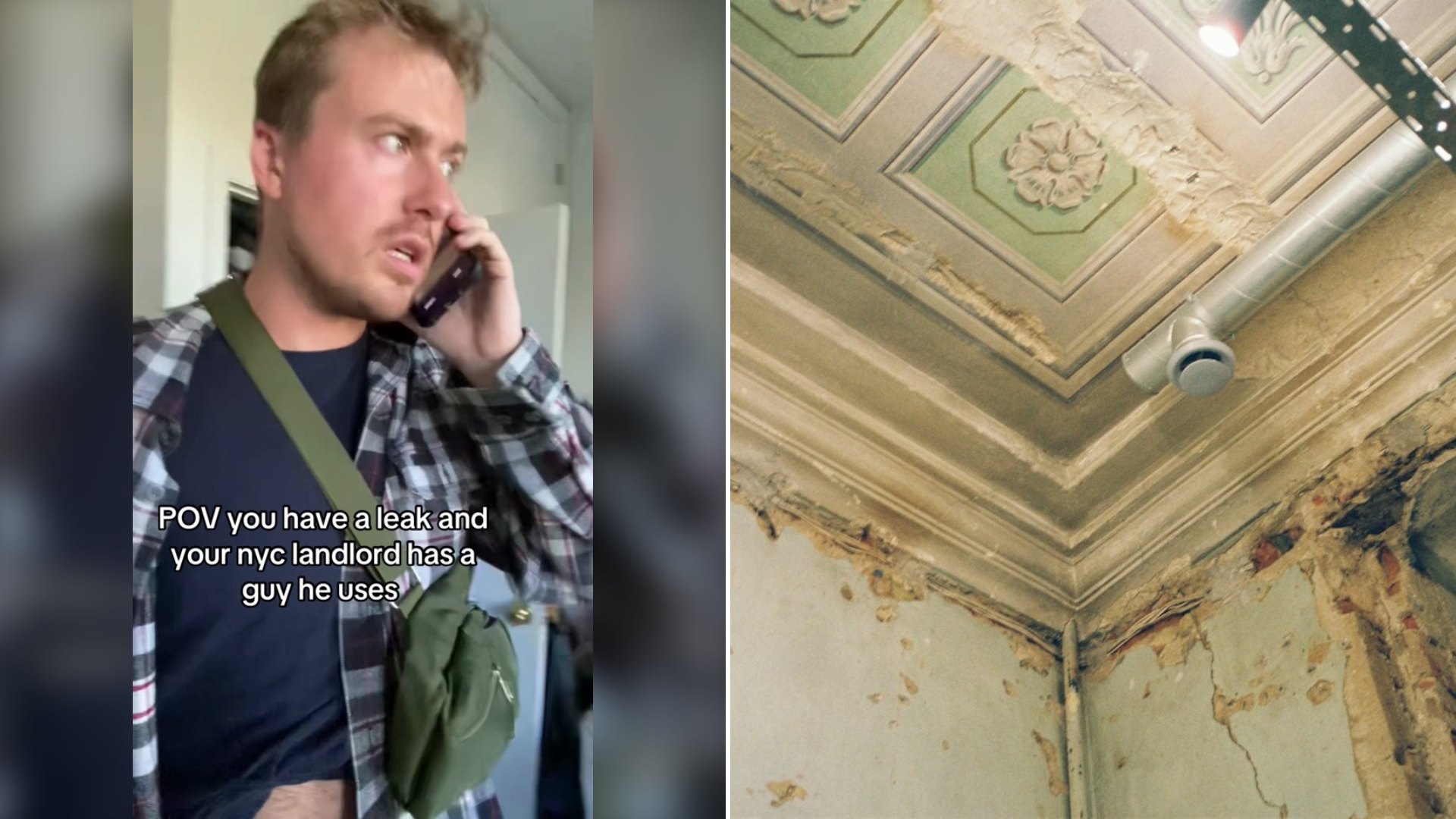
The clip, posted in mid October 2026, is under a minute long, and much of it is hard to make out. What comes through clearly is her exhaustion. “It’s 6 a.m.,” she says, more than once. She points up at the ceiling. “It’s been leaking up here every day,” she says. “There’s water damage.”
The man looking at it is unconvinced. He calls it an “easy fix” and seems to suggest the problem is being exaggerated, insisting there is nothing there. When she presses him on how he knows there is no mold, he answers flatly: “There’s no mold.” Then the conversation heats up. “What do you want me to do?” he asks, repeating it. Then, sounding fed up, he adds: “I’ll knock the whole thing down.”
Her caption adds a note of frustration that many big city renters will recognize: “rent is 3x income and there is no in unit washer drier.” In other words, she is paying a lot, and she is still dealing with this.
@gowiththeflofi
Why a Daily Leak Is a Big Deal
A small drip can seem harmless, but a ceiling that leaks every day is a warning sign. Water that keeps soaking into drywall or plaster can weaken it over time, and in the worst cases sections of a ceiling can sag or fall. Repeated moisture is also exactly what mold needs to grow. Mold often starts inside the ceiling cavity, out of sight, long before it shows up as a spot on the surface. That is why simply looking up at a ceiling and declaring it mold free is not much of an inspection.
Leaks in apartment buildings usually come from the unit above, a roof problem or plumbing inside the walls. Patching the stain without finding and fixing the source tends to mean the leak comes right back.
Your Rights as a Renter With a Leak
Every state has some version of what is called the warranty of habitability, which means a landlord must keep a rental safe and livable. In New York, that duty is written into state law, and it covers problems like persistent leaks and conditions that can lead to mold.
New York City goes further. Under a local law focused on indoor allergens, owners of many apartment buildings are required to investigate and fix mold and the moisture problems that cause it, using safe work practices. Renters there can call 311 to file a complaint with the city’s housing agency, which can send an inspector and issue violations.
Wherever you live, here is how to protect yourself.
Report it in writing. Phone calls and hallway conversations are easy to deny. Email or text your landlord or management company each time the leak happens, and keep copies.
Document everything. Take dated photos and videos of the leak, the stain, any bubbling paint and anything that gets damaged. This creator’s video, for example, captures both the condition and the response she got.
Protect your things. Move furniture and electronics away from the leak, put down buckets or towels and, if water is near a light fixture or outlet, turn off that circuit and alert the landlord immediately. Water and electricity are a dangerous combination.
Watch for mold signs. A musty smell, dark spots, peeling paint or worsening allergy or breathing symptoms can all point to mold. If you suspect it, say so in writing and ask for the source of the moisture to be found and fixed.
Call your local housing office. If the landlord does not respond in a reasonable time, contact your city or county code enforcement or housing department. An official inspection can carry far more weight than a tenant’s complaint.
Get advice before withholding rent. In some places tenants can withhold rent or repair and deduct, but the rules are strict and getting them wrong can lead to eviction. Talk to a tenant rights organization or legal aid office first.
Use renters insurance. If your belongings are damaged, your renters policy may cover them. The landlord’s insurance usually covers the building, not your possessions.
Keeping It Civil at the Door
Tense moments like this one are common when repairs drag on. If a maintenance worker or super is dismissive, stay calm, ask direct questions about what will be done and when, and follow up in writing with a summary of the conversation. Being polite does not mean giving up your rights. It just makes your paper trail stronger.
For this renter, the leak was not a one time surprise. It was a daily problem in a home she pays dearly for. Her early morning video is a reminder that tenants have every right to ask for real repairs and to keep pushing until they get them.
More From Willow and Hearth
- Man Keeps Seeing Mysterious Yellow Drips on His New Apartment’s Bathroom Walls, So He Grabs a UV Flashlight From Work and Finds the Marks Run All the Way Around the Room
- Small Landlord With Just Nine Units Says More Than Half His Tenants Have Stopped Paying Rent and He May Have to File Five Evictions at the Same Time
- Couple Closes on a Log Cabin Set on 78 Acres in the Woods, Camps Out in the Living Room on Night One and Spots the Sunset Over Her Gardens From the Kitchen Sink, Calling the Whole Thing a Longtime Dream
Leave a Reply