The builder met him in the driveway with a confident answer. Everything good? “Yeah, we’re ready,” the builder said. Then home inspector @inspectiontime looked around the yard of this brand new house in Longview, Texas, and saw trash scattered everywhere. “You know it’s gonna be a good inspection when you walk up and there’s this trash everywhere,” he jokes. It only went downhill from there.
The caption sets the tone for the whole video: “Just because it’s brand new doesn’t mean it’s built right.”
Before he even reaches the big problem, the inspector pauses to give buyers a piece of advice. “If your inspector is not using a thermal camera, especially on new construction, it might be time to pick another inspector,” he says. As he puts it, a brand new house is not like a brand new car.
A Roof That Was Shingled Wrong
Then he gets up to the roof, and the sarcasm kicks in. “Oh my gosh, that is just beautiful. I love it,” he says, in a tone that makes clear he means the opposite.
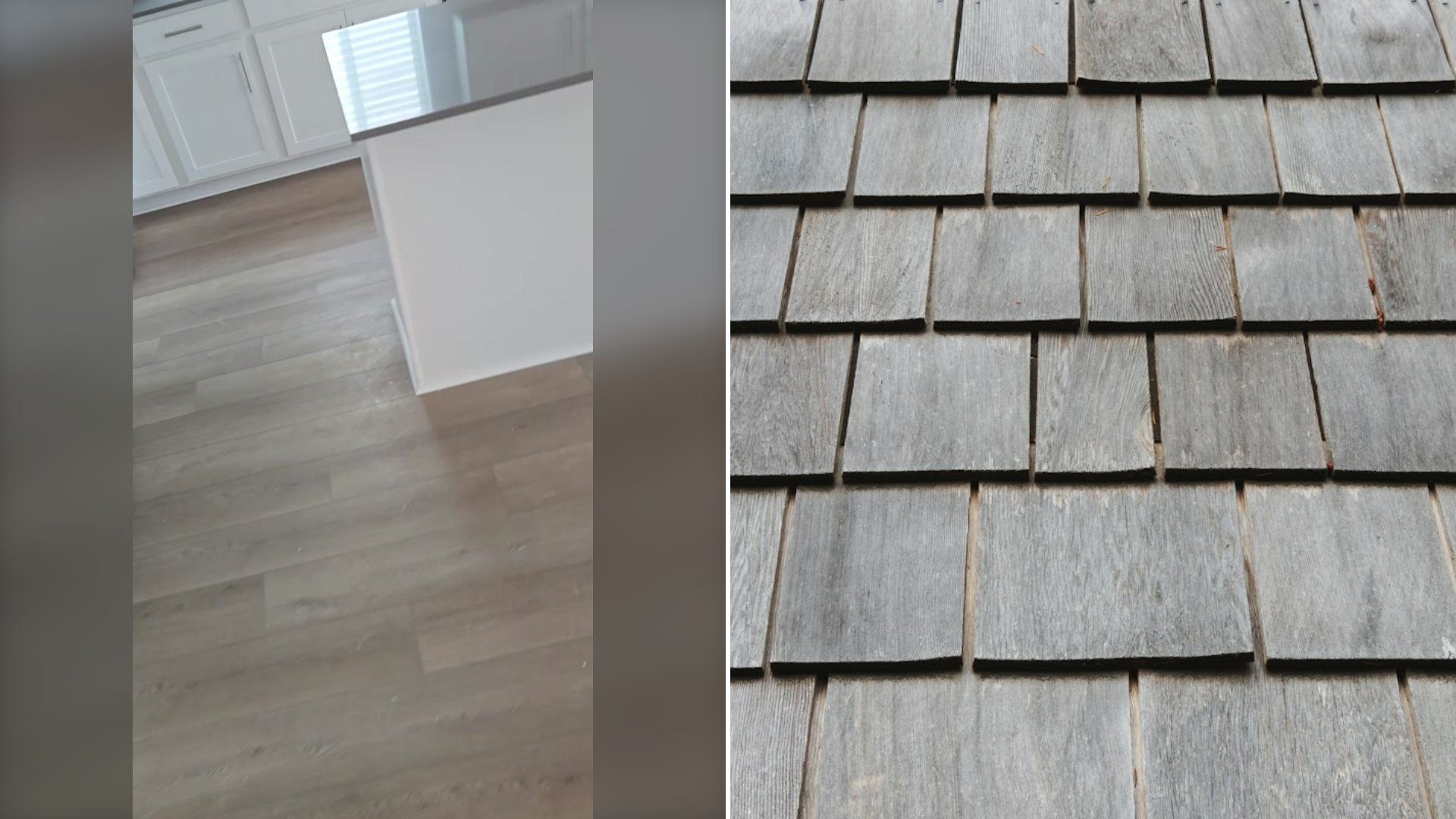
His verdict is blunt: whoever did the roof did not know how to install shingles very well. He shows the camera how the tabs on the shingles should look, then shows how they actually look on this house. They do not match.
He also points to a spot where one material should be lapped over the top of another and is not. “I mean, this ain’t correct,” he says.
And with the builder still on site, he wonders aloud whether he should just walk down and break the news. “Hey man, the whole roof is no good. You should start over.”
@inspectiontime
Why Shingle Installation Matters So Much
To most people standing in the driveway, a roof looks like a roof. But asphalt shingles depend on a precise pattern to keep water out. Each course is supposed to be offset and overlapped so that rain running down the roof always flows over a shingle, never under one. The tabs and joints are staggered so water cannot find a straight path through the seams to the underlayment and decking below.
When tabs are misaligned or the offset pattern is wrong, gaps and joints can line up in ways that let water seep through. The same goes for overlaps at valleys, walls and roof penetrations. Water always runs downhill, so anything that should be on top must actually be on top. When a lower layer is placed over an upper one, the roof can funnel water underneath instead of shedding it.
Roofs on new homes are often installed quickly by subcontracted crews working on several houses at once. Builders are supposed to check that work, but a roof is the one part of a house few people ever look at closely. That makes it a common place for mistakes to hide until the first big storm.
Improper installation can also affect the manufacturer’s warranty. Shingle makers publish detailed installation instructions covering nailing, exposure and offsets, and a roof that does not follow them may not be covered if problems show up later. A roof leak can damage insulation, ceilings and framing long before anyone sees a drip.
How to Protect Yourself on a New Build
This video is one more reminder that a builder’s “we’re ready” is not the same as a clean inspection. If you are buying new construction, consider these steps:
- Hire an independent inspector. Choose someone experienced with new construction who works for you, not the builder.
- Ask about tools. As this inspector stresses, a thermal camera can reveal missing insulation, hidden moisture and air leaks that are invisible to the eye. Ask any inspector you interview whether they use one.
- Ask how they inspect the roof. Some inspectors walk roofs, some use drones and some view from a ladder. Ask what method they use so you know what was actually examined.
- Look at the site itself. A job site covered in trash is not proof of bad work, but it can say something about supervision and attention to detail.
- Put repairs in writing. Send the inspection report to the builder and get written confirmation of which items will be corrected before closing.
- Re-inspect the fixes. For a major item like a roof, have your inspector come back after the work is done to verify it.
- Keep your warranty paperwork. Know what your builder’s warranty covers, how long it lasts and how to file a claim, and keep copies of shingle product information.
It is also worth walking around the outside of the home yourself before closing. You do not need to climb on the roof. From the ground, look for shingles that appear crooked, lifted or uneven, and check that gutters are attached and downspouts carry water away from the foundation. Snap photos of anything that looks off and ask your inspector about it.
A brand new home should come with a brand new roof that will protect it for years. As this Longview inspection shows, it is worth having a professional confirm that before you sign, even when the builder is standing right there saying everything is ready.
More From Willow and Hearth
- Inspector Says He Could Pull Loose Bricks Right Off the Sill of a New Build Then Asks What You Think of a Kitchen in a Closed Off Far Corner
- Pulte New Construction Inspection Shows a Very Different Experience Than the Inspector Expected
- Inspector Climbs into a New Construction Attic That Never Got a Pre Drywall Inspection and Shows What Is up There
Leave a Reply