Most people never see the inside of their attic, let alone the inside of a brand new home’s attic before anyone has moved in. @frontlineoh, a home inspector, took people along on what he calls an average day, crawling around above the ceilings of a newly built house. What he found there is a good reminder of why the roof framing deserves a second look.
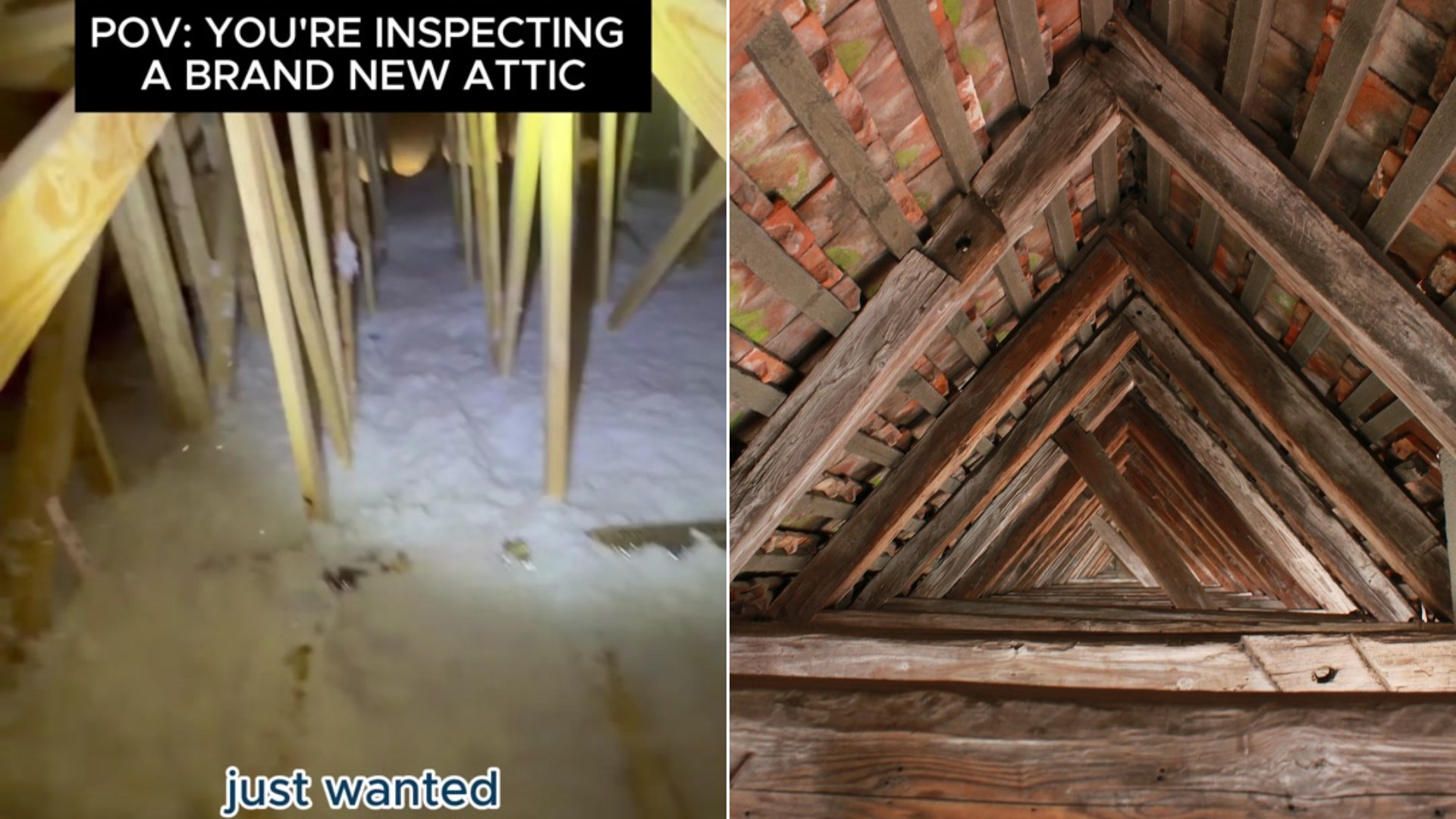
He starts by explaining the part of the job nobody sees. Working through an attic means constantly balancing on the sturdy wooden members, the framing pieces that can hold weight, so you do not fall through somebody’s drywall into their living room or bedroom. Good footing is hard to find. He also tries not to disturb the insulation, and when he has to trample some down, he fluffs it back up afterward.
@frontlineoh
A truss split right in half
It is not always worth the trouble, he says, because he does not always find something. But sometimes he does. In this attic, one of the trusses was split right in half.
The house was built just a few months earlier, earlier this year. It had been used as a model home for a while. And here is the key detail: because it was a model home, there was no pre-drywall inspection. The inspector in the video says he was the first inspector to ever come into that attic. His verdict was brief: “This is definitely something that should have been caught.”
He does not say what happened afterward, whether the builder repaired it, or who owned the house at the time, so we do not know the end of the story. But the lesson is easy to see.
What a truss does for your roof
Trusses are the triangular wooden frames that hold up most modern roofs. Each one is engineered so that the weight of the roof, along with any snow or wind pushing on it, is spread across its pieces. When a piece is cracked or split, that sharing of the load can be thrown off. Depending on where the damage is, it could be minor, or it could mean the roof is not carrying its weight as designed.
That is why a split truss is not something to shrug off. In most cases it is also not a do-it-yourself fix. Trusses are engineered parts, and repairs typically need to be designed or approved by the truss manufacturer or an engineer.
Why model homes and fast builds slip through
You might assume every new house gets looked at from top to bottom. Not necessarily. Local building departments do inspect certain stages, but their checks are limited and they are not working for you. A model home, a spec home, or a house that sells before it is finished might never get an independent inspection at the framing stage. Once the drywall and insulation go in, the problems are covered up and forgotten.
If you are buying a new house
- Hire your own inspector. Choose someone with experience in new construction, and ask whether they also inspect attics and roof framing.
- Book a pre-drywall visit if you can. If your home is still being built, this is the best time for a private inspector to see the framing, wiring, and plumbing before they are hidden.
- Be extra careful with model homes and quick-turnaround builds. Ask the seller directly whether the house had any inspections during construction and request copies of the reports.
- Get an attic inspection even after the walls are up. A good inspector can still look at the roof structure from the attic hatch or by crawling across the framing.
- Put repairs in writing. If something turns up, ask the builder for a written plan, and have the fix checked before you close.
If you are checking your own attic
Even in an older home, a quick peek into the attic can tell you a lot. If you go up, a few safety tips are worth remembering.
- Step only on the framing, not on the drywall between the joists. It will not hold you.
- Use a bright flashlight and take your phone to snap photos of anything odd.
- Be careful of nails sticking through the roof and of wiring.
- Watch for heat in the summer. Attics can get dangerously hot, so go early in the day.
- If you see cracked or split boards, sagging, or metal connector plates pulling away, take a picture and call a professional.
It would be easy to think “new” means “done right.” This inspector’s day in the attic shows why it pays to have someone check, and why the best time to find a problem is before somebody has already moved in. He seems to feel the same way, wrapping up by saying that the problem was something that should have been caught.
More Stories You May Like
- Plumber With 30 Years Of Experience Says Never Use Type M Copper When Replumbing Because It Causes Pinhole Leaks And The Fix Costs Only $10 More
- He Finished A Client’s $8,000 Fence, Then A Neighbor Complained To The City About Which Side Faces Out, Forcing Him To Add 50 Feet Of Shadow Box
- Home Inspector Finds A Gas Meter With A Broken Top Held Together With Tape, Then Learns Nobody Ever Called The Gas Company To Fix It
Leave a Reply