If you are thinking about replacing the water pipes in your home, a plumber with more than three decades in the trade has a warning about one specific kind of copper. Creator @twinhomeexperts is not a fan of Type M copper, and the advice comes down to a simple trade: spend a little more now so you are not tearing open drywall later.
It is the sort of tip that costs almost nothing to follow and could save a homeowner a lot of money, so it is worth going through carefully. Below is what the plumber said, what the pipe labels mean, and a few things to check before you buy a single stick of pipe.
@twinhomeexperts
What the plumber is warning about
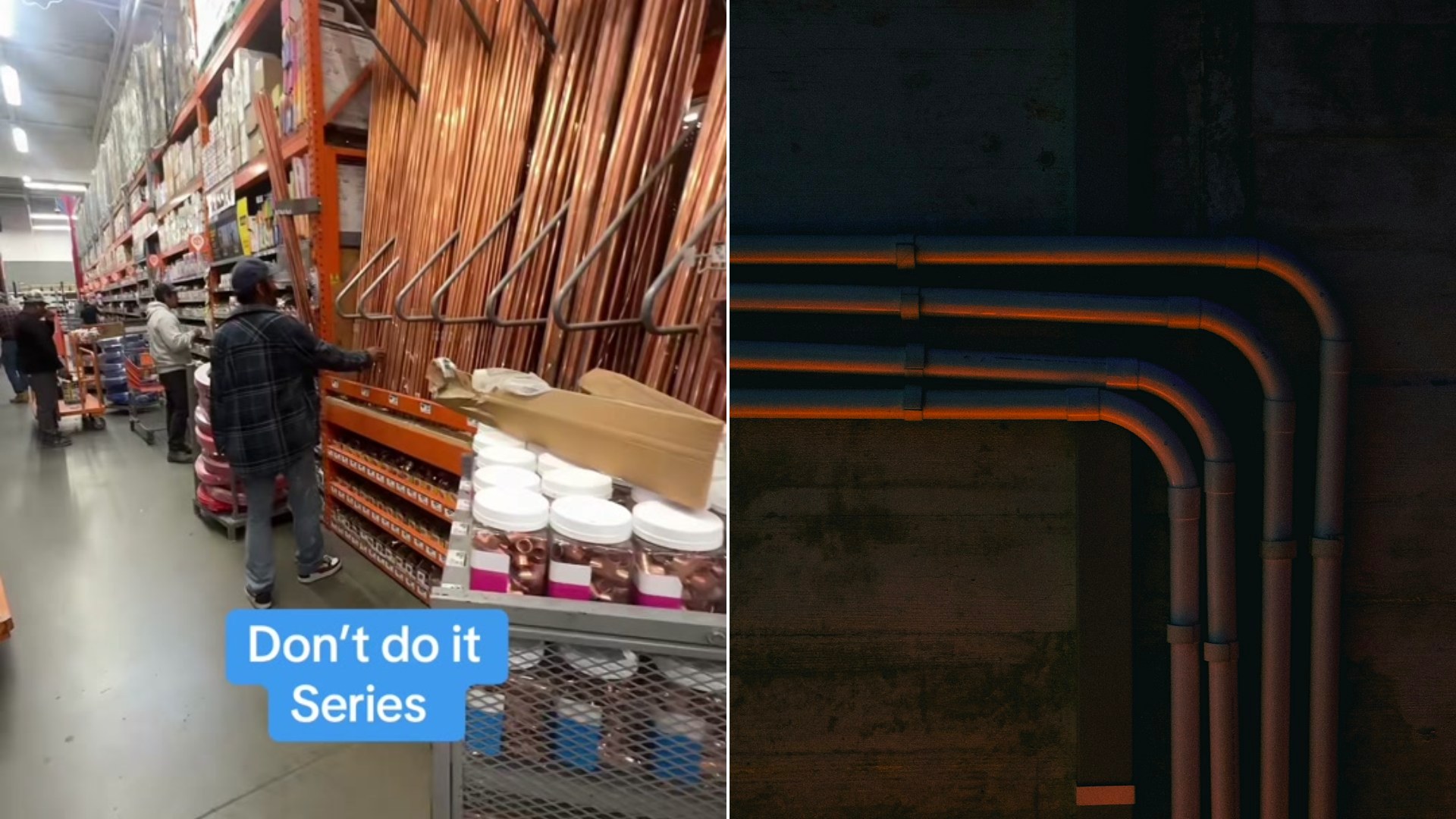
In the post, the plumber points to someone loading up half-inch Type M copper pipe, the kind with the red label, at $29.96 a stick. The plumber calls that a big problem, and says it is a pinhole leak problem. The advice for anyone who chooses copper for the water system in their home is to stay far away from Type M, and at the very least go with Type L, which carries the blue label.
The plumber then shows the difference in wall thickness. The piece on the left, the plumber says, is Type L, and it is thicker than Type M. Homeowners, the plumber says, will save thousands in the long run by following this tip.
One more rule follows. Never install half-inch L or half-inch M for a recirculating system, the plumber says, because they will create pinhole leaks, and always use PEX instead. In the caption, the plumber explains having worked in the trade for more than 30 years and having seen Type M copper pinhole leak way too many times. For about $10 more a stick, the caption says, you can go with Type L and avoid future leaks, water damage and expensive repairs.
Type M and Type L, side by side
The two pipes look nearly identical at a glance, which is why the color label matters. According to a home improvement guide to Type M and Type L copper, the main differences are wall thickness, pressure rating and cost:
- Wall thickness: For half-inch pipe, Type M is 0.028 inch thick and Type L is 0.040 inch. For three-quarter-inch pipe, M is 0.032 inch and L is 0.045 inch.
- Color code: Type L is marked blue and Type M is marked red.
- Fittings: The outside diameters match, so the same fittings work with either one. The thicker wall means Type L has a slightly smaller opening on the inside.
- Cost: Type L costs more because it uses more copper.
The same guide says both types are used for indoor water supply lines and both exceed typical municipal water pressure, and that the International Building Code permits Types L, M and K for water supply. It also notes that some local codes allow only Type L. That is an important point: what your plumber can legally install depends on where you live.
Thin walls and pinhole leaks
A pinhole leak is exactly what it sounds like: a tiny hole in a pipe that sprays or weeps water. Because they are small, they can go unnoticed behind a wall for a long time, which is why they cause so much damage. The plumber’s reasoning is easy to follow. A thicker wall gives the pipe more material to wear through before it fails, and a thinner wall has less to spare. That is a professional opinion from three decades on the job, not a code requirement.
It is also fair to say that many homes have Type M copper that has served for decades with no trouble. Water chemistry, flow speed, installation quality and how hot and fast the water moves through the pipe can all play a part. If you are on well water or have water that is very acidic or hard, that could change the equation. When you are unsure, ask the plumber you hire how your local water behaves with copper.
What about PEX?
The plumber’s last line is to always use PEX, a flexible plastic pipe, for a recirculating system. PEX has its own pros and cons, and a comparison of PEX and copper lists some of the real trade-offs:
- Cost: Copper runs about $2 to $8 per linear foot and PEX about $0.50 to $2, according to the article.
- Lifespan: Copper lasts roughly 50 to 70 years and PEX about 30 to 50, though very hot water or high chlorine levels can shorten the life of PEX.
- Corrosion: Copper is more prone to corrosion, so PEX suits homes with hard water. Rodents can chew PEX, though, so copper may be better where pests are a problem.
- Installation: PEX uses push-to-connect, crimp or clamp fittings and can be snaked through finished walls, while copper requires soldering.
- Freezing: PEX has some flexibility and can expand if the water inside freezes. Copper is more likely to crack.
Questions to ask before your plumber starts
- Which type of pipe are you quoting? Ask for the pipe type in writing: L, M or PEX. A big price difference between two bids may be a difference in materials.
- Is the recirculating line included? If your home has a hot water recirculating loop, ask what the plumber recommends for it, since that is the specific case this plumber warns about.
- What does local code say? Your building department can tell you what is allowed and whether a permit is needed.
- What is the warranty? A written warranty on labor and materials tells you how much the contractor stands behind the job.
- What is the difference in dollars? The caption puts the cost of upgrading to Type L at about $10 more per stick. Ask your contractor to price the whole job both ways so you can see the real number for your house.
The bottom line
Replumbing a house is a big, messy job, and the pipes you choose are the part you will never see again once the walls are closed. A tip that says to spend a little more on thicker pipe, or choose PEX where it makes sense, is easy to remember. Check your local rules, compare quotes line by line, and ask your plumber to explain the choices in plain English. If a pro with 30 years in the field says Type M has pinholed too many times, it may be worth listening before the walls go back up.
Leave a Reply