Ben and Carla bring home the same money and shop in the same suburb on the same Saturday. Each has roughly $45,000 saved for a down payment, and together they earn about $85,000 a year.
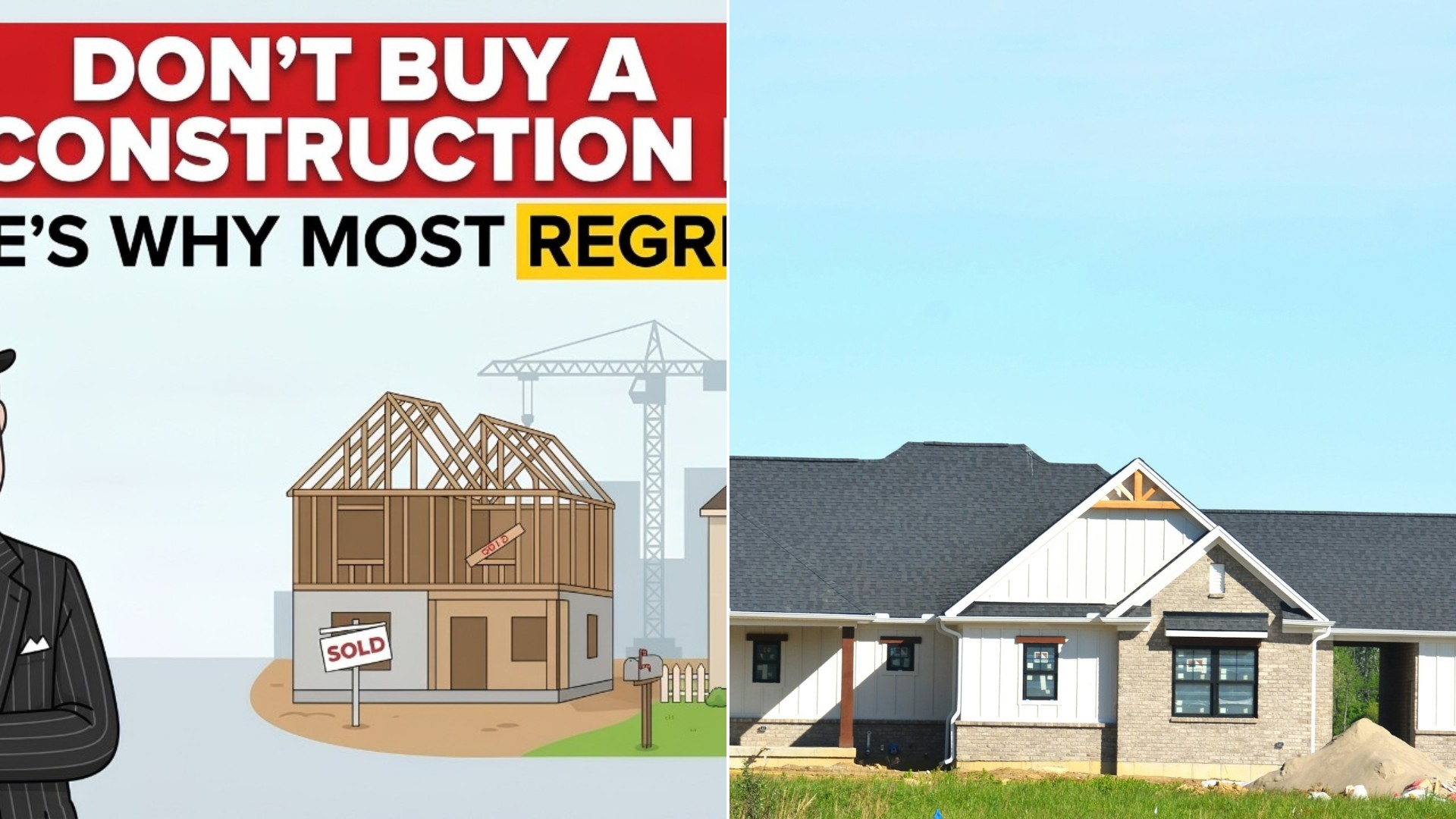
Ben falls for a brand-new home with a sales trailer, a model that smells like vanilla candles and a friendly rep promising a monthly payment he can hardly believe. Carla ignores all of it and buys a house that is 7 years old, three streets over.
Ben tells his friends he got the better deal. Carla keeps quiet about hers.
Five years later, according to a worked example from the @USFinovaHub-14 channel, Ben has spent about $40,000 more than Carla for the same size house in the same part of town. The creator says the numbers are an illustration built from national figures and typical builder terms, not a quote from one builder, though he says the pattern is real.
The $410,000 House Quietly Became A $445,000 House In The Design Studio
Ben wants a four-bedroom of about 2,000 square feet. The advertised price is $410,000, almost exactly the national median for a new home, and the creator points out that new homes currently cost roughly $25,000 less than existing ones. On paper, new looks like the bargain.
Then the rep walks him down the hall to the design studio. The floors in the model are not the floors that come standard, and neither are the countertops, light fixtures, cabinet hardware, the extra garage outlet or the taller ceilings.
Ben picks a few things that feel reasonable, then a few more, for $26,000 in upgrades. The lot backing onto the pond adds $9,000, so by the time he signs, the $410,000 house is a $445,000 house. Upgrades are also the part of a home you recover the least when you sell, because the next buyer is paying for the house, not for your taste.
“A Low Payment Isn’t A Low Price” Is The Trap Behind The Rate Buy-Down
The rep leans in with the part that makes it all feel okay. If Ben uses the builder’s preferred lender, he gets a two-to-one rate buy-down and $8,000 toward closing costs. His rate starts at 5%, climbs to 6% in year two and settles at 7%, and his first payment is about $2,150 a month.
Buy-downs are not free, the creator explains. The cost lives inside a price Ben never negotiated, so the builder is discounting the payment, not the house. Because Ben only talks to the builder’s lender, he never sees a competing quote.
Carla finds a 2,050-square-foot house listed at $424,000 that has sat for five weeks. She gets an inspection and settles at $415,000 with $4,000 from the seller. Her rate is 7% with no trick, and her payment is $2,485. On day one, Ben pays $335 less every month and tells everyone about it.
New Construction Can Mean A Year Of Waiting And A Punch List Full Of Problems
Carla closes in about six weeks. Ben gets a lot with a number on it, and new construction can run from six months to more than a year between signing and closing. Every month the date slips, he is paying rent on top of everything else, paying to extend his rate lock or watching rates move against him.
At the final walk-through, Ben gets a clipboard and a roll of blue tape for the punch list. The creator cites a Clever Real Estate survey that found about one in seven new-home buyers skip the inspection because the house is new. Among those who did inspect, 65% found problems, and nearly a quarter said the home failed its first inspection.
Ben hires his own inspector twice, once before the drywall goes up and once at the end, for about $1,000 in total. The warranty sounds generous at 1 year on workmanship, 2 on major systems and 10 on structure, but the 10-year piece usually covers serious structural failures, not the things that actually annoy you.
The Bare Yard And The Page-40 Tax Surprise Cost Ben Another Small Fortune
Then Ben moves in and finds the yard is bare dirt. A fence runs $6,500, landscaping $8,500, window coverings $3,000 and appliances $3,500, which is another $21,500, mostly in year one. Carla’s house came with mature trees, a fence that needed paint and blinds the sellers left, and she spends $3,000 on paint and small fixes.
Ben’s first property tax bill is small, about $2,100, because it is based on the land or a half-finished house. Then the full assessment arrives at around $6,200 a year, plus a special district fee of $2,800 a year that pays for roads, water lines and utilities. He finds that number on page 40 of a disclosure packet he skimmed.
In year two the buy-down steps up and his payment goes from $2,150 to about $2,400. In year three it hits $2,665. Ben’s total monthly cost starts around $3,025 and reaches $3,884 by year three, while Carla’s stays about $3,727 the whole time. His loan is also bigger, $400,500 against her $373,500, because he financed the upgrades and the lot premium.
New Homes Do Save Money On Repairs, But Not Enough To Win
To be fair to Ben, he is not suffering. He spends about $1,500 a year on repairs versus $4,000 for Carla, whose older house starts asking for a water heater, a roof patch and an air conditioner part. His utilities run about $600 a year lower and his insurance about $400 cheaper. Over five years, he spends about $4,100 less than Carla on running the house.
Selling is where it hurts. The creator cites the National Association of Home Builders saying more than six in 10 builders have offered incentives month after month for over a year, and roughly a third are cutting prices by an average of about 6%. In year five, Ben lists on a street where the builder is still selling new homes with a buy-down, a closing credit and a fresh warranty. Ben cannot match any of that.
Using the same 3% yearly appreciation for both houses, each is worth about $487,000 at year five. Ben put in about $18,800 more cash up front, has about $25,400 less equity and saved about $4,100 on running costs. Netted out, he is about $40,000 behind.
Meet Dana, Who Bought New From The Same Builder And Came Out $4,000 Ahead Of Carla
Dana buys from the same builder but skips the design studio and picks a finished quick move-in home that has been sitting on the builder’s books. She asks for a price cut instead of a rate buy-down and gets about 6%. She compares an outside lender, hires an independent inspector twice and reads the warranty and district disclosure before signing.
She pays $385,400 with no upgrades and no lot premium, and under the same assumptions ends up about $4,000 ahead of Carla with a newer house. The creator’s point is that it takes patience, paperwork and a willingness to walk away.
Five Situations Where Buying New Makes Sense, And Six Steps Before You Sign
Buying new can make sense when your area has almost no resale inventory, when you plan to stay a long time, when you need a layout, accessibility features or energy performance older homes cannot offer, when the builder is truly discounting the price and not just the payment, and when you have done the homework.
- Look up what comparable resale homes nearby actually sold for before stepping into a sales center.
- Ask for a price reduction, not just a rate buy-down, and ask what the price would be without the incentive.
- Get a loan estimate from at least one lender outside the builder’s network and compare total cost, not the monthly payment.
- Ask for the full tax breakdown, including special district or HOA charges and the bill after reassessment.
- Hire your own inspector, ideally before the drywall and at the final walk-through, and do not close until the punch list is in writing.
- Read the warranty and the closing-date language in the contract before you sign.
None of it is complicated, the creator says, it just does not happen when you are standing in a model home that smells like cinnamon. Ben was not wrong to buy new. He was wrong to buy new the way the builder wanted him to, and the creator sums it up this way: a low payment is not a low price, so ask what the house costs, not what it costs this month.
More Stories You May Like
- Twenty Two Year Old Quits His Full Time Job to Remodel His First House After Finding a Termite Eaten Wall and Pulling Up All the Flooring
- Woman Shows Her Louisiana Lake House That Started as a 1970s Single Wide Trailer With a Bedroom Addition and Explains Some of the Changes She Has Made So Far
- Inspector Finds A Dishwasher Hose Chewed Through, Duct Tape Used As A Repair And Mold Growing In The Attic Of A House Loaded With Problems
Leave a Reply