At 22 years old, most people are still figuring out their first real budget. A young man who posts as @tullys.garage took a bigger leap. He bought his very first house, and then he quit his full-time job to remodel it.
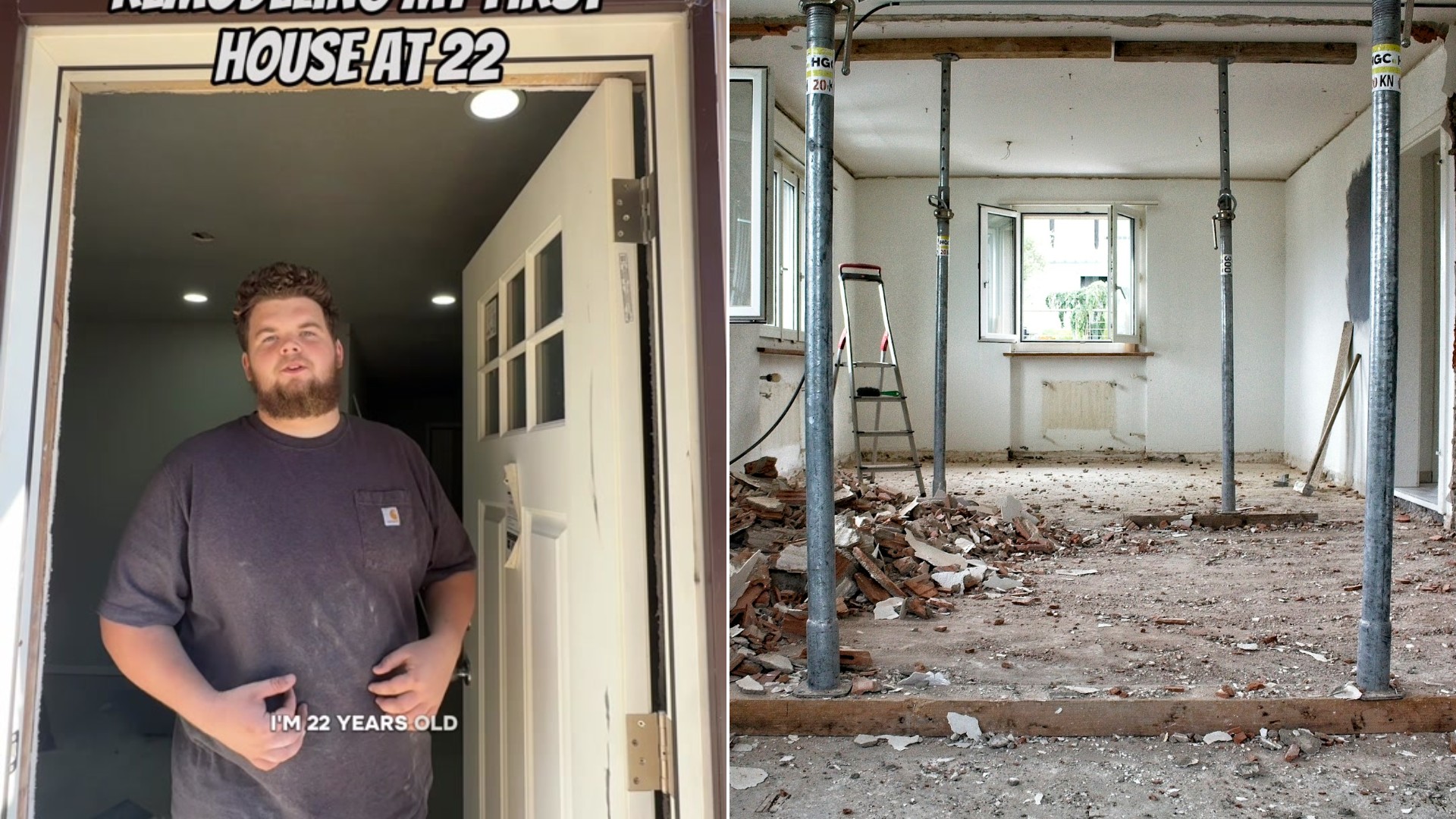
“I’m 22 years old and I just quit my full-time job to work on remodeling my very first house,” he says to start a new series. This first episode is a catch-up on everything he has already done, and he plans to document the whole journey until the place is finished.
The most dramatic discovery came early. When he first bought the house, one wall had a window in it with a window unit. Rain had leaked in and ruined the wall, and he says it turned out to be a festival of termites.
@tullys.garage
Tearing out the bad wall
So he tore that wall apart and rebuilt it. He also got rid of the window altogether. His plan is to cool the house with several mini-split systems rather than window units, so that old opening no longer had a job to do.
It is a good reminder of why a wall with a leak is never just a cosmetic problem. Water finds its way in slowly, and the damage hides behind the paint until someone opens it up.
Lights, switches and a few odd choices
Once the wall was handled, he turned to a long list of layout problems. The old lights were positioned in ways he did not like, and the ceiling fan sat in a strange spot. His fix was to install 12 can lights.
The switches were just as puzzling. In the living room, the light switch was in one place and the ceiling fan switch was across the room, so he moved everything to one spot and has been patching sheetrock around the work ever since.
In the bedroom, a can light was way too close to the ceiling fan. He added four new can lights closer to the corners, and he says he will patch those soon. The bathroom had its own head-scratcher: all of the bathroom switches were in the bedroom. He moved them into the bathroom, where they belong, though he has not done anything else in there yet.
He also pulled up the flooring throughout the whole house. To close out the episode, he promises to clean up, because the place has become a mess. That is how every remodel looks around the middle, and he knows it.
What to know before you tackle a fixer-upper
His story is exciting, and it is also a useful checklist for anyone eyeing a rough first house.
- Water first, everything else second. Stains, soft spots, bubbling paint and musty smells around windows and window units are signs to look closer. Find and fix the source of a leak before you spend money on finishes.
- Know the signs of termites. Mud tubes along foundations or walls, wood that sounds hollow when you tap it, and discarded wings near windows are common clues. A pest inspection before you buy is usually inexpensive compared with the repairs.
- Think about where the switches go before you patch. Moving a switch means opening a wall, so it is smart to decide on your final layout before you close it. Stand in each doorway and ask where your hand naturally reaches.
- Check permits. Many towns require permits and inspections for electrical work, and adding or moving lighting may count. Call your local building department before you start. If you are not trained in electrical work, hire a licensed electrician for anything you are unsure about.
- Space recessed lights with care. Can lights too close to a ceiling fan can create a flickering, strobe-like effect when the blades turn, and lights too far apart leave dim pockets. A simple sketch on paper helps before you cut holes in the ceiling.
- Build a cushion. Remodels almost always cost more and take longer than planned, and old houses hold surprises behind the walls. Having savings set aside for the unexpected matters most when you no longer have a regular paycheck coming in.
It also pays to take photos at every stage. Pictures of the opened wall, the wiring and the framing become a record you can use later for insurance, resale or simply to remember how far you have come.
The big decision
Quitting a job to remodel is not for everyone, and it is a decision that deserves a plan for income, insurance and the long stretch when a house is not livable. But there is something admirable about a young person rolling up his sleeves, learning as he goes and sharing the real, messy middle for others to follow.
If you are thinking about your own first project, start with the structure and the water, then work your way to the lights and the paint. The pretty part comes last, and it is always worth the wait.
More Stories You May Like
- He Finished A Client’s $8,000 Fence, Then A Neighbor Complained To The City About Which Side Faces Out, Forcing Him To Add 50 Feet Of Shadow Box
- Couple Restoring An 1888 Home Clears The Attic And Finds A Sewing Machine, A 1920s Chemical Company Ledger And A Glass Display Cabinet
- Grandparents Who Always Wanted A Brick Home Get New Windows, Doors, Porch, Roof, Driveway And Granite Counters In One Big Reveal
Leave a Reply