Every tradesperson has one: the tool that looked irresistible on the shelf and has been collecting dust ever since. An HVAC service technician named Eric, who shares his work life as @ericdoeshvac, decided to own up to his. He calls the segment “Why did I buy that, and how much did it cost me?”
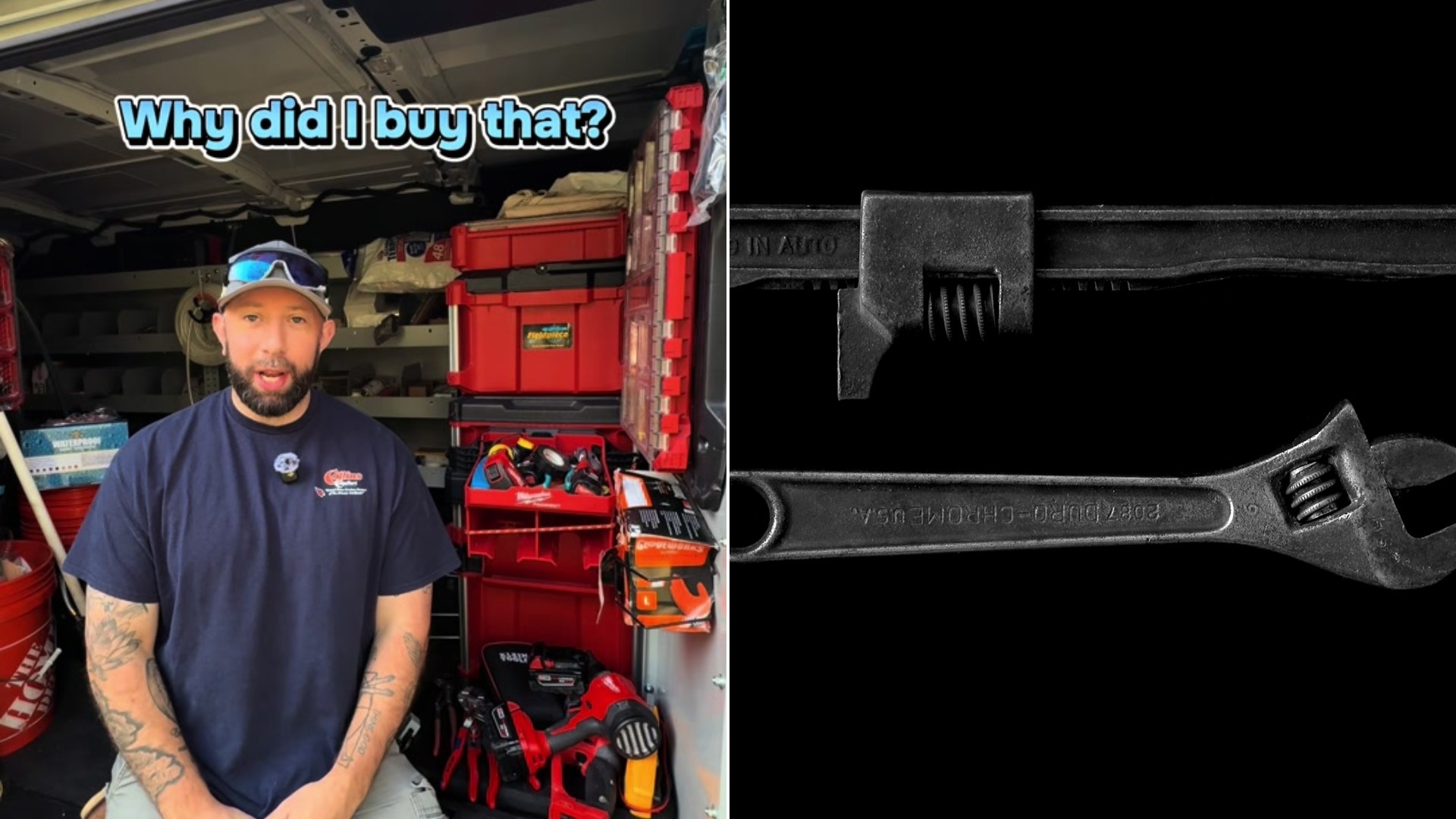
His first confession is the one that stings the most. Number one on the list is what he calls a Swedish pipe wrench, a pliers wrench from the Knipex line that he pronounces his own way. “Why do I have this? I don’t know,” he says with a laugh.
How many times has he used it? Exactly once, on a gas valve. Did he actually need it for that gas valve? No. He bought it because he thought it was so cool.
@ericdoeshvac
Why a tool can be too nice to use
Eric is honest about the appeal. The wrench has a locking button, and it feels nice and heavy in the hand. It has the feel of quality. The problem is that feeling quality is not the same as needing it. He says he spent close to about $90 on it, somewhere around $85 before tax, for a tool he has used one time.
Staying with the same brand, he shows a second pliers wrench, a self-adjusting push-button model with a comfort grip handle. This one cost another $80 to $85, and he has not used it at all. It rode in his tool bag for maybe two weeks before he decided he was done with it. It is heavy, and it now lives in his pack out, which is the larger case of gear he keeps at the truck rather than carrying into a job. His question: “Am I bringing this with me to a job site?”
When new technology makes a tool obsolete
Another item on his list taught a different lesson. It involves a hose and a transfer pump, and Eric says it took a lot of time to use. Since then, he explains, makers have come out with drill adapter transfer pumps that are much lighter and simpler, and they do not need an M18 battery to run. The older setup has become obsolete for him.
That is the hazard of buying gear in a field that keeps changing. A tool that was a smart purchase a few years ago can be overtaken by something smaller and cheaper.
His closing line is the best part. Will he learn from his mistake? “Probably not.” Will he buy another tool he does not need? “Absolutely yes.” Why? “I love tools and I love the game.”
How to avoid your own regret pile
You do not have to be a professional to fall for a shiny tool. Anyone who has wandered a hardware store aisle knows the feeling. If you want to keep your workshop, garage or truck useful, here are a few habits worth trying.
- Rent or borrow first. If you will use a tool once a year, a rental counter or a neighbor with a garage may save you most of the price.
- Wait a week. Put it in the online cart and leave it. If you still need it after seven days, and you can say what job it will do, buy it.
- Buy for the job in front of you. A tool that solves a problem you have today is better than one for a problem you may have someday.
- Weigh it, literally. Eric’s second wrench ended up in the pack out because it was heavy. If you carry your tools all day, or up a ladder, every pound counts.
- Use the quality tools you own. A pricey tool feels better when it earns its keep. Pull it out for the job, even if a cheaper one would do.
- Check what is new before you commit. Newer versions of old standbys, like the lighter transfer pumps he mentions, can make an older design obsolete almost overnight.
- Resell what you do not use. Good brand-name tools in like-new condition often sell well secondhand, which can recover a good share of what you spent.
The real lesson
It also helps to keep a simple tally. Write down what you paid for each tool and mark a tick every time you use it. After a year, the tools with no ticks are the ones to sell or stop buying more of.
What makes Eric’s confession fun is that he is not scolding anyone. He is a working technician who knows exactly what a tool should cost and still could not resist. If a professional can be tempted by a locking button and a nice heavy feel, the rest of us can forgive ourselves for a few impulse buys.
Just do the math before you swipe the card. Ninety dollars for one gas valve is a steep price for a good story, though it does make a good one.
More Stories You May Like
- Gardener Strips A Tomato Plant Down To One Leaf And Lays It Sideways In A Trench So The Stem Turns Into Roots And Grows Bigger Tomatoes
- Homesteader Tests Pappy’s Banana Peel Water On Tomatoes Against A Control Group To Find Out If The Old Timer Was Right Or Needs To Get Off Facebook
- She Bought A 10 Acre Farm At 30, And Six Months Later Has A Fall Harvest, A 12 Panel Solar Array And A Modern Wood Stove
Leave a Reply