Every spring, folks head to the yard with good intentions and a long list of lawn lore passed down from a neighbor, a TV ad or Grandpa. Some of that advice is solid. A surprising amount of it is flat wrong, and it can leave you with a weaker lawn and a bigger bill.
The list below comes from a publication called Busting the Most Common Lawn Myths and Misconceptions (FSA6142), written by turfgrass specialist Aaron Patton for the University of Arkansas System Division of Agriculture. It was written with Arkansas lawns in mind, so grass types and calendar dates will differ where you live. Check with your county extension office before you change your routine.
1. Never Mow Short To Mow Less
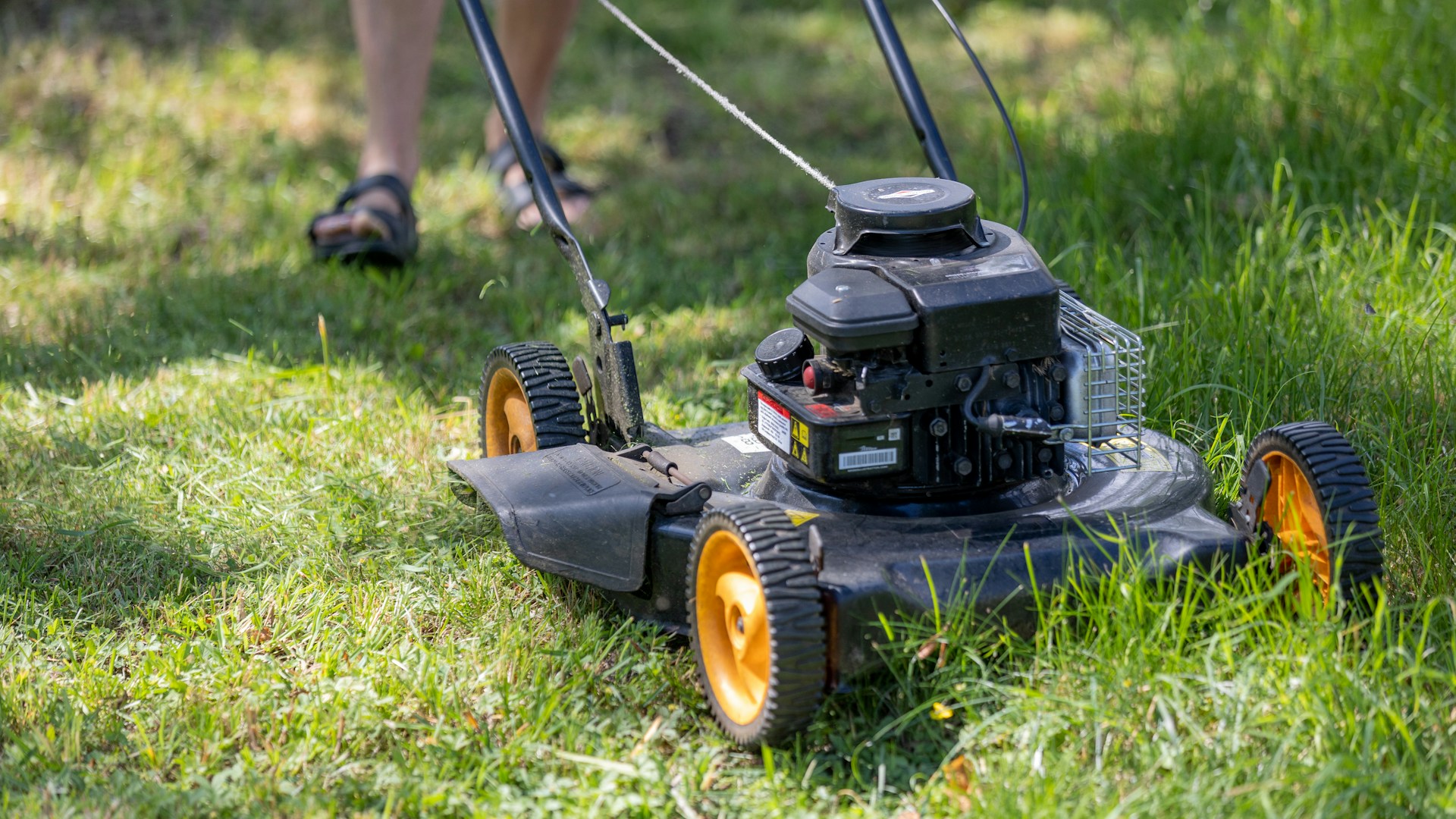
It sounds clever: cut the grass low so you can mow less often. The University of Arkansas Division of Agriculture says it backfires, because you should remove no more than one-third of the leaf blade at each mowing.
At 3.0 inches, that works out to mowing about every 7 days, and at 2.0 inches, about every 5 days. The publication puts the best height for most lawns at 2.0 to 4.0 inches, and says mowing below that creates weak turf that needs more fertilizer, water and pesticides.
2. Never Expect A Golf Course Look From The Lowest Mower Setting
Some of us picture the neighbor’s perfect fairway and drop the mower to its lowest notch. The Division of Agriculture explains that golf courses use different grass species, reel mowers and trained superintendents.
Scraping your family lawn down on a regular mower just adds cost, time, fertilizer and water. Keep it in the 2.0 to 4.0 inch range instead.
3. Never Scalp The Lawn Without Checking For Green Shoots
Mowing a little low before bermudagrass greens up can clear dead debris and warm the soil. But the publication warns of scalping if you wait too long, and of more weeds when sunlight reaches bare soil.
Look for green shoots first. The Division of Agriculture says to avoid the practice on zoysiagrass, which often does not fully go dormant, and on centipedegrass and St. Augustinegrass, which are injured by low spring mowing.
4. Never Skip Mowing Because Of Seedheads
You may have heard that mowing spreads the seedheads around. The University of Arkansas publication says seedheads must mature on the stem for months before they will germinate, so mowed or mulched seedheads will not sprout.
Mow often with a sharp blade. Seedheads last about a month on cool-season grasses and zoysiagrass, while bermudagrass makes them all summer long.
5. Never Fertilize Cool-Season Grass In Spring
Spring feels like the natural time to feed the lawn, but the Division of Agriculture says it causes too much top growth, reduces rooting and leads to summer stress on cool-season grass. Warm-season grasses such as bermudagrass, centipedegrass, St. Augustinegrass and zoysiagrass should be fed in summer when they are actively growing.
For tall fescue, the publication recommends September and November, then April or May. It also says not to fertilize warm-season turf in winter, or any grass during a drought.
6. Never Ignore The Numbers On The Fertilizer Bag
The three numbers on a bag are not decoration. According to the publication, they give the percent of nitrogen, P2O5 and K2O, and nitrogen causes the biggest response in the grass.
Quick-release nitrogen responds within a week but can burn the lawn if misapplied. Slow-release nitrogen responds in 3 to 10 weeks and rarely burns, even above 85 degrees F.
7. Never Wait For Dandelions To Bloom To Fight Them
Pulling the yellow flowers in spring feels productive, yet the Division of Agriculture says removing a few dandelions will not change the seed supply drifting in from roadsides and fields. A thick, healthy lawn is the better defense.
If you do use a herbicide, the publication suggests late September to mid-November, on a calm, sunny day with moist soil and no rain forecast for 24 hours. Spot-spray when you can.
8. Never Seed Every Grass In Spring
Timing depends on the grass. The University of Arkansas publication says bermudagrass should not be seeded after July 1, and that May to early June is best.
For tall fescue and other cool-season grasses, it says September is ideal and March is second choice, with spring risks such as wet conditions, cool weather, weeds and poor summer survival. Zoysiagrass and centipedegrass take 90 or more days to establish, so weed control matters.
9. Never Rake Away Every Leaf
Many of us rake until our backs ache. The Division of Agriculture says moderate amounts of leaves mulched into the turf do not harm the soil or the grass and can improve soil structure.
Heavy layers of leaves can smother grass, so mow regularly in fall. Rake, blow or vacuum only when large amounts pile up between mowings.
10. Never Lime A Lawn Without A Soil Test
Lime is not a yearly ritual. The publication says to get a soil test first, and notes that county extension offices in Arkansas offer it free.
It says nutrients are most available at a pH of 5.8 to 6.5, and that about 50% of Arkansas lawns are at or below 5.7. Target ranges differ by grass, so the test results matter.
11. Never Spread Gypsum To Fix Compacted Soil
Gypsum gets sold as a cure-all for hard ground. The Division of Agriculture says it only helps soils with high sodium, which are common in the western United States, and not in Arkansas.
The publication adds that Arkansas soils already have plenty of calcium and sulfur. Save your money and ask your extension office what your soil actually needs.
12. Never Count On Spiked Shoes To Aerate
Those strap-on spiked sandals look handy, but the math in the publication shows they disturb only about 0.04% of the lawn as you walk. Turf specialists recommend aerating at least 5% of the soil surface.
The publication adds that hollow-tine aerification works better than solid-tine. Rent a real aerator and do the job right.
13. Never Pour Household Tonics On The Grass
Ammonia, cola, beer, hydrogen peroxide and dish soap all have fans among backyard experts. The University of Arkansas publication says these products have little scientific support and may cause more damage than good.
Your lawn is not a science fair. Stick with methods backed by research and a soil test.
14. Never Bag Clippings Out Of Fear Of Thatch
Returning clippings is often blamed for thatch. The publication cites a 1967 University of Rhode Island study that found thatch is mainly lignin-containing tissue such as rhizomes, stolons and stems, plus roots, not clippings.
Later studies agreed. In one test, returning clippings increased zoysiagrass thatch by only 3%, and bermudagrass research found no contribution at all.
15. Never Water Just Because You Can
More water does not mean a better lawn. The Division of Agriculture says overwatering damages more Arkansas turf than underwatering, and that October 1 to June 1 seldom calls for extra water.
Water when the grass shows stress, such as a bluish-gray or brown color or footprints that linger. Water early in the morning, about once a week in summer.
16. Never Blame Moles On Grubs
Seeing tunnels, many folks reach for grub killer. According to the publication, moles eat mainly earthworms and only occasionally eat grubs, so killing grubs will not remove them.
That means a pricey grub treatment may do nothing about the mole problem. Save the cash for the real fix.
17. Never Trust Chewing Gum To Chase Off Moles
Old tales say chewing gum or similar products kill moles. The Division of Agriculture says apparent success often comes from weather changes that push moles deeper into the soil.
The publication states that trapping is the only sure control. If moles are tearing up your yard, ask your county extension office for help.
These tips come from a publication aimed at Arkansas lawns, so your best mowing height, seeding dates and fertilizer schedule may differ. Your county extension office can tell you what works for your grass and soil.
Start with one or two changes this season, such as raising the mower and getting a soil test. Your lawn, and your wallet, will thank you.
More Stories You May Like
- Gardener Bought Candy Corn Spirea By Mail And Locally And The Colors Came Out So Different She Wonders If It Is Too Much Of A Pop
- Planting Bulbs Too Shallow Or Too Late And Cutting Back The Wrong Plants Can Cost You Next Spring’s Blooms So Check Your Zone Before You Dig
- Overwatering The Wrong Plant For Your Zone And Buying Too Early Are The Quiet Ways Gardeners Kill Plants And Waste Money Every Spring
Leave a Reply