Every lawn guide tells you never to cut more than one third of the grass blade at a time. So it was a surprise when a turf pro filmed himself taking off about half the blade and said he was perfectly fine with it.
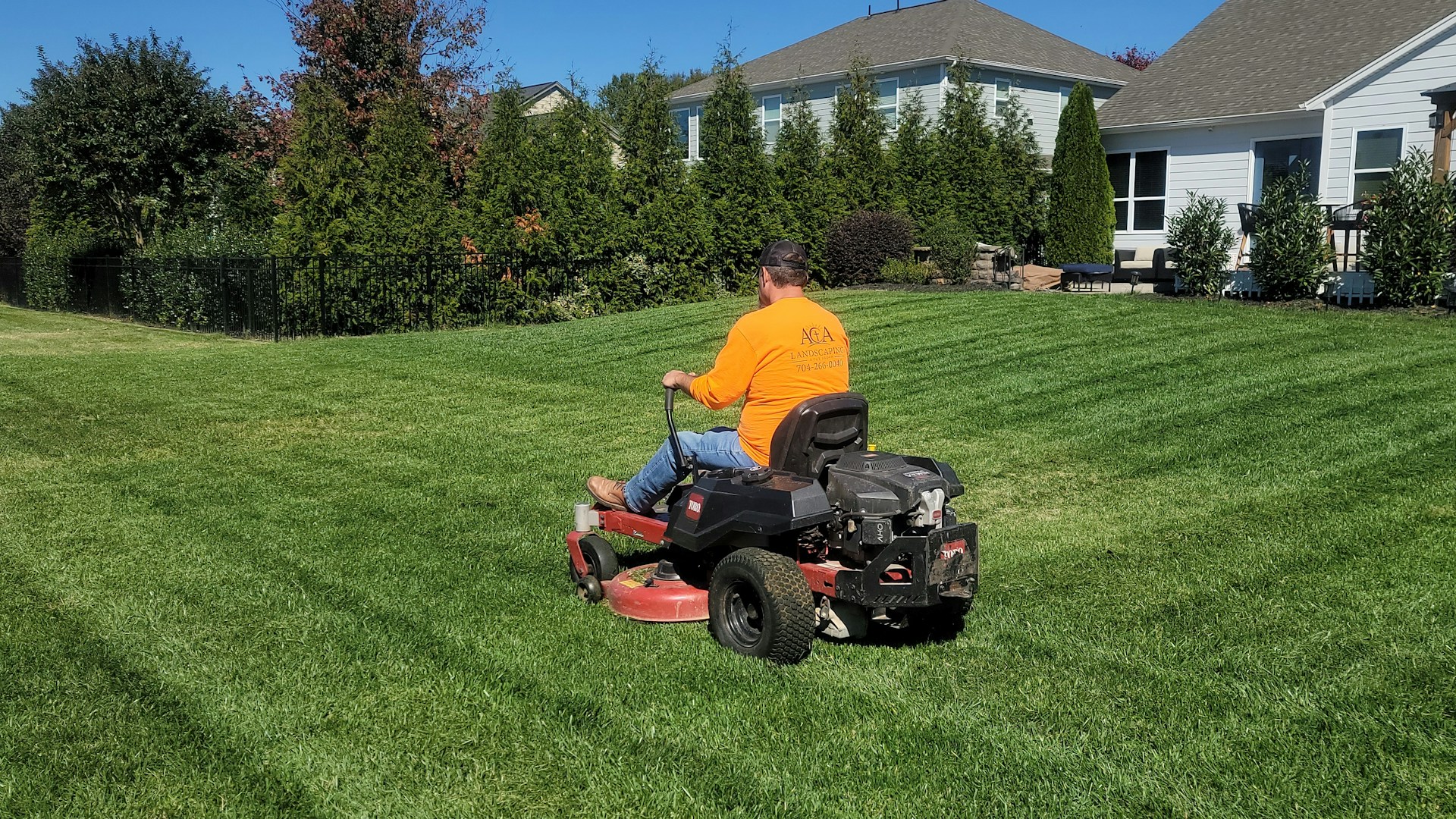
The man behind @GCITurfandTee was mowing his tall fescue lawn in North Carolina after a few days away in Florida, and he admits straight out that he got behind.
“I’m More Like A Half Rule” Right Now, And He Says The Grass Will Be Fine
He had just returned from Florida, where he and a friend were invited to play a round of golf. He mowed before he left, but he says this is the time of year when fescue is “absolutely jamming,” so the lawn grew while he was gone.
“Obviously, I showed you earlier, I’m not at a one-third rule right now. I’m more like a half rule,” he says. His mower deck will only go so high, but he is not worried.
The reason is the season. He says there is no chance of heat stress or drought stress this time of year, so cutting more than the usual third will not hurt the turf. If the grass goes a little long, you simply have to cut a bit more off. He still tells everyone to try their best to follow the one-third rule.
The Dark Green Color He Came Home To After Five Days Away
After three, four or five days away, he says, he was not surprised by what he saw, a super rich, dark green. His lawn had just been fed with iron and calcium products, and he says the color changes every time. The cut looks clean up close, with only a little white left from the clippings. A touch of gray leaf spot that always seems to show up in one corner was knocked right out.
What To Do After Aeration And Seeding Is Done
Many homeowners finish aerating and overseeding and then wonder what to do next. His advice depends on where you live. Northern lawns that get cold early may have finished these steps already. In Kentucky, West Virginia, Virginia, Tennessee and the Carolinas, he says there is still time for fall lawn care.
His first step is to keep mowing and follow the one-third rule as well as you can. His second is to keep the water rolling unless it is raining. At this time of year he waters about two days a week and runs each zone for 15 to 20 minutes. The goal is to keep the root zone moist, from ground level down about four to six inches, so it never dries out.
His Three Fertilizer Rounds To Total About Two Pounds
He starts thinking about fertilizer after the second mowing following aeration and seeding, once the grass is tall enough to cut twice. He says he uses quick-release nitrogen this time of year, such as ammonium sulfate and urea.
He likes to make three applications after aerating and seeding, totaling about two pounds of nitrogen per thousand square feet. He splits it up with a half pound, another half pound and then a full pound. The last round has some slow release in it so the feeding stretches into late fall. In between, he adds liquid calcium and iron to make the color pop.
He Does Not Stress Over Bare Spots, He Just Fixes Them
In the front yard he points to a patch of bare dirt and says he has no idea what happened. Maybe the seed slid when he turned the mower, or when he stepped on it while it was wet. His attitude is simple: “I don’t sweat it. I don’t stress over it. I just fix it.”
He sprinkles a dusting of seed and works it into the ground with a small tool, so that when water hits it the seed packs into the soil and the mower will not disturb it. It will take a little longer to come in, he says, and that is lawn care.
He also spots a little ryegrass, pulls it out and tucks the fescue roots back into the dirt where they will fill the gap. That, he says, is the only weed in the yard. A couple of tiny weeds on the edge are not worth getting a sprayer out for, since a cold snap or frost is close and will take care of them.
Why A Push Mower And Not The Big Machine
Viewers asked why he was using a little mower and not a bigger one. His answer is that he wants to, and he enjoys push mowing, especially in cooler weather when the sun is not beating down. The gardening reason is that there is still young, tender grass he does not want a heavy mower on. He plans to give it a couple more mowings with the small mower and then bring out the big one to put stripes in for Thanksgiving. It was about 50 degrees for the high that day, and he wore sleeves and pants.
What Homeowners Can Take From This
His point is that maintaining fescue after seeding is pretty simple. Fall is the prime time of year, so it should be the most carefree. Stay on top of mowing, put down a few fertilizer applications before it gets really cold, keep an eye on fungicide if humidity lingers, and do not let the ground dry out.
The weather will go up and down this time of year, so play your watering by ear. Cutting more than a third in fall, when the grass is not stressed, is a lesser worry than neglecting the lawn altogether. Check with your local extension office for timing in your area.
More Stories You May Like
- Before You Buy, Check These 14 HOA Rules, Fees And Documents
- Owners Who Bought An Abandoned 1880s New York City Townhouse Wait Two Years To Restore The Staircase They Fell For At First Sight, Then Their Woodworker Peels Back The Layers
- Home Buyers Face A $2,004 Monthly Payment, Up 12.8% In A Year, As Newly Pending Listings Fall 16.8% In The Steepest Drop Since 2023
Leave a Reply