“Back on site, familiar site, a nightmare site.” That is how excavator operator @DIRT-BOSS opens a day’s work on a lot where he had already cut door openings through a concrete floor and exposed a septic line. Overnight rain had made the ground worse.
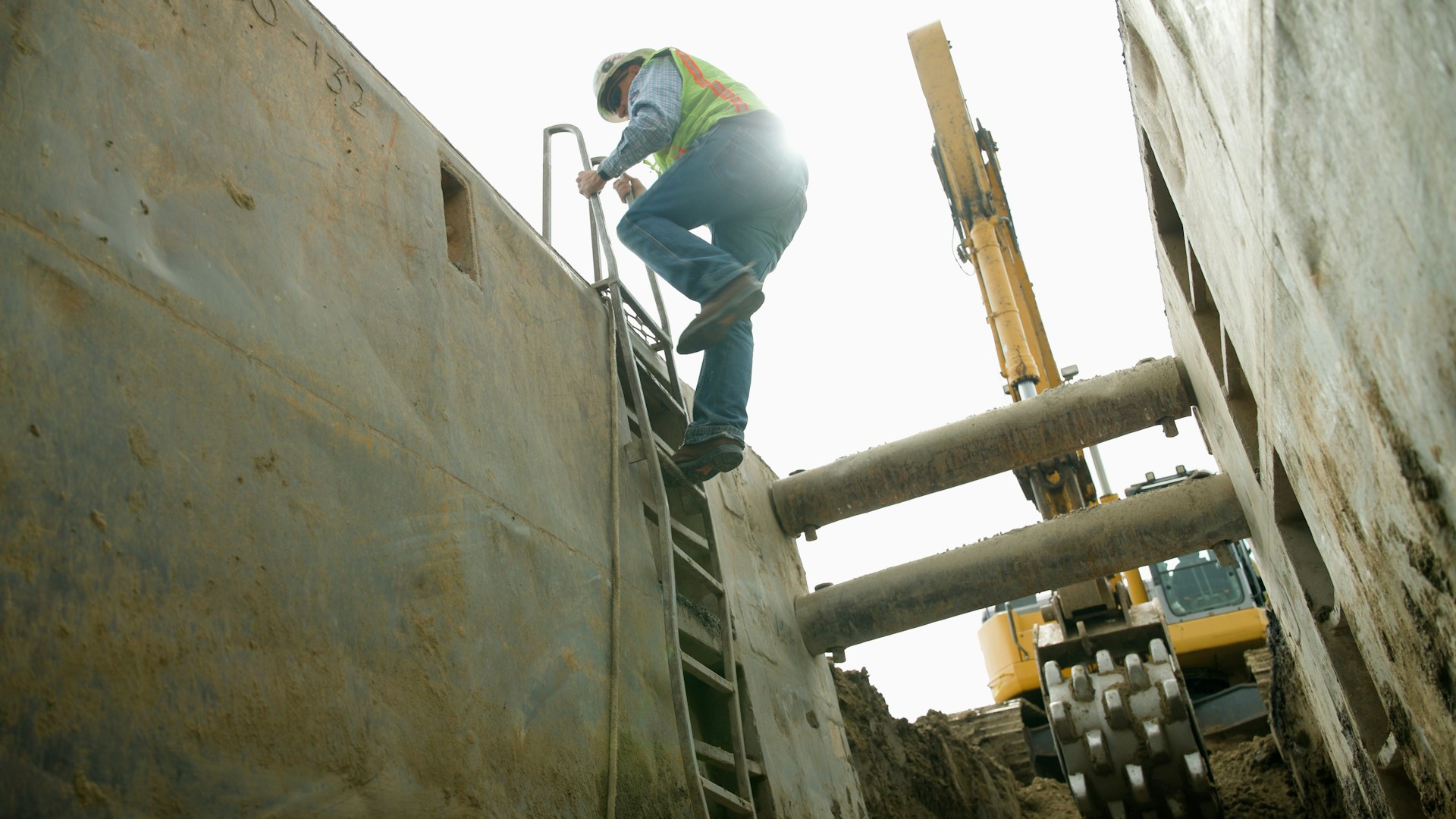
His job this time was narrow. Set a 1,000 gallon drivable septic tank 20 feet off the house, then run an SDR35 line about 75 to 80 feet out to an existing septic field and its D-boxes. After that, his contract was done, since he had already put in the electric.
Two Loads Of Sand Arrive, And He Hopes It Is Enough To Bridge The Mud
The house is up and the owner is finishing the interior, so the goal is simply to make the system work so he can live there. Two loads of sand were on the way, to be dumped at the edge of the soft ground so he would have a spot to lay pipe.
Before digging he cleared away concrete someone had dumped the day before, along with rebar and wire sticking up that could impale the machine or him. Then he laid out the tank. It is 58 inches wide and 8 feet 1 inch long, so he marked an 8 by 10 foot hole to leave about a foot of overdig all around.
His advice is to be careful not to overdig, but to go a little bigger in sand because it caves in. This site was all fill, so he hugged the outside of his line. He also cut the trench for the pipe first, because it is much harder to cut in after the tank is set.
“I Hit That So Hard With My Head, I Dented The Machine”
Next came the math. He set a laser to shoot the bottom of the inlet pipe and gives 3 inches of fall for every 10 feet. The tank is 50 inches from the inlet to the bottom, so he needed the digging to reach 58 inches on the stick, with at least 6 inches of pitch.
The ground fought him the whole way. He hit hard fill, then what he called “gooey mooey” mud, then overburden, stumps and big chunks of shot rock from the quarry. In the rush he whacked his head on the cab hard enough to take skin off the top of it and dent the machine, and he said he thought he had a concussion with numb wrists.
Then, oddly, the bottom turned to good ground. He put some stone in, set a red mark on the pipe as a visual to keep it centered, and set the clean-out. His tip is to glue only the upper section upright first and leave the bottom alone, so if you are out of plumb you can adjust as you go.
The Tank Lands Perfectly Level And The Sand Goes In By The Truckload
Right on cue, the sand arrived and so did the septic tank. It went in perfectly level with a slight pitch in the right direction, which he prefers. He glued the pipe, backfilled with sand and moved on to the run to the D-box.
Ten trucks of sand were due to be blown in down the slope, and he built a rough road so they could dump easily. The ground did not cooperate. He says the machine was sinking and leaning to the left in what felt like a marsh pit, and a fully loaded truck had to be yanked out. “This is just play-doh and trucks were just about going over,” he said.
Because the elevation differed by about 4 feet, he skipped the grade laser and matched slope by eye and feel with the bucket. In sand, he adds, chalk is your best friend because paint will not mark the sand.
A Stump Hiding Right Where The Pipe Was Supposed To Go
Something in the bottom of the trench bothered him, and it turned out to be a stump with a bit of fur sticking up, right under the pipe route. He packed the little trough with sand to give the line a better chance.
He had brought all his fittings in the truck, which paid off when he came up a little short but still made the connection. At the box he used hydraulic cement around the joint, since he says the gaskets are sometimes questionable. “I’ve had them leak,” he said.
He ran a continuous slope, checked it and then backfilled with sand. As the soft ground kept moving, he straddled the trench with the machine and built a road on both sides, laying two feet of sand over the worst section to bridge it.
Downpour, Sliding Tracks And A Wrap Before The Mud Won
The last stretch got dramatic, because the machine started sliding off the hill and he said the ground was moving 4 feet underneath him. With the system installed and the pipe protected, he finished with the skid steer, marked the line with markers for the homeowner and stayed off the fresh trench.
As he finished, the rain came down hard. “Thank the Lord we made it, because if it was raining we would have never got in there,” he said. “For what it was and for what it is, it’s not that bad.”
What Homeowners Can Learn From A Septic Install On Bad Ground
Even if you never run an excavator, his day shows how a septic install works. Tank size sets the hole, the inlet depth sets the dig, and pitch on the line sets whether wastewater flows. He uses 3 inches of fall for every 10 feet.
It also shows why site prep matters. Soft fill and stumps under a pipe are a problem, so he overdug, built the bed with sand and bridged the worst of it.
His other message is about order of work. Cut the trench before the tank goes in, glue the top section first and check plumb, and do not drive over a fresh install for a long time. The owner plans to keep filling the lot, but he is not driving over this line any time soon.
More Stories You May Like
- Portable Generators Are One Of The Leading Causes Of Post Storm Carbon Monoxide Deaths, And Federal Officials Say Never Run One Closer Than 20 Feet From Your House
- Man Mows An Elderly Veteran’s Overgrown Yard To Save Him From A $500 City Fine, Then A Neighbor Asks How The City Is Supposed To Collect And Police Show Up
- Gardener Rips Out Every Blade Of Grass In Her 50 Ft Long Garden, Then Digs Up Her Whole Catmint Border To Replant It With A New Tool That Spared Her Shoulders And Back
Leave a Reply