A load bearing sticker belongs on a beam or a wall, and it is supposed to mean something solid. An inspector on YouTube says he found stickers like that on drywall, and trusses sitting right on top of it.
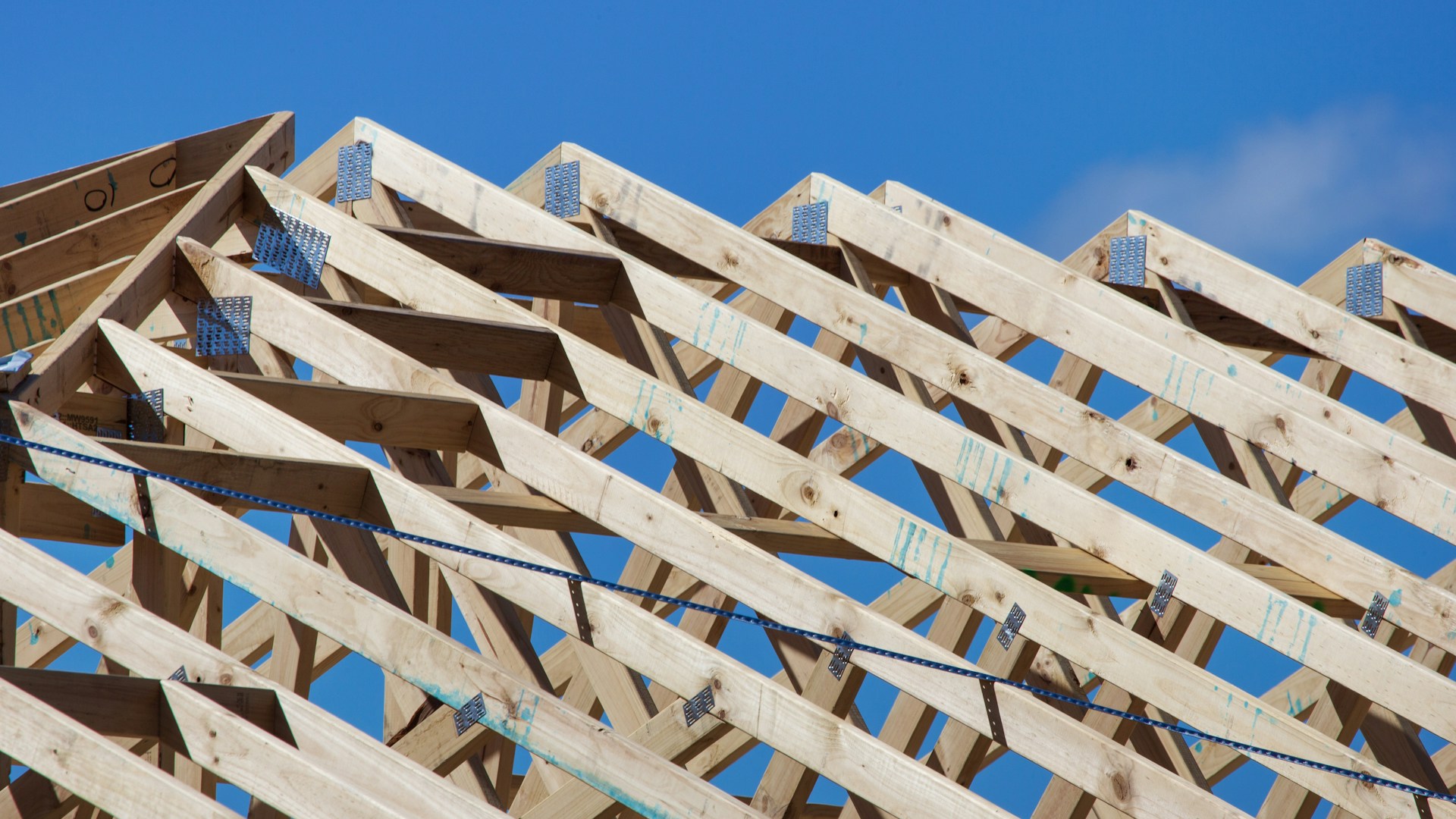
In a video from @CyFy, the inspector says the roof trusses in a new home actually rest on drywall, and that he can pull nails out by hand at the one connector he could reach, because the rest of the attic is closed off to him.
Trusses Resting On Drywall
He asks whether the builder is using more load bearing drywall, pointing to the load bearing stickers. He says the trusses rest on the drywall, which in effect makes the drywall load bearing, and he says he is “starting to get really concerned.”
Drywall is a finish material. It is built to cover walls and ceilings, not to carry the weight of a roof. In a normal build, trusses sit on top plates of framed walls and are tied in with proper connectors.
He adds that an engineer had verified, in his words, that the wrong trusses were being installed in the wrong houses.
Nails That Come Out By Hand
The next point is about connectors. A double shear hanger is a metal bracket designed to hold framing members together, and it relies on the right nails going in the right holes.
The inspector says he could reach only one such hanger, because the rest sit in an attic he says he was not given access to. At the one he could reach, he says, he can pull the nails out by hand.
“I need to go check all those other trusses now,” he says. “And I can’t.” He says the builder would need to check them too, and that they cannot because access has been blocked. “Is that by design?” he asks.
The Gas Leak At The Meter
The video also returns to the outdoors, where the inspector points to a hole around the gas meter. “I can see the gas leak from here,” he says, and he sticks his tester in the hole to show it.
He says a gas crew he calls “one of the good ones” has already verified the leak and will fix it. His advice to homeowners is firm: if you have a gas leak, call it in immediately.
The Inspector Says Realtors Steer Buyers To Friendly Inspectors
The most pointed part of the video is about how buyers find inspectors. He raises the question of why the leak was not caught before closing, and says the buyers used the inspector the realtor recommended. “Notice how they didn’t find the issues I did,” he says.
He says he does not work for realtors or builders and gets no business from them. According to him, all of his business comes from homeowners, who share his information with others, and he says the waiting list is about two years.
He also says that home inspectors are not allowed to compensate realtors for recommendations, and describes seeing inspectors brought before a state board over so called pay to play.
Why Roof Framing Matters So Much
Whatever the dispute behind the video, the structural point deserves attention. A roof is heavy, and it has to withstand snow, wind and years of weather. Trusses are engineered, and each one is designed for a specific span and load.
That is why connectors, bearing points and bracing matter. A truss that rests on the wrong support or is attached with loose nails can sag, shift or fail under stress.
Homeowners cannot judge any of this by looking from the driveway. That is the reason a careful inspection that includes the attic is so valuable.
Your Right To Pick Your Own Inspector
Many states regulate home inspectors, and professional groups such as ASHI and InterNACHI have codes of ethics that discourage conflicts of interest. In a number of states, inspectors are barred from paying referral fees to real estate agents.
You can protect yourself by choosing your own inspector. Look up reviews, ask for sample reports and check the state license if your state requires one. Ask whether the inspector does any work for agents or builders and how they handle conflicts of interest.
It is fine to ask your agent for suggestions, but treat them as one source among several.
Questions To Ask On A New Build
Ask the builder for attic access before closing. A good inspection includes the attic, the crawlspace and the roof, and a refusal to allow access is something to put in writing and take seriously.
Ask for copies of the truss drawings, the engineer’s letters and the building department’s inspection records. Ask who verified that the trusses match the plans for your specific house.
If your inspector flags a structural concern, consider hiring a licensed structural engineer for an independent review. It costs money, but it costs far less than fixing a roof after closing.
The Takeaway
The inspector in the video is making serious claims, and he is making them on camera. Buyers do not have to decide who is right to learn from it.
Hire your own inspector, insist on attic access, ask about the structure and get repairs documented in writing. A home is the largest purchase most families make, and a roof you can trust is worth the extra questions.
More Stories You May Like
- Former Realtor Teams Up With Two Other Realtors To Get Around Client Commission Agreements On Eight Home Sales, Then The Regulator Says He Deleted Emails, Lied To Investigators And Must Pay $627,000
- Couple Pays A Builder $305,033.57 For Their Dream Home, Then Says Some Invoices Were Fraudulent And The Job Was Left Unfinished With Leaks And Mold, And The State Supreme Court Revives Their Lawsuit
- Man Tries To Load His Dishwasher And Finds It Totally Locked Up Showing The Word Sabbath, Then A Woman In The Background Laughs Nonstop And Points Out It Is Not Even The Sabbath
Leave a Reply