Every driveway has one. A low spot where water sits after the rain, soaking in around the edges and slowly working its way under the slab.
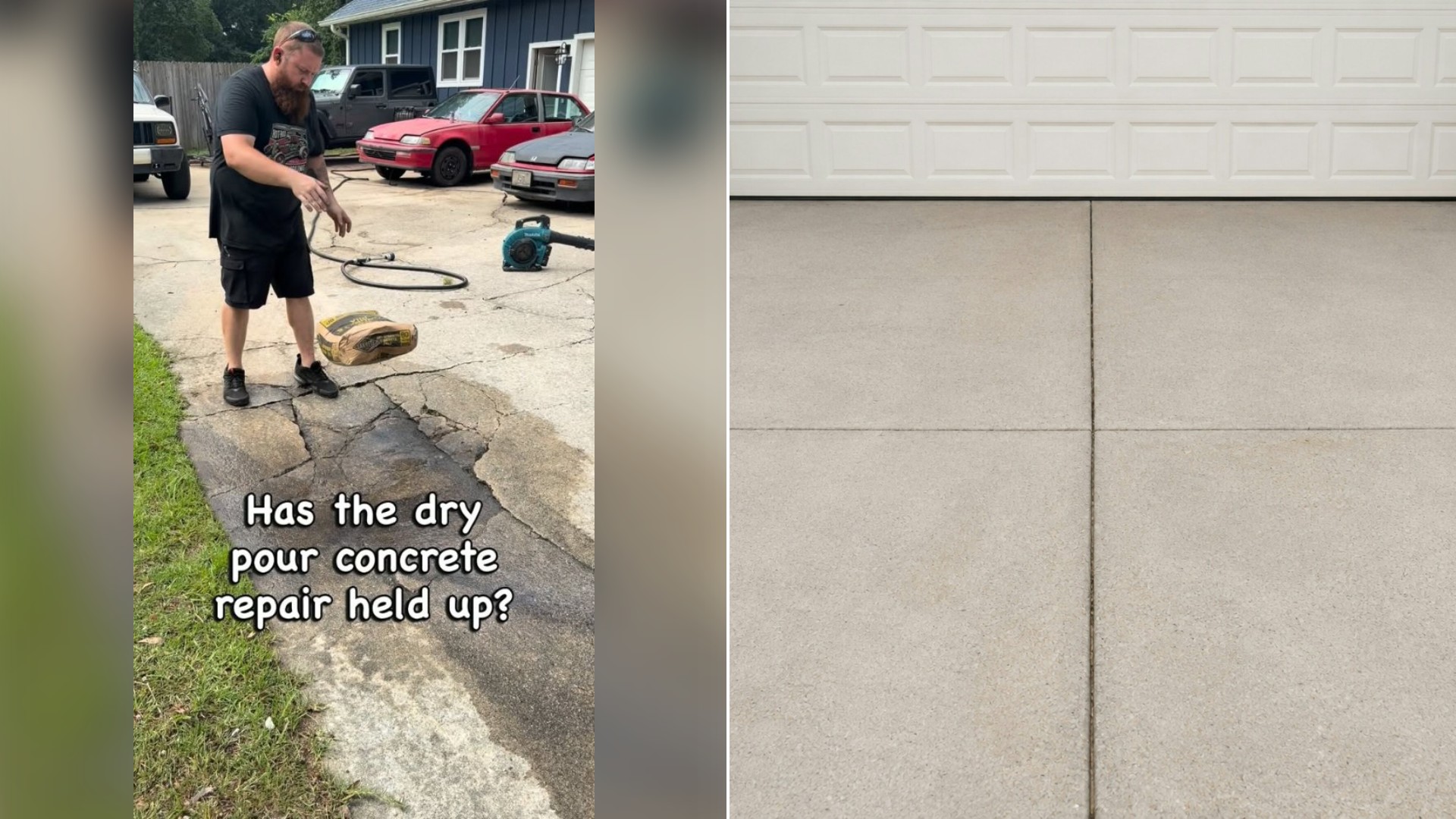
The creator behind @full_steam_designs had one of those. The fix was a dry pour concrete repair, and 14 weeks later the creator reports the patch has not cracked or separated from the old slab.
That last part is the big deal, because patches on old concrete are famous for failing.
View this post on Instagram
A Few Inches Low And Collecting Water
The problem spot sat a few inches lower than the surrounding driveway. Rain pooled there, and the water drained down under the slab.
That is a bad combination. Water that runs under a slab can wash away the soil that supports it, and in cold climates it can freeze and push the concrete around.
Fixing the low spot was about more than looks. It was about stopping water from getting into a place where it could do real harm.
What A Dry Pour Repair Means
A dry pour, sometimes called a dry mix pour, means placing the concrete mix in the hole with very little water added up front. The mix is spread and compacted, and moisture is added afterward from above.
The appeal is control. A drier mix does not slump or run, so it is easier to build up a low area and shape it to the grade you want.
It is a popular trick among do it yourselfers because it does not require a truck, a wheelbarrow of soupy concrete or a rush to finish before the mix sets.
A Different Mix With Bigger Stones
The creator says the usual choice is a regular bagged mix, but this time the repair got a different one with bigger stones in it. Larger aggregate can give a repair more strength and bulk, which matters when you are filling a patch that is a few inches deep.
Concrete is made from cement, sand and stone, and the stone does much of the load-bearing work. A thin layer of fine mix tends to chip and crack at the edges, while a thicker fill with coarse stone holds together better.
The Secret Was Keeping It Wet
The step the creator stresses is moisture. The repair was kept wet while it set, soaked daily.
This is called curing, and it is the part many people skip. Concrete does not simply dry out and harden. It gains strength through a chemical reaction with water, and if it dries too fast, the surface can crack and weaken.
Concrete professionals commonly recommend keeping fresh concrete damp for several days after placing it, and covering it with plastic or wet burlap in hot, dry or windy weather.
Weather is the real judge of any outdoor repair. Rain, sun, freezing nights and the weight of vehicles all push on a patch, and a repair that survives them is likely to keep going.
14 Weeks Later, No Cracks And No Separation
Fourteen weeks is a fair test. It is long enough for weather to move through, for the patch to take traffic and for any weak bond to show itself.
The report is that the repair has not cracked and has not pulled away from the old slab. The seam between new and old concrete is where most patches fail, so a tight bond is the sign of a job done well.
How To Repair A Low Spot In Your Own Driveway
If you want to try something similar, preparation is the key. These steps are commonly advised by concrete suppliers and contractors.
- Clean the area thoroughly. Remove loose pieces, dirt and oil, and sweep it clean.
- Roughen the old surface so the new material has something to grip.
- Dampen the old concrete so it does not pull water out of the patch.
- Place and compact the mix in layers, then shape it to the grade so water drains away.
- Keep it moist for several days, and keep cars off until it has cured.
A patch is only as good as the slope it leaves behind. Aim for a surface that sheds water toward the street or yard so the spot does not collect rain again.
Water management matters as much as the patch. Check that your downspouts and gutters are not dumping water onto the driveway, because even a perfect repair will struggle if runoff keeps pouring across it.
Wear gloves and eye protection when you handle wet concrete, since it is caustic and can burn skin. Rinse splashes off right away with clean water.
Know When To Call A Pro
A single low spot is a fine weekend job. But a slab that has sunk in several places, has wide cracks or is breaking apart may be sitting on soil that is washing out.
In those cases, a contractor can inspect the base and may suggest lifting or replacing the slab. Fixing the surface alone will not solve a problem that begins underneath.
For the single wet spot, though, the creator’s approach is a good reminder. Use the right mix, take your time with the prep and keep the concrete damp. Do those three things and your patch has a real shot at lasting.
More Stories You May Like
- Pool Customers Paid About $117,545 For Repairs That Investigators Say Were Left Largely Incomplete, Some Later Got Repayments Of Just $25 To $50, And The Owner Pleads Not Guilty To Eight Felony Grand Theft Charges
- Tenants Keep Paying Rent While Their Landlord Racks Up More Than $1 Million In Unpaid Water Bills At Five Buildings, And One Renter Asks ‘So Where Is That Money Going?’
- Homeowner Faces A $6,400 Escrow Shortage That Would Push Her Mortgage From $2,400 To $3,200, So She Calls The Lender And Drops It To $1,600
Leave a Reply