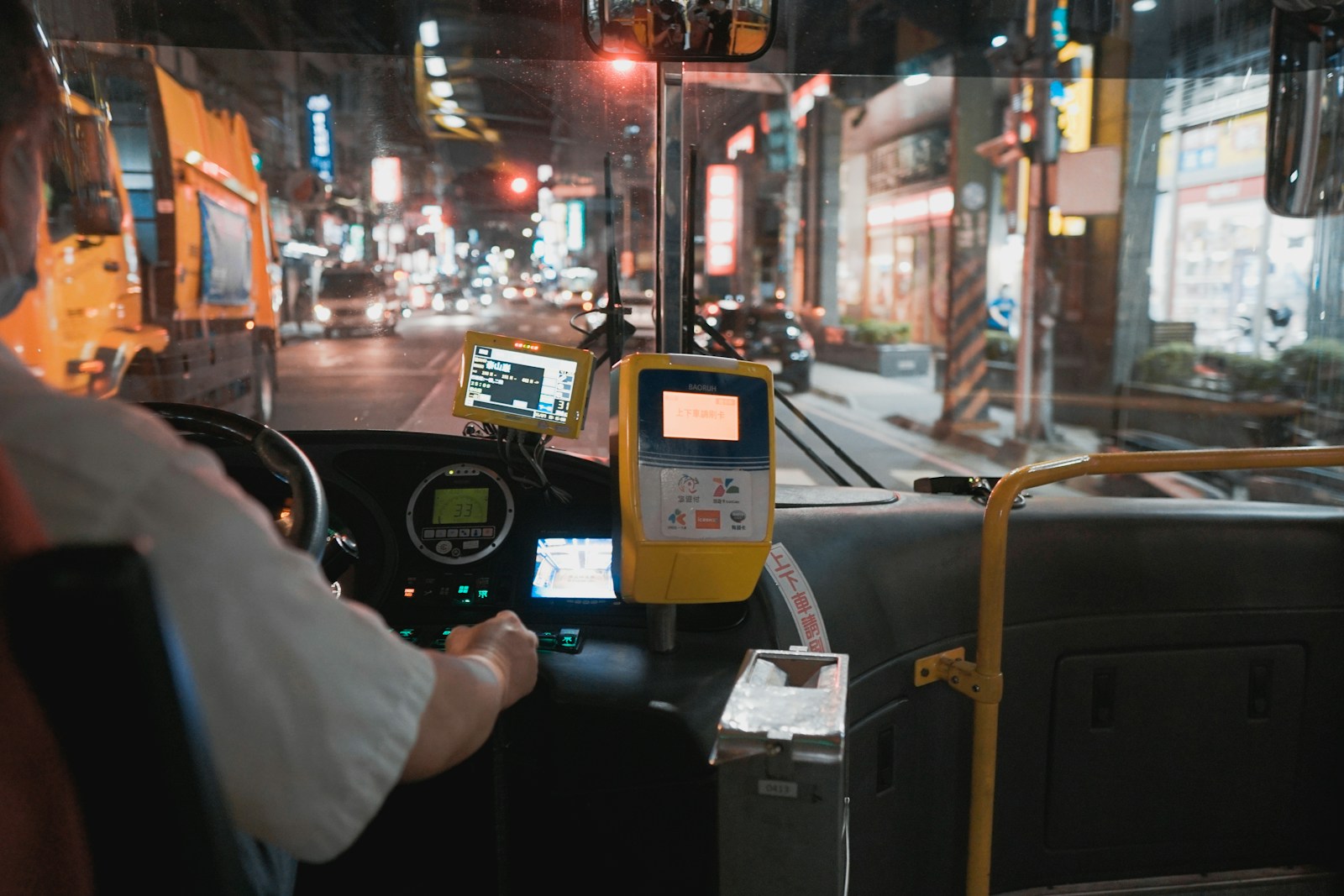
A school bus driver says a split-second decision to respond to what looked like a child’s plea for help ended with a damaged bus, a humiliating police encounter, and the crushing feeling that he may have done the right thing for all the wrong reasons. The driver explained that he was in town when he stopped to let an older woman and a young girl cross the street. As they crossed in front of him, he said the girl looked directly into his eyes and repeatedly made the hand gesture often associated online with someone silently asking for help.

According to the driver, the moment threw him into panic. He said there was a parallel parking spot just behind him, so he reversed, tried to pull over, and hit a street lantern in the process. He then got out, went after the pair, and called police. But instead of finding confirmation that something was wrong, he said officers spoke with the older woman, accepted her explanation that the girl had simply been waving to a friend across the street, and told him everything appeared fine. The problem, he wrote, was that there had been no friend there at all, and the girl had been looking directly at him the entire time.
That is what seemed to haunt him most. He did not come away feeling reassured. He came away feeling dismissed. In the post, he said police never even spoke directly to the girl, which left him convinced that the most important person in the situation had effectively been ignored. Instead, he said, the woman made him look like a “psycho” who wrecked his bus over nothing, while officers thanked him for the awareness but took no further action. By the end of the encounter, he was left dealing not only with self-doubt, but also with an angry boss upset about the damage to the vehicle.
The driver later added more context after some readers assumed he had been operating a large American-style school bus full of children. He clarified that this happened in a European country, that he was driving a much smaller nine-seat bus commonly used for that kind of work, and that there were no children inside at the time. He also said he reversed very slowly and that the street lantern was so sturdy it was barely affected, while the actual damage to the vehicle was limited to a small dent and a broken glass panel that was fixed the next morning. Even so, he said his boss remained angry, and the emotional aftermath clearly lingered longer than the physical damage.
What made the story resonate online was not the crash itself, but the moral weight behind it. The driver did not write like someone fishing for praise. He sounded shaken, embarrassed, and unsure whether he had just blown up his day over a misunderstanding. But many commenters saw the situation differently. The top reply argued that it is far better to act and be wrong than to do nothing and later find out a child was truly in danger. That commenter pointed out that the alternative could have been sitting at home that night and seeing the girl’s face on the news, a possibility that many readers agreed would have been far harder to live with.
Others focused on the most troubling part of the story: that no one in authority seemed especially interested in asking the child what she meant. One of the strongest replies pointed out that there was no guarantee the driver was wrong because police never took the girl aside and spoke with her separately. Another commenter said it was astonishing how often children are not treated like full people in situations where their own safety may be at stake. That line of discussion shifted the thread from one man’s embarrassment into something broader and darker: the possibility that even when adults do notice warning signs, systems still fail if no one bothers to ask the child directly.
Several commenters urged the driver not to stop there. One person suggested contacting child protective services or the relevant local equivalent, using the exact location, date, and time of the incident so authorities could trace the police interaction and identify the woman and child from that report. The driver replied that this had happened in central Europe and that police had taken their information before ending the matter. Other users encouraged him to keep pushing if possible, both because it might help the child and because it might help him feel calmer knowing he had done everything he reasonably could.
The thread also drew responses from people who had been on the other side of similar situations. One commenter described being mistakenly reported while out with a younger adopted sister and said that although the experience was upsetting, they would still rather someone call if a child really might be in danger. Another person who said they had been abused as a child offered perhaps the most emotional response of all. They wrote that even if the girl was not rescued that day, the fact that someone noticed and reacted could still matter deeply. In their view, a child in trouble seeing an adult respond to a silent help signal might come away feeling seen, believed, and more likely to ask for help again.
That may be why the post hit so hard. It was not a story about a hero saving the day, or even about a clear outcome. It was about acting on instinct in a moment where doing nothing felt unbearable, and then being left with uncertainty afterward. The driver did not get the reassurance he wanted from police. He did not get gratitude from his boss. He got a dented bus, a broken window, and a sick feeling that he might have made a fool of himself. But to a lot of readers, that was not really the point. The point was that when a child appears to ask for help, the shame of overreacting is still easier to carry than the risk of ignoring it.
In the end, the Reddit thread became less about whether the driver misread the gesture and more about what kind of world people want to live in. One where adults notice, act, and risk looking foolish? Or one where everyone minds their business until it is too late? The driver may have walked away feeling like an idiot, but online, many people thought he looked like something else entirely: the only adult in the situation who took the possibility seriously.
More from Willow and Hearth:
Leave a Reply