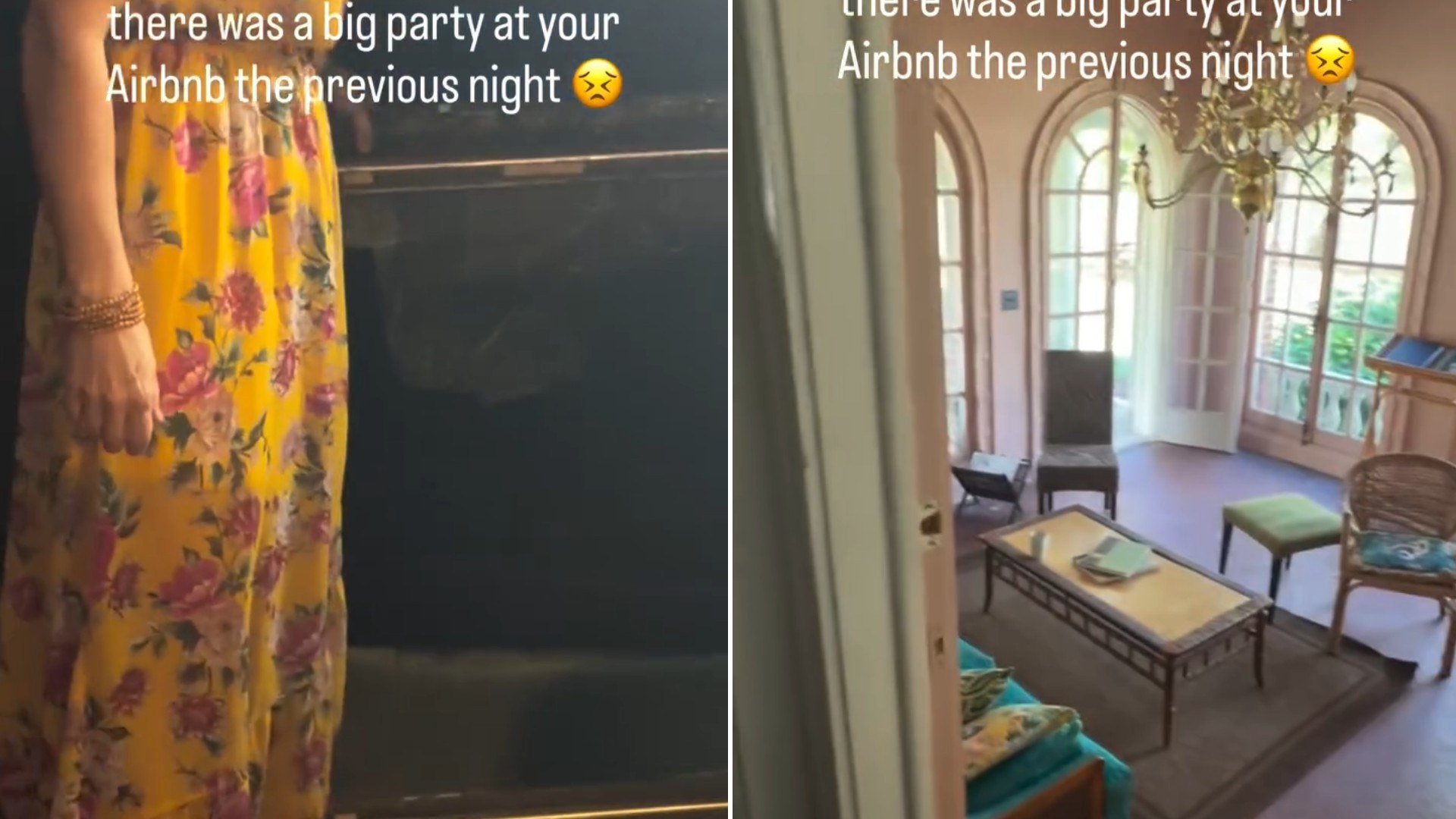
Finding out about a problem secondhand is never a great way to start an investigation, and that’s exactly how this story begins. A neighbor tipped her off, not a guest, not a booking platform notification, a neighbor, that something had gone seriously wrong at her Airbnb property while she wasn’t there to see it happen. What follows in the video is her own walkthrough of the aftermath, room by room, narrating each new discovery as she pieces together what had actually taken place during a stay she’d approved for what she thought were a small, quiet group of guests.
The tone throughout is measured rather than explosive, closer to an investigator methodically documenting a scene than someone venting online for sympathy. Each room reveals something new, and she talks through it as she goes, connecting the physical evidence in front of her to the story that’s slowly emerging: an unauthorized party had happened in her property, entirely without her knowledge, and she only learned about it because someone living nearby happened to notice and say something.
Short-term rental hosting has always carried an inherent tension between trust and control, and this video captures that tension about as clearly as any single clip could. As @nicolestults demonstrates by walking through her own property discovering the damage in real time, a host can screen guests carefully, set clear rules in a listing, and still end up entirely blindsided by what actually happens once the door closes and the property is out of their direct line of sight.
View this post on Instagram
Unauthorized parties remain one of the most persistent headaches in the short-term rental industry, and platforms have responded over the years with an evolving mix of policies, including occupancy verification tools, party-detection technology in some markets, and stricter guest screening for certain listing types. Even with those tools in place, enforcement still often depends heavily on outside tips, exactly like the neighbor who alerted this host, since a host who isn’t physically present has limited ways of knowing in real time what’s actually happening inside their own property.
For hosts hoping to reduce the odds of a similar discovery, a combination of preventative and reactive measures tends to work best. Clearly stating occupancy limits and no-party policies in a listing description is a reasonable first step, though policy alone rarely stops anyone determined to break the rules. Noise monitoring devices that track decibel levels without recording audio or video have become a popular middle-ground solution, giving hosts a way to detect unusually loud, party-like activity and intervene while it’s still happening rather than finding out only after the fact. Building a relationship with neighbors near a rental property, sharing contact information and asking them to flag anything unusual, can also function as an informal but genuinely effective early warning system, exactly the role this particular neighbor ended up playing.
When damage does happen despite precautions, documentation becomes the host’s strongest tool for recovering costs. Thorough move-in photos and videos, kept on file for every turnover, create the baseline needed to prove what condition a property was in before a problematic stay, making it far easier to pursue a damage claim through a platform’s host protection program or a security deposit, where applicable. Reporting the incident promptly, along with time-stamped photo and video evidence exactly like the walkthrough captured in this clip, significantly improves the odds of a successful resolution compared to reports filed days or weeks after the fact once details have faded and evidence has been cleaned up or discarded.
Beyond the practical logistics of the cleanup and claims process, there’s a genuine emotional toll to discovering a violation of trust in a space someone has invested time and money into maintaining. Hosting, especially for people managing a single property rather than a large portfolio, often carries a personal stake that goes beyond simple business economics. What this video ultimately shows, beyond a cautionary tale for other hosts, is the value of community and vigilance working together, a neighbor’s willingness to say something turning an unauthorized party from an undiscovered loss into a documented, addressable problem.
Videos like this one have also, somewhat unexpectedly, become part of the broader conversation between hosts and the communities surrounding short-term rentals, many of whom have their own concerns about noise, parking, and safety tied to properties operating near their homes. A host publicly acknowledging that a neighbor’s tip was the reason a problem got caught at all sends a quiet but meaningful signal that hosts and neighbors aren’t necessarily at odds, and that the relationship, when nurtured rather than ignored, can genuinely benefit both sides when something does go wrong behind closed doors.
There’s also a useful reminder here for anyone renting their own home out occasionally, even informally, rather than running it as a full-scale hosting business. The assumption that a small number of trusted guests couldn’t possibly cause this kind of damage is exactly the assumption that tends to get tested the hardest, and building in even a modest layer of oversight, whether that’s a check-in call, a noise monitor, or simply a friendly relationship with the people next door, tends to pay for itself many times over compared to the cost and stress of discovering a problem only after it’s already happened.
Leave a Reply