An empty apartment with exposed ductwork, concrete-look finishes, and bare walls can feel more like an unfinished warehouse than a home, which is exactly the challenge creator @natehome tackles in his latest before-and-after. The reel opens on that cold, industrial shell and ends on a fully furnished, warmly styled space that barely resembles where it started.
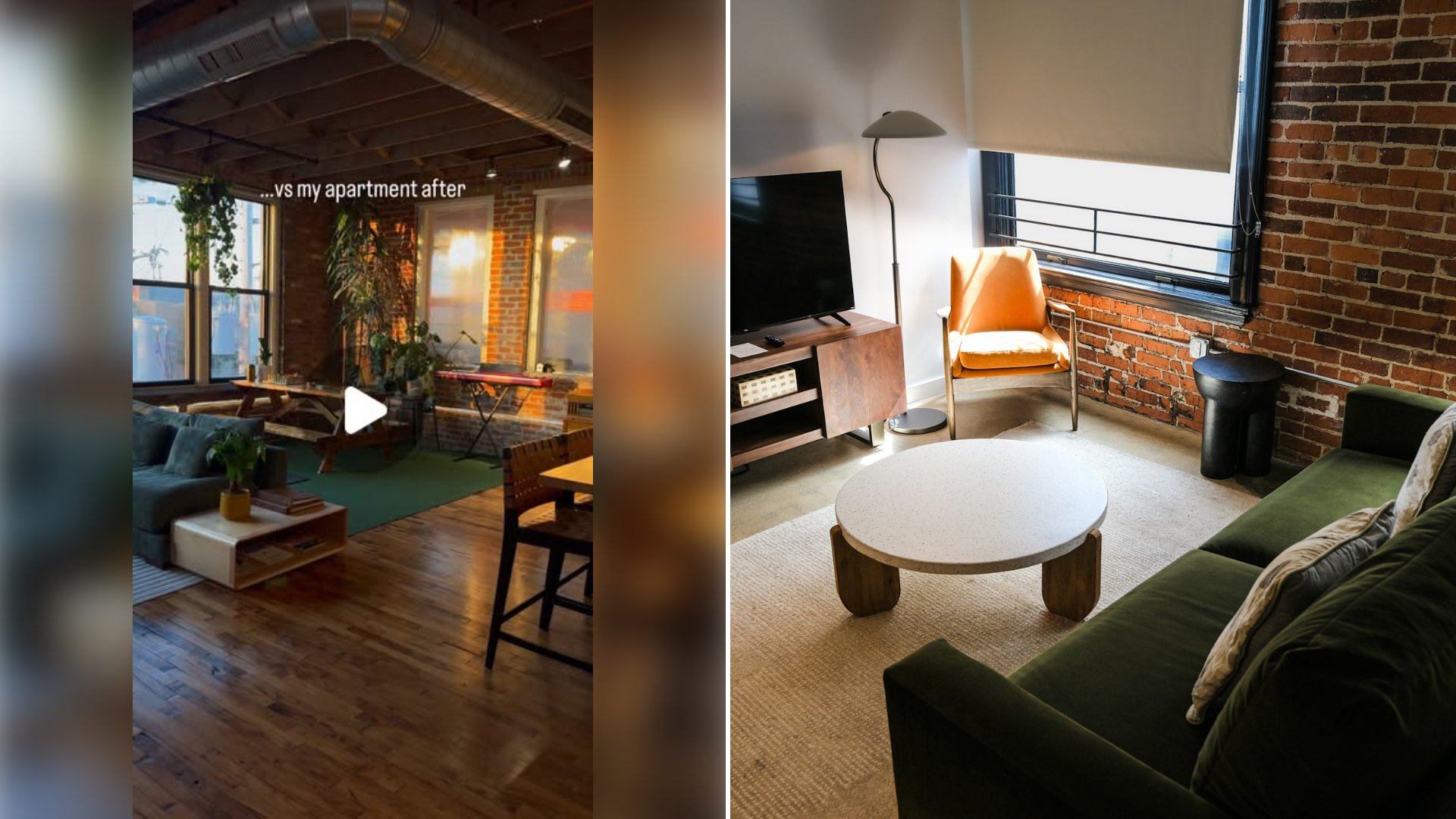
Nothing structural changes between the two states shown in the video. The exposed beams, concrete, and hard industrial lines that defined the empty apartment are all still there in the after shot. What changes is everything layered on top: furniture placement, textiles, lighting, and the kind of styling choices that soften hard architectural surfaces without hiding them. It is a reminder that an industrial shell and a cozy home are not opposites, just different stages of the same room.
This kind of transformation resonates strongly with renters and first-time apartment dwellers, who are far more likely to inherit an industrial-style loft or converted warehouse unit than to design one from scratch. Unlike a full renovation, nothing here required construction, a landlord’s permission, or a security deposit risk, just furniture, textiles, and lighting decisions that are entirely within a renter’s control.
Budget tips for warming up a large industrial loft
Layered lighting is consistently cited by interior designers as the single most effective low-cost fix for a cold industrial space. A single overhead fixture, common in converted lofts, tends to flatten a room and emphasize hard surfaces like concrete and exposed metal. Adding several lower, warmer light sources, floor lamps, table lamps, and warm-temperature bulbs in particular, breaks up that flat overhead glare and creates the kind of pooled, ambient light associated with a cozy living space, usually for a modest investment in a handful of lamps and bulbs.
Textiles do similar work for sound and texture. Large area rugs placed under seating areas soften hard flooring both visually and acoustically, since industrial spaces with concrete floors and high ceilings tend to have more echo than a standard apartment. Layered throw blankets, textured pillows, and curtains, even purely decorative ones hung over a window that does not need them for privacy, all add soft surfaces that counteract the hard, reflective materials industrial lofts are built with.
Furniture scale matters more in a large industrial unit than in a standard apartment. High ceilings and open floor plans can swallow furniture that would look appropriately sized in a conventional room, which is why designers working in loft spaces often recommend oversized sofas, tall bookshelves, and large-scale art rather than a collection of smaller pieces that can read as sparse and disconnected in a big volume of space. Grouping furniture into defined zones, rather than pushing everything against the walls, also helps a large open room feel like several intentional living areas instead of one echoing box.
More from Willow and Hearth
- Man Shows One Month in His New Home by Building a Bed Frame, Stocking a Burgundy Wardrobe, Assembling Oak Storage in a Green Tiled Bathroom and Ending in the Living Room
- Couple Turns an Empty High Ceiling Loft Into Their Home With a Gallery Wall, Plants and a Purple Lit Living Area in a 13 Second Reel That Starts With Let’s Move In Together
- Homebuyers Announce They Are Officially Homeowners as a Man Carries a Woman Through a Kitchen Full of Silver Balloons and She Holds Up the Keys While Two Men in Suits Dance In
Leave a Reply