A countertop that looks freshly poured and polished turns out, by the end of the video, to be the result of a do-it-yourself finish rather than a professional stone install. The project comes from @thehandyhalf, Sara Mathis, who has built a sizable following around budget-friendly DIY home renovation, and part of what she calls “custom on a budget” content. According to the creator, a professional quote for new countertops came in at several thousand dollars, and her video walks through the countertop refinishing alternative she used instead to get a similar look for a small fraction of that cost.
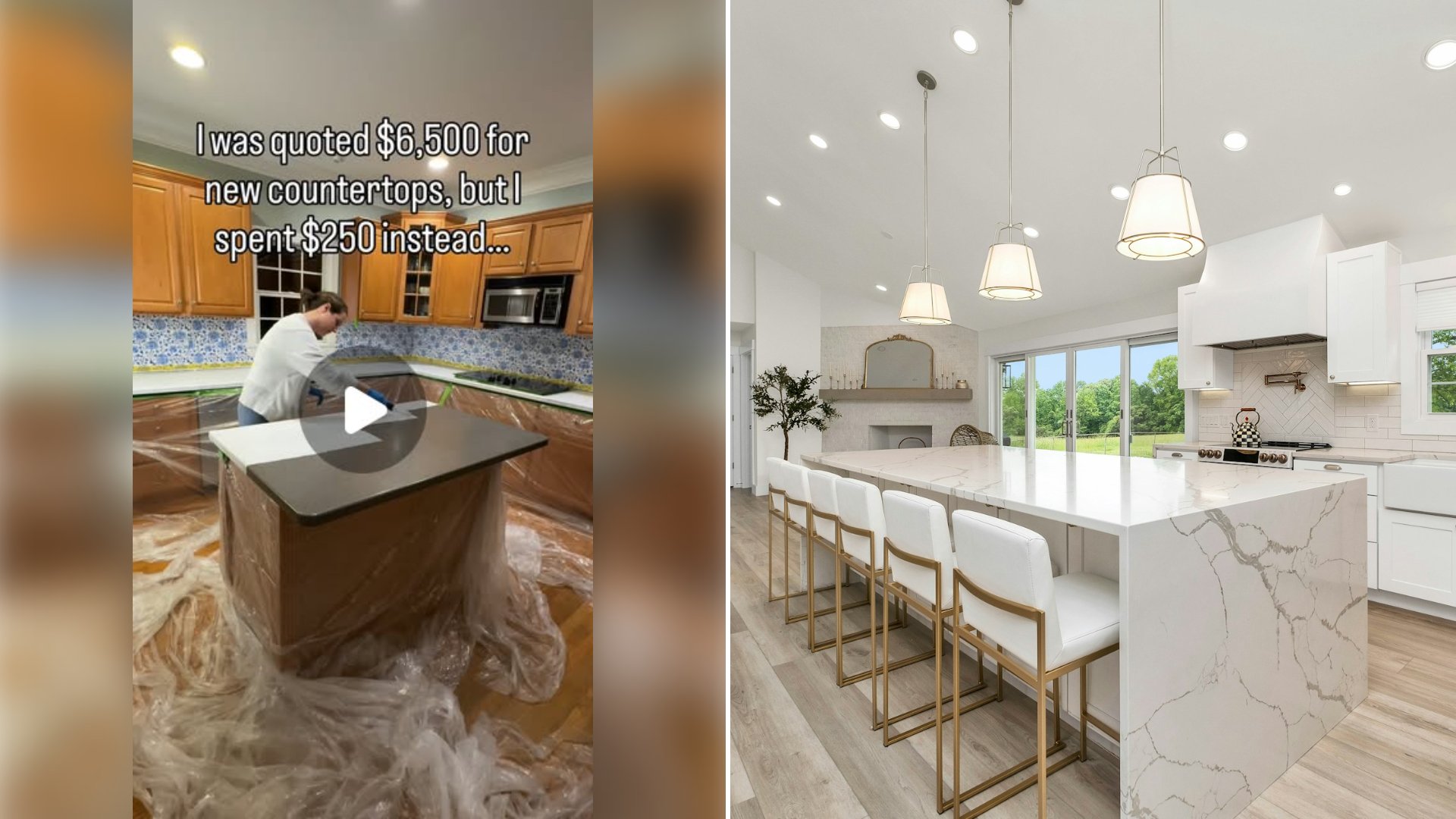
The video fits a recurring theme across her account, summed up in one caption as, “if my bank account says no, my brain will find a way.” Rather than treating a high contractor quote as the final word, the series consistently looks for a lower-cost workaround that gets close to the same finished look.
The gap between a professional quote and a DIY result is rarely a coincidence. Countertop refinishing and DIY epoxy overlay kits, which coat existing countertops rather than replacing them, typically cost somewhere between $100 and $300 for an average kitchen, depending on square footage and kit brand. Professional quartz or granite installation, by contrast, frequently runs from roughly $50 to $150 per square foot installed once materials, fabrication and labor are factored in, which is where quotes stretching into the thousands of dollars tend to come from on an average-sized kitchen.
That price gap comes with real tradeoffs, and durability is the biggest one. Natural stone and engineered quartz countertops are built to withstand decades of daily cooking, heat, and scratching with minimal maintenance, and most come with long manufacturer warranties. DIY epoxy and overlay finishes, while visually convincing in photos and video, are a surface coating rather than a structural material, and they’re generally more vulnerable to scratching, chipping at the edges, and heat damage from hot pans set directly on the surface. Most DIY refinishing products are realistically expected to look their best for a few years before needing a touch-up or a full redo, rather than the decades typically expected from solid stone.
That doesn’t necessarily make the DIY route a bad decision, especially for a starter home, a rental, or a kitchen a homeowner knows they’ll eventually replace anyway. For homeowners planning to sell within a few years, or those simply trying to make a dated kitchen look fresh without taking on a major renovation loan, a refinishing kit can buy time and a meaningfully better look for a fraction of the investment, as long as the limitations are understood going in rather than discovered later.
Preparation tends to matter more than the product itself with these kits. Most manufacturers call for thorough cleaning and degreasing, light sanding to help the coating adhere, and careful taping around sinks, faucets and backsplashes before application, with multiple coats applied in stages and cure times that can stretch from a full day to several days before the surface is ready for normal use. Skipping those steps is the most common reason a DIY countertop project doesn’t hold up as well as the finished video makes it look.
For now, the video stands as one more entry in a genre that keeps growing: homeowners sharing the exact dollar gap between what a contractor quoted and what they managed on their own, with the DIY result usually looking close enough in photos that the difference only becomes obvious up close.
More from Willow and Hearth
- Homeowner Quoted $18k by a Contractor for a Dining Nook Answers No Thanks I Got It and Builds the Bench, Cushions, Table and Hanging Plants in Five Steps
- Homeowner Who Bought a House Knowing the Bathroom Was Dated Fixes Cracked Yellow Tile With Crayons and a Hair Dryer and Plans Cartoonish Pink Stripes
- Homeowners Pull Kitchen Cabinets Out of the Middle of the Room, Build IKEA Cabinets, Flip the Doors on a Fridge and Rework the Window Over the Counter
Leave a Reply