Walk through enough houses and you will spot it: an outlet installed upside down, with the ground hole on top and the two slots below it. It looks wrong, and a lot of homeowners wonder if the electrician made a mistake. Electrician @oliviasaad3 says there is a quick way to fix it, and she promises it takes two seconds once the cover is off.
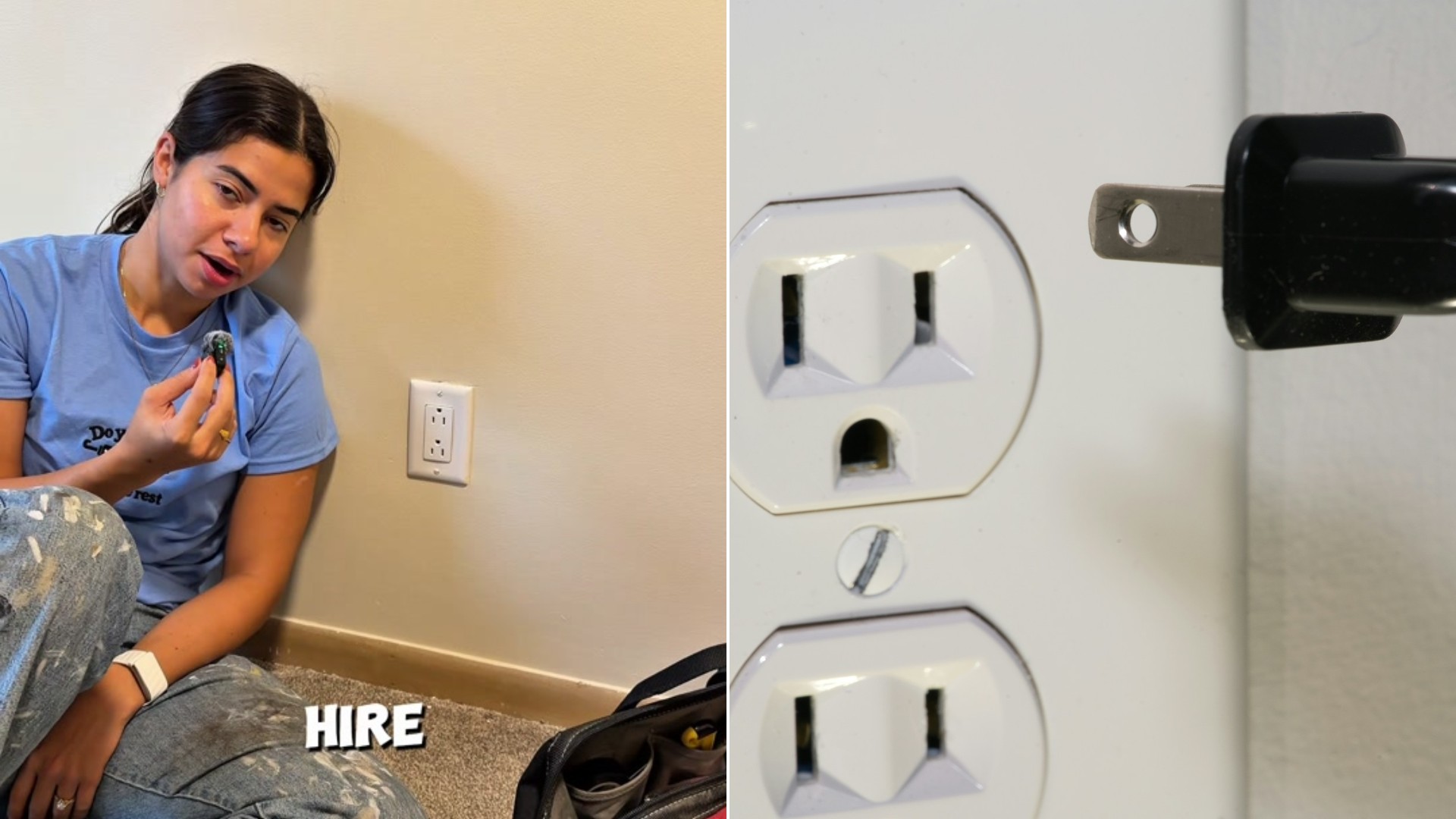
Her video, shared under the tag “in case your dad didn’t teach you,” walks through the job step by step. Here is what she shows, plus what to keep in mind before you pick up a screwdriver.
@oliviasaad3
Is An Upside Down Outlet A Secret Switch Signal?
She opens by heading off an argument she expects in the comments. She says there is an unspoken rule, whether it is code or just practice, that an outlet is sometimes installed upside down to tell you a wall switch controls it.
In her telling, that is not what happened here. She says the contractor simply got it wrong, and she shows how to flip the outlet the right way.
“Before You Touch Anything Electrical, What Do You Do?”
Step one is the part she repeats with a straight face: turn off the breaker. As she puts it, “Before you touch anything electrical, what do you do? Turn your breaker off.” She jokes that one of these days she will skip the reminder and leave it to viewers to figure out, then warns that if you do not shut the power off, “you’re going to find out.”
With the power off, she uses a flathead screwdriver to take off the cover plate. Two screws hold the outlet to the box, and she says to unscrew them. Then you carefully grab the outlet and pull it out of the wall.
The Wiring Check That Cuts The Job In Half
Before you flip anything, she says to check the wiring. Her rule is simple enough to memorize: black wires to brass, white wires to silver. She tells viewers to write it in a notebook, or “tattoo it on your forehead if you need to.”
If the wiring looks correct, she says, congratulations, because you just cut the job in half. All that is left is to turn the outlet around.
Spin It Gently, Then Tighten Everything Down
To turn it, you carefully spin the outlet so the wires twist with it. She cautions against kinking or cutting any wires. Wires are malleable and can be moved, she explains, but bending them back and forth too many times will break them, and that can lead to a house fire.
Then she puts the screws back in. Her advice is to make them tight, because a loose outlet will wiggle in the wall. Last comes the cover plate, which she says needs no explanation.
Her sign-off: “As always, good luck on your next project.”
A Few Things To Know Before You Try This
Her demonstration is short, but a few extra points are worth knowing, and none of them change what she says.
First, a quick refresher on the colors. On a standard household outlet, the black wire is the hot one that carries power in, and the white wire is the neutral that carries it back. That is why black goes to the brass screw and white goes to the silver one. A bare copper or green wire is the ground, and it attaches to the green screw.
Second, turning off the breaker is only the first half of safety. Many electricians confirm the power is really off with a non-contact voltage tester before touching the wires. Those testers are inexpensive and sold at hardware stores. Test the outlet, test the box, and only then reach in.
Third, if you open the box and the wiring does not look right, stop. Burn marks, loose connections, aluminum wiring or a tangle of wires you cannot sort out are signs to call a licensed electrician. Her video says the wiring check cuts the job in half, and when the wiring is wrong, the job is no longer a two-second fix.
Fourth, be careful with the wire itself. If an old wire looks stiff, cracked or overly bent, leave it to a professional rather than twisting it further.
Why Orientation Even Matters
You will hear different opinions about which way an outlet should face. Some electricians like the ground hole up. Others install it with the ground hole down. In many homes it is a matter of preference, and local rules differ. If you are curious which way your area expects outlets to face, your local building department can tell you.
What matters most is that the outlet is wired correctly, firmly secured and sitting flush with the wall plate. A crooked or wobbling outlet can pull on the wires behind it, and that is exactly why she says to tighten those screws.
The Takeaway
It is easy to feel helpless when a contractor leaves something looking off. This video shows that a simple cosmetic fix can sometimes be done in minutes with a flathead screwdriver, a steady hand and a healthy respect for the breaker.
The routine is short: breaker off, cover off, outlet out, check black to brass and white to silver, spin gently, screws tight, cover on. Follow it, and know when to call in the pro.
More Stories You May Like
- 12 Things You Should Never Do To Your Outlets And Extension Cords
- HVAC Tech Says Check The Thermostat Batteries, A Water Filled Pan Under The Furnace And A Dirty Filter Before You Pay For A Service Call, Because It May Be A Frozen Drain
- No Water Pressure In A 1971 Doublewide Gets Worse When A Metal Piece Snaps Off, So The Owner Heads To Lowe’s For SharkBite Fittings To Rebuild The Pipes Around The Water Filter
Leave a Reply