If you have ever opened up a junction box and thought the wiring looked good enough, a working electrician has a few things to tell you. In a short bench demonstration on the Starving Electrician channel, he goes through the common mistakes DIYers make, and a surprising number of professionals too. He says he has seen every one of them, and he adds that he was not paid to make the video.
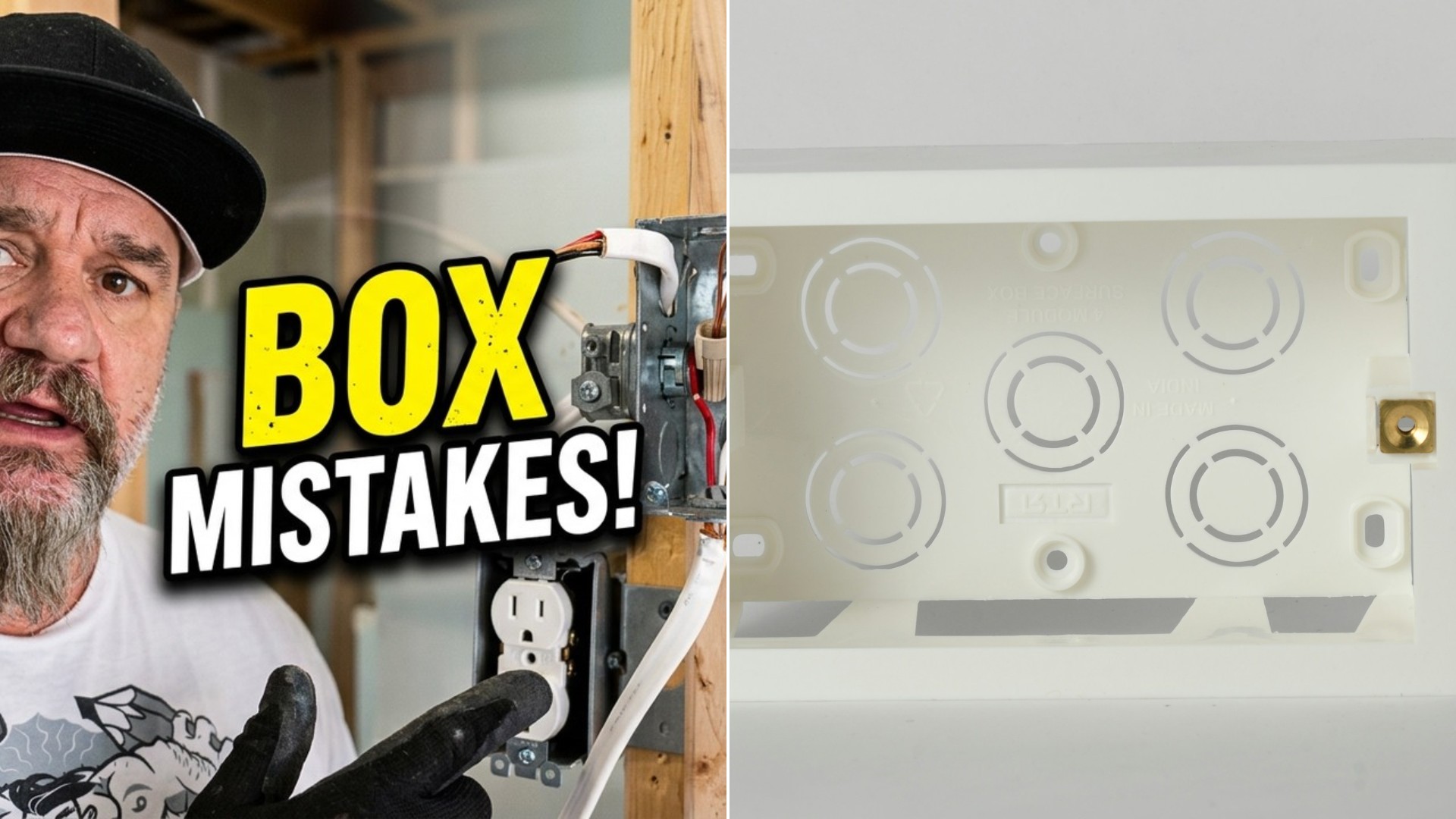
His lesson fits on a single box and a handful of connectors. Two mistakes top his list: wrapping Romex around the ground screw, and tying 14 gauge wire into a 20 amp circuit. Both are easy to commit and both can cause trouble down the line.
Mistake one: the ground screw
The first problem he points to is a Romex cable that has been wrapped around a screw inside the box, with the metal cover screwed on and the job called done. He explains that if the box happens to be grounded, that may seem fine, but it is not the legal way to do it. The proper method uses the small bump-out in the box and a dedicated green ground screw.
He says a regular screw would work if you colored it green with a marker, because the point is identification. Anyone who opens the box later should be able to see right away which screw is the ground. His advice is to take the bare grounds and pigtail them together, then connect them to the green screw. He says he learned the hard way, getting shot down in the trade long ago for wrapping a wire around that screw.
Mistake two: 14 gauge wire on a 20 amp circuit
The second mistake involves a yellow cable, which he points out is always identified as number 12 wire, used for a 20 amp circuit. Following it around the box, he finds it tied into a piece of 14-2 Romex. Many people jump off a 20 amp circuit with the smaller 15 amp wire, and he says that is a mistake.
His reasoning is that the breaker is supposed to trip before the wire burns, never the other way around. A smaller wire on a larger breaker may never trip, and an appliance running on that circuit could heat the thinner wire. So his rule is firm: never tie 14 gauge wire in with 12 gauge just because it is the only thing lying around, and if you are feeding something, feed it with the right wire. If you have a 20 amp circuit, he says, keep it with 20 amp wire.
Leave your wire long enough
On the same box, he notices a three-wire cable that has simply been capped with a wire nut. He says you never know when you will need that wire again, so leave it a little longer. It is a small habit, he says, but it is the sort of common little thing people do.
A tour of the connectors
Much of the video is a lesson in picking the proper connector for the cable you have. He holds up several and explains what each is for.
- A common clamp connector works well, but it has a flaw: if you push anything bigger than a 14-2 cable through it, the cable can pull back out and never really holds.
- An MC connector, sometimes called a double barrel, is made for MC cable, not Romex. The clamps may seem to hold, but they do not clamp all the way and the cable can pull out.
- A two-screw clamp connector is the proper choice for Romex. He says you can put one to two wires in it, which matters when a panel has a thousand knockouts to fill.
- A compression connector, the watertight kind that keeps moisture and condensation out of the pipe, is meant for EMT or conduit, and Romex does not belong in it.
- A connector with a big opening on the inside is an MC connector and needs an MC bushing, even if it looks like a Romex connector at first glance.
Using no connector at all, simply pushing the cable through the hole, is a no-go in his book. He warns that if someone tugs on the wire later, it can pull out of the box far enough for the hot conductor to touch the metal, creating a short that is a headache to track down.
What homeowners should take away
His summary is simple. Always use the proper connector to hold Romex in place. Always use the ground screw. Match the wire to the circuit. Finish with a properly fitting blank cover over the top of the box. He calls it quick and easy stuff, and the kind of basics that keep a project safe.
A few general reminders go along with his advice. In the United States, 14 gauge copper wire is typically used on 15 amp circuits and 12 gauge on 20 amp circuits, and you can read the gauge printed on the cable jacket before you buy. Local codes and permit rules vary, so check yours before you start, and turn off the breaker and test that wires are dead before touching them. If you are unsure about any step, hiring a licensed electrician is a smart investment that can protect your home and your family.
More Stories You May Like
- Smoke And Carbon Monoxide Alarms Wear Out Around The 10 Year Mark According To Manufacturer Guidance So Check The Date On Yours Tonight
- Couple With Kids Says Their Neighbor Mows at Night Keeps Eight or Nine Junk Cars in the Driveway and Has a Paved Area That a New Survey Puts on Their Land
- HOA Fines And Special Assessments Can Blindside New Owners So Read The CC&Rs And Resale Certificate Before You Buy Into The Neighborhood
Leave a Reply