You are about to spend serious money on new floors, and the quote in your hand looks fair. Flooring pro @FlooringInsights1.0 says there is a line item that may be missing from it, and that missing line is the reason so many new floors fall apart.
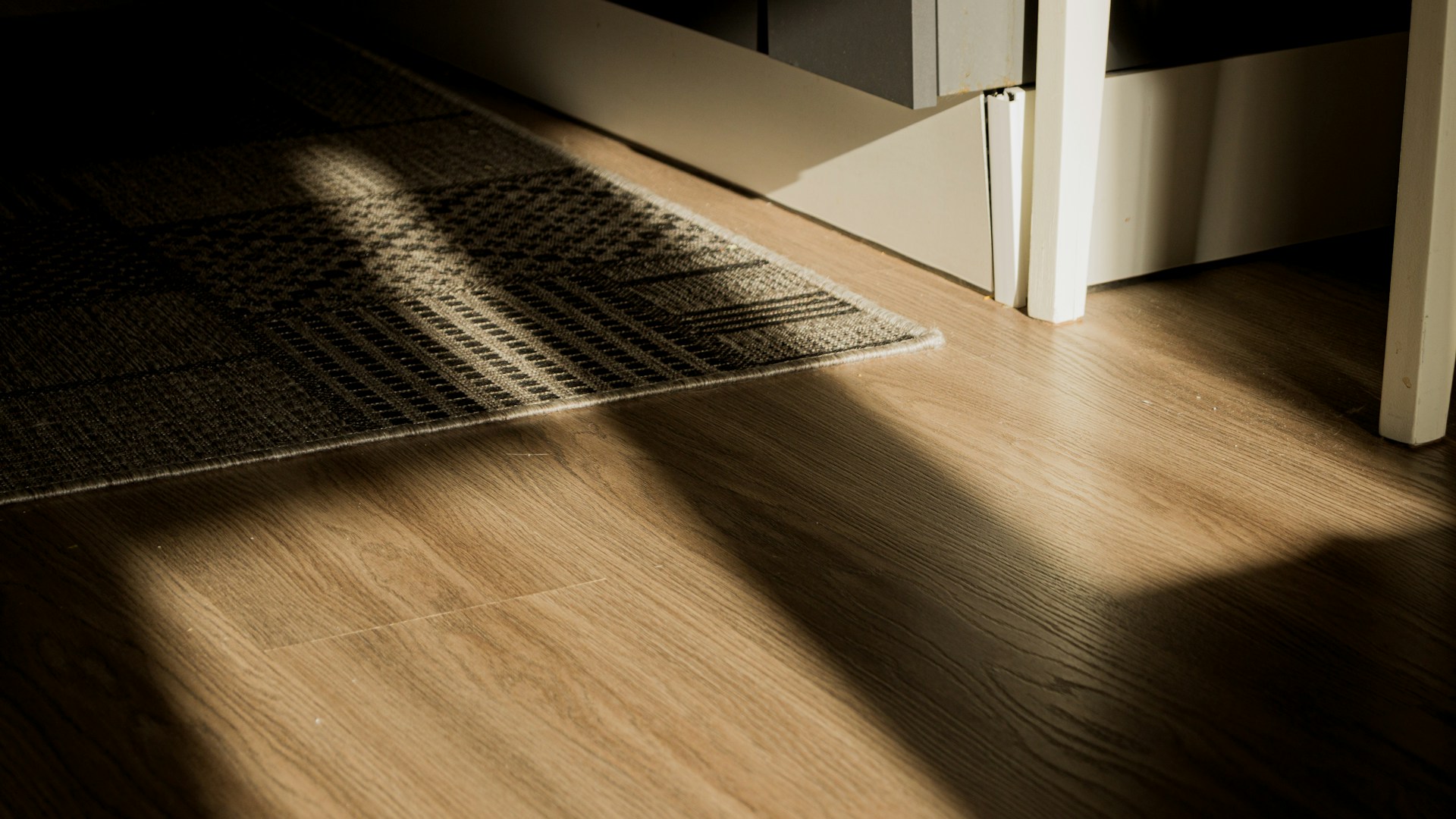
His claim is a bold one. About 90% of flooring projects are installed without the company doing any subfloor preparation, and he says that leads to a very high failure rate within just 3 to 5 years, often much sooner.
He works in Raleigh, North Carolina, and says he has been in thousands of homes there. Here is what he wants homeowners to know before they sign anything.
Not One Subfloor In Thousands Of Homes Has Been Within Manufacturer Tolerance
Your subfloor is what sits under the finished flooring, usually plywood or concrete. Prep means getting that surface flat, dry, clean and solid before any new flooring goes down.
He says that in all the homes he has visited, there has not been one project where the subfloor met the manufacturer’s tolerance. That includes houses only a couple of years old and brand-new builds. The tolerance he cites is 3/16 of an inch within 10 feet.
If the floor is not installed to the manufacturer’s specifications, he warns, the warranty is voided.
What Real Prep Looks Like, And Why Contractors Skip The Slowest Step
On his jobs, the crew first removes the old flooring down to bare concrete or plywood. He says many companies install right over the old floor, and most manufacturers void the warranty when that happens.
Next, loose plywood gets screwed down, since a moving subfloor squeaks with every step. Then comes the step he says takes the longest, which is probably why people skip it: grinding every square foot of the subfloor. Grinding knocks down lifted plywood joints and high spots and removes leftover drywall mud and paint.
He says some companies sand the joints with a palm sander and call that prep, but it does not make much difference. After grinding, the crew checks for low spots with a 10-foot straight edge and marks every one. Contractors who use only a 4-foot or 6-foot level see far less, he says, though that beats the ones who do not check at all.
Low spots are then primed over a clean subfloor, and self-leveler is poured. On plywood it has to be a fiber-reinforced leveler because plywood flexes. Most levelers need at least 24 hours to dry, followed by a final grind before the flooring goes in.
On a concrete slab, moisture must be tested too. LVP is advertised as waterproof, but he says it is still affected by moisture. If readings run above the manufacturer’s range, a moisture barrier goes down first.
“If Someone Says One Day Installation, I Would Stay Away From Them Completely”
On a 1,000-square-foot project, he says prep usually takes about 3 days of a five-day install with a crew of two. Proper prep makes a one-day install virtually impossible, which is why he tells homeowners to be careful with that promise.
The reason quotes leave it out, in his words, is that prep is skilled labor, and skilled labor is hard to find and expensive. Many companies also use low-bid subcontractors, who earn less per hour the longer they stay on your job. A day of grinding comes straight out of their pay.
The Math: $2,214 Of Prep On A $16,000 Floor
He offers a real example. One of his LVP projects came to about $16,000, and the subfloor preparation line was $2,214. About half of that was self-leveler and half was grinding and leveling labor, which is more than 10% of the budget on that home.
He says proper prep can add $2 to $5 per square foot, so an extra $2,000 to $5,000 on a bigger home. A quote that lists only “installation” on one line leaves you guessing whether it is included.
He tells of a client who hired another company for the first floor of the house. Halfway through, that company said another $1,500 was needed for subfloor prep, which had not been in the original quote. The homeowner was not ready to pay it, and later called his company for the second floor.
Skipping Prep To Save A Few Thousand Can Cost $25,000 Later
His numbers on the downside are sharp. If you skip prep and save $2,000 to $5,000, then watch the floor fail in two years, you pay for the whole job again: new materials, new labor, removal and disposal. He puts that at $10,000 to $20,000 depending on the floor.
He says his company has replaced projects where owners spent more than $20,000 the first time and, two years later, spent $25,000 to redo them. His crew redoes more than 20 projects every year that other companies installed without prep, and he has seen entire subdivisions of new houses need new flooring within a year because of gapping and separating.
The cause is how LVP works. It is a floating floor, planks snapped together with no glue, so the locking joints are all that hold it together. High or low spots make the floor move with every step, and that breaks the joints, especially on cheap, thin LVP. Laminate is almost always a floating click-lock system too, while engineered hardwood can be glued or nailed down.
At first the floor looks great. Then come clicking sounds and visible gaps between planks. Viewers told him one floor failed after 2 years without prep, and another failed 6 months in when LVP went straight onto concrete in a rental.
The One Question To Ask Your Contractor Before You Sign
When joints fail, he says most people call the manufacturer first, but the warranty is voided if the install did not meet spec. Then they call the installer, and most companies give only a one-year labor warranty, which leaves the homeowner empty-handed in years two to five.
His advice is to ask the contractor how they handle prep, and then pay attention to how they answer. A plain yes means little, he says, because everybody is going to say yes. A good answer has specifics, such as:
- We grind the whole subfloor.
- We level anything outside of 3/16 over 10 feet.
- Prep is already included in the quote.
- If we find something major underneath, here is what it will cost.
A vague “Oh yeah, we always prep, don’t worry about it” answers nothing. If the installer never checks the flatness of the subfloor, he calls that a massive red flag. Get everything in writing, and ask to see past work.
One more thing: you usually cannot judge the subfloor until the old flooring is gone, so ask up front what happens and what it costs if the crew finds something bad.
More Stories You May Like
- Man Tries To Load His Dishwasher And Finds It Totally Locked Up Showing The Word Sabbath, Then A Woman In The Background Laughs Nonstop And Points Out It Is Not Even The Sabbath
- Waxhaw Dad Spends More Than $70,000 On A 60,000 Light Holiday Show That Draws About Four Cars A Night, Then His HOA Finds Him In Violation, He Sues, And He Says The Real Fight Started Over A Golf Course
- 76 Year Old San Diego Woman Hires A Plumber To Fix Some Pipes, Then Says He Switched The Utilities To His Name, Rented Out Rooms And Filled Her Home With About 15 People, While Police Were Called More Than 30 Times
Leave a Reply