She made a promise on her gardening channel not long ago. Never again would she lay landscaping fabric. Now the gardener behind @SamanthaMillerDiaries is out in the cottage garden holding a roll of the stuff, and she knows exactly how it looks.
“Did y’all see my video where I said, ‘Don’t do it. No landscaping fabric’?” she asks. Then comes the confession. “Guess what? I’m using landscaping fabric.”
Her helper for the day is Doug, who has a week off and has hit a stopping point on the deck. The crew is ready to put up the gazebo, but one box out of a big slew of deliveries never arrived, so nothing else can happen until it does. That left Doug free to help redo the pathway in the cottage garden.
Her Rule Has One Loophole, And It Is The Path
The gardener says the fabric will not go anywhere near her plants. It is solely for the pathways. Her original fabric on that path was cheap and thin, and when heavy flooding came through, it left a pile of silt on top and weeds pushing up.
The new stuff is a different animal. She describes it as a super thick, felt-like material, bought at the local co-op, where it comes in gigantic rolls and gets cut to size. The pre-cut piece is about four feet wide, and the full rolls are 15 feet long.
“There is a time and a place for landscaping fabric,” she says. Her rule now is not around your plants and not in the flower bed. Use it on pathways, under rocks, that sort of thing, and then it is okay.
The Pea Gravel Comes Straight Off The River Bottom
The rock for the path is what locals call river rock or pea gravel, and the gardener says it is very common in her area. Companies there get contracts to dredge the bottom of navigable rivers so larger vessels can pass, and all that material fills the riverbed over the years.
Somebody had the bright idea of sending it to landscaping companies to sell for garden beds and pathways. She adds that plenty of playgrounds use it as a base so there is something soft to land on.
Doug jokes about kids choking on it and throwing it at each other. She says moms wash the pockets full of pebbles in the washing machine for their rock collections, and admits some of the stones are kind of cool.
The Plan To Save Every Rock Falls Apart In Minutes
Her first idea was to take a razor blade down both sides of the path, pull the old barrier back, scoop the rocks into buckets and rinse them for reuse. She also wondered aloud how bad an idea it would be to lay the new barrier right over the old mess.
Doug weighed in. He thought it was not worth the trouble, since there would be more dirt and weeds than rocks saved. Putting the new fabric and rock on top would also raise the path slightly, which would better separate it from the mulch.
She says she was only trying to save some money, but she took his advice.
Then came a small setback. The strip turned out to be a little too wide, and she was not about to dig things up and transplant them to make it fit. So the thick fabric got trimmed to the width of the existing path, with a lot of pulling and cutting. Her hint is that sometimes feet work better than tools.
A Fresh Path, A New Bridge And Blooming Roses
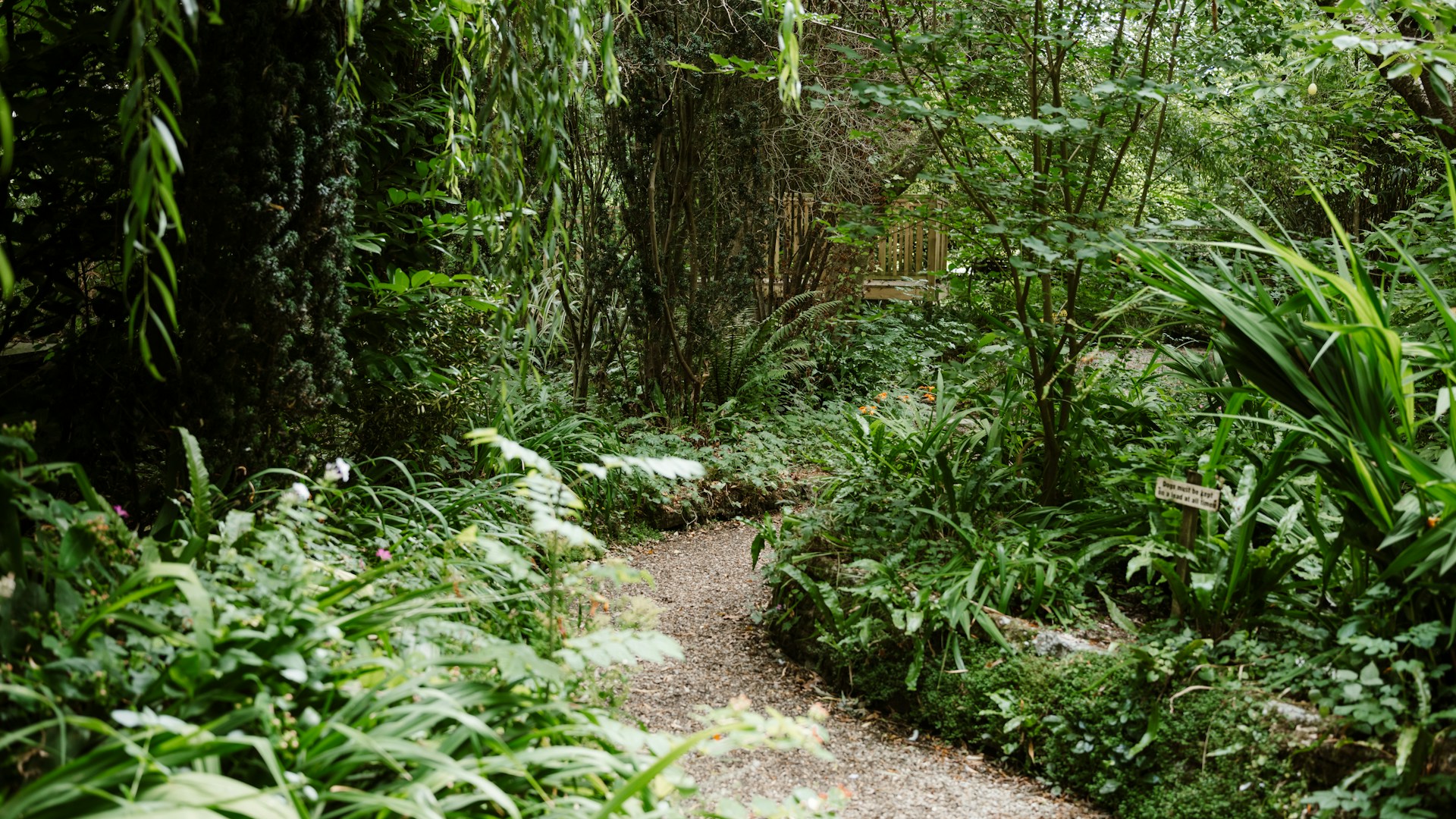
Once the path was finished, the gardener says it stood out beautifully. The new rock looks darker for now because it is sandy and wet, and she expects the sun and rain to bleach it to match the old stone.
Along the way she showed off the garden. The roses are blooming heavily, the hydrangeas are browning out, and she pointed to a Belinda’s Dream rose in bloom. She also showed a bridge Doug built this year over a dry creek bed that had gone without one for the longest time.
It was a quick project, which she says is wonderful because most projects seem to bring a dilemma or something that goes wrong. Doug later brought more big river rock to line both sides of the path, so rainwater cannot wash the pebbles into the mulch and pets and little feet cannot kick them around.
Next Up, A Wild Vegetable Garden And Maybe A Lodge
The vegetable garden is next. While Doug was waiting on gazebo parts, he knocked down the weeds, and she says it is no longer a monstrosity, though still very weedy. Now she can finally see how big the area is.
The plan is raised beds with pavers or cobblestone pathways between them, using the same big river rock. She teases that Doug will cut the lumber from the woods with his sawmill. A green tomato hanging high in the tangle even made a cameo.
She is also researching county rules for building a small recreational lodge on the family land. She imagines a cottage-style place to hang out and camp without leaving the property, and she would love to frame it herself.
What To Borrow From Her Path Project
You do not have to dredge a river to copy her approach.
- Use thick, felt-like fabric under a path, and skip it in planting beds.
- Order the roll size you need, or ask the store to cut it for you.
- Do not spend an afternoon rescuing dirty old gravel if it costs more time than it saves.
- Line both sides of the path with larger stones to hold smaller pebbles in place.
- Expect fresh gravel to look dark at first, since the sun and rain will fade it.
The gardener says she is very pleased, and she promises a big vegetable garden renovation is coming soon.
More Stories You May Like
- Inspector Finds A Leaking Sewer Grinder Pump Next To A Power Outlet, A Crushed Water Meter And A Load Bearing Water Bottle In A Brand New Build
- Before Buying A Fixer Upper, Compare These 8 Renovation Loan Rules From FHA 203(k) And Fannie Mae HomeStyle, Including Costs That Surprise First Time Buyers
- 10 Things Landlords Generally Cannot Do To A Tenant, From Changing The Locks To Shutting Off The Utilities, And Why State Law Decides The Details
Leave a Reply