A Wheat Trader’s Mansion, Then a Hospital, Then Three Decades of Silence
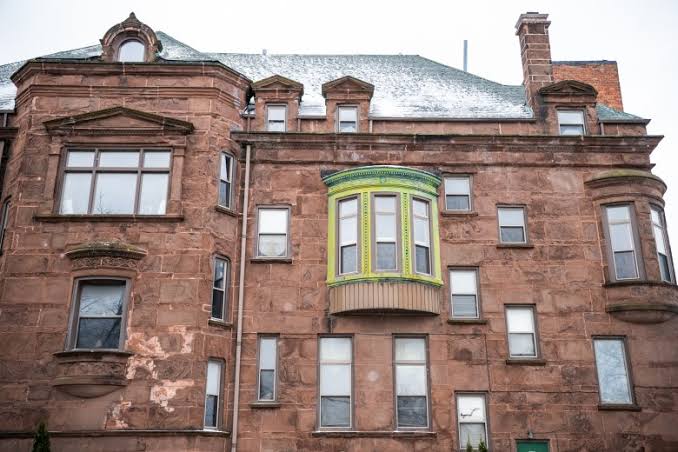
The house at 3736 S. Michigan Avenue in Chicago’s Bronzeville neighborhood has been standing since 1890, back when the area was still known as Grand Boulevard and the block was lined with the homes of the city’s wealthiest merchants. It was built for Adolph J. Lichtstern, a man the Chicago Tribune once described as “a Board of Trade man and capitalist” and one of the country’s leading wheat traders, according to Block Club Chicago’s reporting on the property’s history. It is now for sale, listed at $1.2 million, and the price tag is arguably the least interesting thing about it.

What sets this mansion apart from the dozens of aging Gilded Age brownstones scattered across Chicago’s South Side is what happened to it after the Lichtstern family moved on. As the neighborhood transformed in the early twentieth century into Bronzeville, one of the most significant Black communities in the country, the mansion was converted and operated for a period as a Black-owned hospital — a rare and historically significant use for a building of its size and era, at a time when Black patients and Black physicians were routinely shut out of Chicago’s white-run medical institutions. Preservation Chicago, the city’s leading architectural preservation advocacy group, independently confirmed and highlighted that history in its own coverage of the listing, framing the building as an example of the kind of overlooked Bronzeville landmark that risks being lost or stripped of its story with a change in ownership. Crain’s Chicago Business, in its own reporting on the sale, similarly described the property as a mansion “layered with history” going up for sale for the first time in decades.
That layering is literal. Bronzeville came of age during the Great Migration as tens of thousands of Black families arrived from the South and built a self-sufficient community of businesses, churches, newspapers, and yes, medical institutions, often because the rest of the city’s infrastructure simply would not serve them. A Black-owned hospital operating inside a former capitalist’s mansion is not an incidental detail in that story. It is the story: a building designed for one kind of wealth and exclusion repurposed, within a few decades, to meet a need the rest of the city refused to meet.
What’s Actually Left of the House
The current listing describes a three-level brownstone with Gilded Age detailing that has largely survived intact: stone columns, ornate window pediments, a decorative parapet, eleven fireplaces, a grand staircase, and a top-floor ballroom with city views. The main residence includes six bedrooms and six bathrooms, and the property also carries two ground-level rental units plus a separate two-story guest house at an adjoining address, bringing the total livable configuration to thirteen bedrooms and ten bathrooms across roughly 11,108 square feet, according to listing details reviewed alongside Block Club Chicago’s reporting. The exterior was tuck-pointed within the past two years, suggesting whoever has held the property in recent decades kept up with at least the basics of structural maintenance even while the building sat largely out of public view.
That combination — genuine architectural integrity plus a real, documented civil-rights-era use most passersby would have no way of knowing about — is what makes this listing worth more than a passing glance. Historic preservation in neighborhoods like Bronzeville rarely comes with landmark status or a plaque out front. It comes down to whether the next private buyer happens to care, or happens to find out, what they’re actually purchasing. A house can carry this kind of history and still get bought by someone who guts the interior for a modern renovation and never learns what the ballroom on the third floor once looked out over, or why a building constructed for a Gilded Age wheat trader ended up serving as a hospital for a community the rest of the city had turned away.
For now, the mansion sits on the market the way it has sat, mostly quiet, for the better part of thirty years: a for-sale sign on a South Side block, in front of a building that has already lived at least two very different lives before this one even gets decided.
SOURCING NOTE: Block Club Chicago’s original reporting is independently corroborated by Preservation Chicago and Crain’s Chicago Business, both of which separately confirm the mansion’s history as a former Black-owned hospital and its current listing status; the specific name of the hospital that operated inside the building was not identified in any available source and is therefore not stated.
Leave a Reply