Every renovation has that moment when somebody pulls back a piece of drywall or a section of old plaster and goes quiet. For the group behind @kitchenwife.w.aknife, that moment came during a wall demolition, and what they spotted tucked inside was a bundled-up blanket. The caption sums up the mood: the poster had a feeling that taking down walls and remodeling the house would lead to finding something.
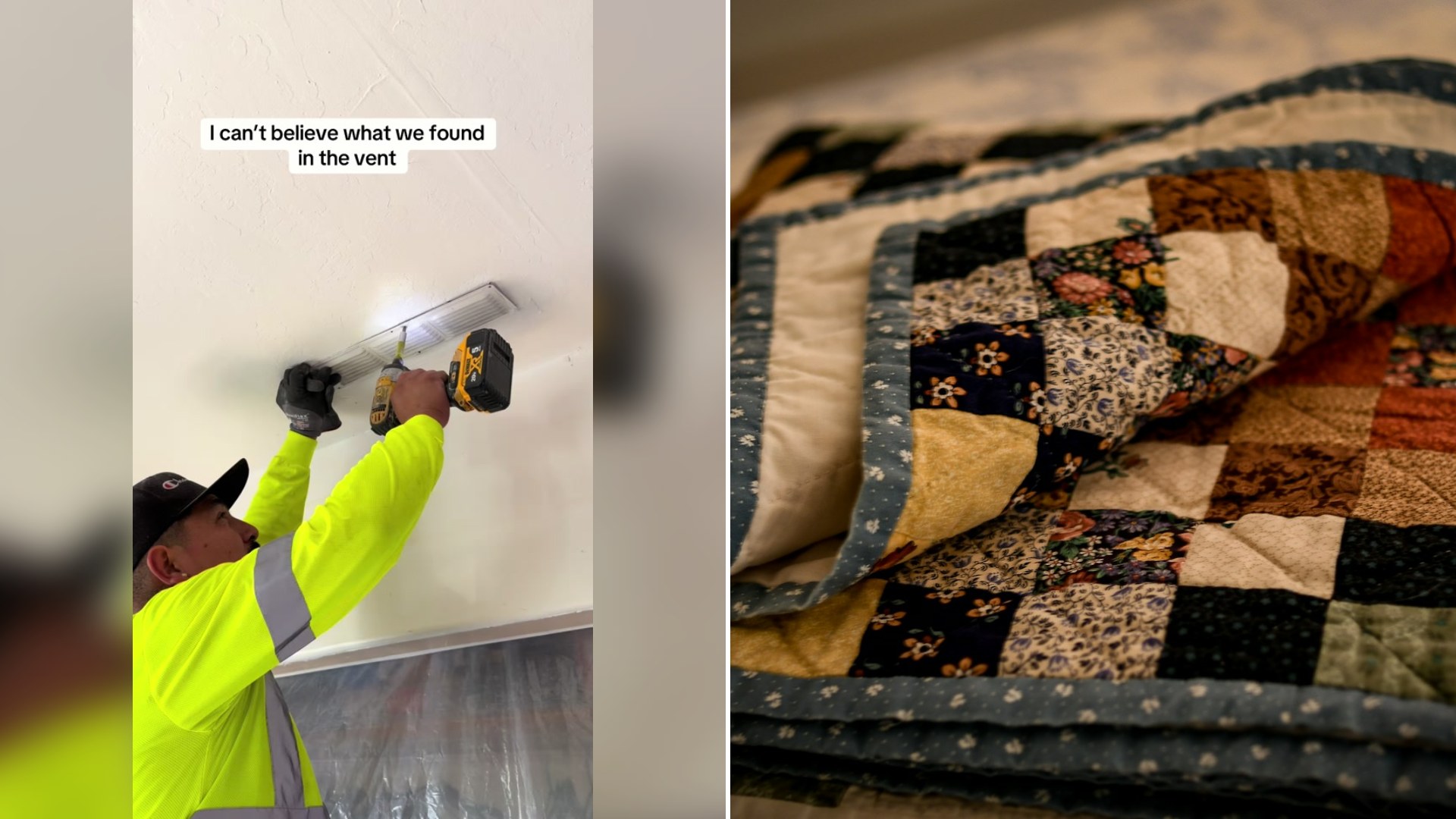
The clip has been played more than 3.3 million times, and it is easy to see why. It is a little over two minutes long, and almost all of it is a group of people standing around a hole in a wall trying to decide who is brave enough to reach in.
@kitchenwife.w.aknife
What the Group Saw in the Wall
The clip opens with someone pointing at the opening and asking what that is. The answer comes quickly: it is a blanket. From there the nerves take over. One voice wonders out loud whether it might start moving. Another asks whether it should just be left where it is, and a friend answers firmly that it should come out.
The worry, spoken out loud and half joking, is about what could be wrapped up inside. Someone asks what happens if the blanket has something unpleasant on it. Another says they are not sure they want to touch it and asks why anyone would stuff a blanket in a wall in the first place. A third voice says nobody wants to reach in and grab something they cannot see. The group goes back and forth, each person nudging someone else to be the one to reach in.
Then comes the more hopeful theory. One person suggests it could be money wrapped up in there. Another says that these days nobody leaves money lying around anywhere, but then points out that the house was built in the 1920s, so the people who lived there might have been saving for a rainy day. As the speaker puts it, that is a good hiding spot.
There is also a practical detail that makes the idea feel less far-fetched. The group notes that there is a vent in that spot that leads up to the attic. That is a real cavity inside the house, out of sight and easy to forget about, and the person speaking says that is exactly why it would make a good place to stash something.
The clip as we can hear it ends before anyone says what the blanket was hiding, so we cannot tell you what, if anything, was inside. What we can tell you is that the creator’s own caption was excited rather than frightened, and the whole thing plays out as a mix of dread and curiosity that anyone who has opened up an old wall will recognize.
Why Old Houses Keep Secrets
It is more common than you might think for renovators to find odd things inside old walls. Old newspapers, bottles, small toys and even notes or signatures left by the original carpenters are the kinds of keepsakes that turn up now and then in homes that are a century old, and many contractors have a story or two about what they have found.
Most of those finds are ordinary leftovers. Builders sometimes tucked newspaper into gaps as makeshift insulation, workers left behind tools and lunch trash, and later owners dropped things down open cavities and never saw them again. A house from the 1920s has had a century for items to slip behind plaster, under floorboards and into attic spaces. That is part of the charm of an older home, and it is why many owners keep a small box of the things they find.
A blanket stuffed beside an attic vent could have any number of plain explanations, such as someone sealing a drafty gap or an animal dragging material in to build a nest. That is only general context, and nothing in the clip confirms which, if any, applies here.
What to Do If You Find Something Odd in a Wall
If you are opening up walls in an older home, a little preparation goes a long way. Here is what is worth keeping in mind.
Stop and look before you grab. Use a flashlight and take a good look at the opening. Nests, wasps and mice are a far more likely surprise than anything dramatic, so do not stick a bare hand into a hole you cannot see into. Gloves, long sleeves and a pair of tongs or a long tool are a smart start.
Wear protection. The EPA notes that homes built before 1978 may contain lead-based paint, and that the older the home, the more likely it is. Its guidance for people doing their own work includes covering floors with plastic sheeting, turning off forced-air heating and cooling and covering the vents, misting surfaces before cutting or scraping, and wearing a disposable respirator, coveralls and eye protection. You can read the full list on the EPA’s lead-safe renovation page for DIYers.
Know the rules if you flip houses. The same EPA page explains that the lead-safe renovation rule generally does not apply to homeowners working on their own homes, but it does apply if you rent part of the property, run a child care business there, or renovate to sell for profit. If that describes you, hire a certified contractor or get certified yourself.
Photograph before you move anything. Take a few pictures of the item where it sits, since that can help later if you want to figure out how long it has been there. Old newspapers, labels and receipts can often be dated.
Do not disturb anything that looks truly alarming. If something looks like it could be a safety issue or something that should not be there, step back and call the right local office for guidance instead of handling it yourself.
Check the vent and attic path. In this case the item was near an attic vent. Any time you find an unexpected gap leading to the attic, it is a good moment to look at insulation, air sealing and pests while the wall is already open. Fixing a draft or a hole now is far easier than after the drywall goes back up.
The Real Treasure of a Remodel
Few of us will ever open a wall and find a fortune. But there is a quiet thrill in being the first person in a hundred years to see what is behind a piece of plaster. Whatever the blanket in this wall turned out to be, the group in the clip did the sensible thing: they talked it out, joked their way through the nerves, and treated the find with a healthy dose of caution.
If you are planning your own demolition day, keep a flashlight, gloves and a camera handy, and remember that the safest way to enjoy a mystery is to approach it slowly. You can find the creator at @kitchenwife.w.aknife for more from this remodel. Share below what you have found in your own walls.
Leave a Reply