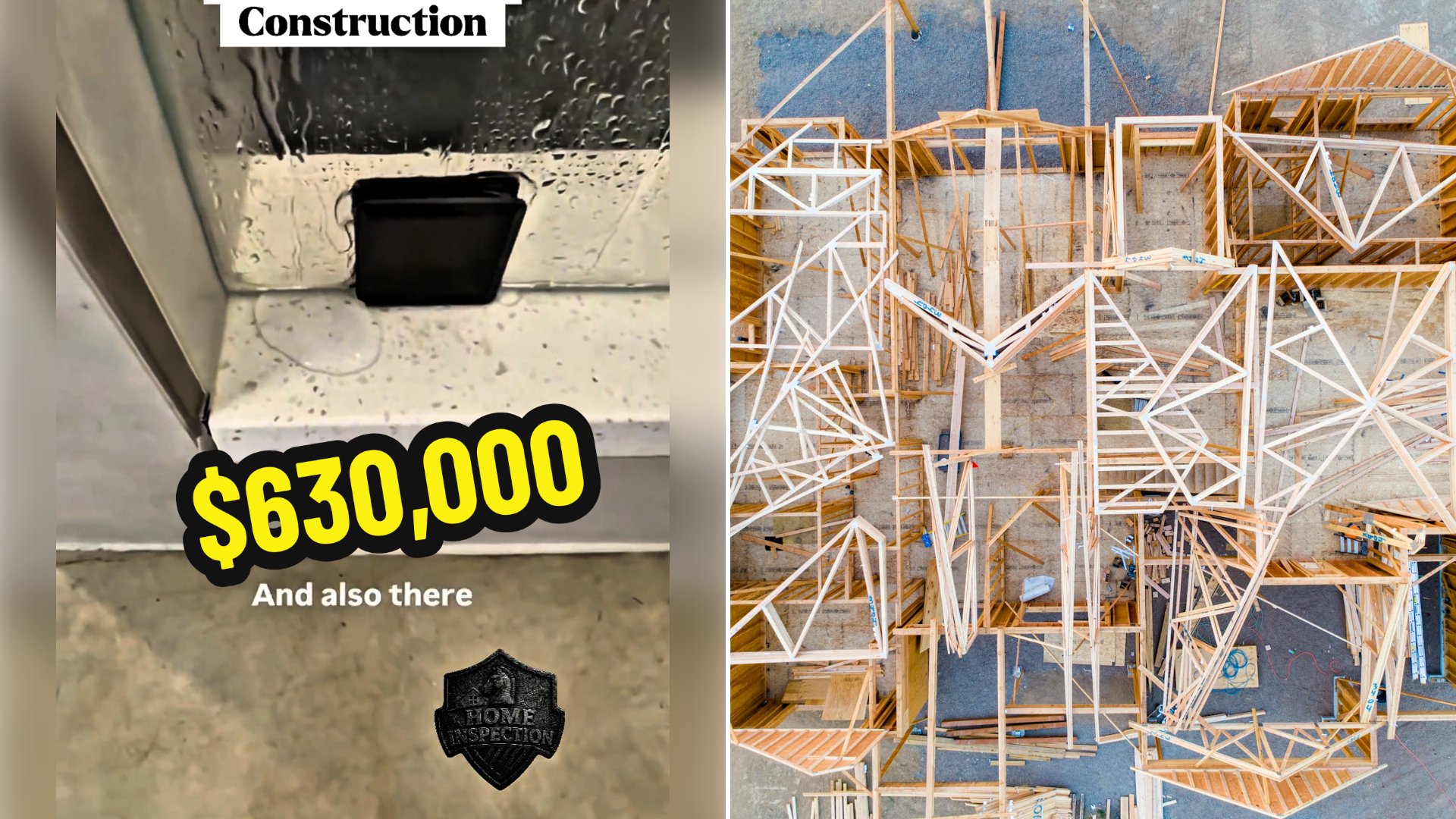
Buying new construction is often sold to buyers as the safe option: no hidden surprises, no decades of deferred maintenance, everything built to current code. A walkthrough posted by @constructioncheckhq complicates that assumption considerably. The inspector moves through a brand new $630,000 home and finds defect after defect, eventually asking out loud, on camera, whether the buyers should even go through with the purchase.
@constructioncheckhq
The video catalogs a running list of issues typical of rushed new builds: improperly sealed penetrations, trim and finish work that doesn’t meet basic quality standards, and signs that several systems were installed without the careful attention a $630,000 price tag would suggest. For a home that size, the kind of defects being flagged aren’t just cosmetic annoyances, they’re the sort of thing that can snowball into real money if they go unaddressed before closing.
New construction homes are not immune to defects, and in some respects they’re more vulnerable to them than older, previously inspected homes. A newly built house hasn’t been lived in long enough to reveal problems through everyday use, and builders working on tight development timelines sometimes move subcontractors through a house faster than ideal quality control allows. That’s exactly why a pre-closing inspection on new construction, separate from any municipal building inspection, has become standard advice from real estate professionals and consumer advocates alike.
Fixing Defects Before Closing Versus After
The cost difference between catching a construction defect before closing versus after is one of the single biggest financial levers a new home buyer has control over, and it isn’t close. Before closing, a buyer typically has real leverage: most new home purchase contracts include a punch list process where the builder is contractually obligated to correct identified defects at no cost to the buyer before the sale finalizes. Builders also generally want to protect their reputation and avoid delaying a closing, so pre-closing repairs tend to happen relatively quickly and entirely on the builder’s dime.
After closing, that leverage largely disappears. Any defect discovered post-sale typically falls under the builder’s limited warranty, which in most states covers structural issues for a longer window, often a decade, but covers workmanship and finish-level defects, exactly the kind flagged in this inspection, for a much shorter period, sometimes just one year. Once that warranty window closes, or if a dispute arises over whether an issue is covered, the buyer is often paying out of pocket for repairs that could have been fixed for free with a pre-closing inspection. Industry estimates from inspection and remodeling trade groups suggest that correcting workmanship defects after a warranty lapses can cost several times more than the same fix negotiated into the original closing, since it now requires hiring outside contractors rather than the original builder absorbing the labor.
Buyers evaluating new construction are generally advised to take a few concrete steps before finalizing a purchase:
- Hire an independent, third-party inspector who doesn’t work for or get referred exclusively by the builder, since municipal building inspections check code compliance, not overall quality.
- Schedule the inspection before the final walkthrough, leaving enough time for the builder to actually complete punch list repairs before closing day.
- Get every agreed repair in writing, with a clear timeline, rather than relying on a verbal promise from a sales representative.
- Read the builder’s limited warranty in full before closing, specifically noting how long workmanship versus structural coverage lasts.
Whether this particular buyer ultimately walks away or pushes the builder for a full punch list resolution, the video serves as a useful reminder that a high price tag is no guarantee of quality, and that the window to get defects fixed for free closes the moment the keys change hands.
More from Willow and Hearth
- Home Inspector Jabs a Knife Into a Brick Wall and Says Painted Masonry That Stays Wet Turns to Butter, Then a Commenter Who Has Painted Brick for 25 Years Pushes Back
- Home Inspector Walks Through a 5000 Square Foot Abandoned House Where Finished Rooms Open Onto Piles of Lumber and Old Roofing and Warns It Gets Crazier the Longer You Watch
- Realtor Reacts to a Painter Rolling White Paint Over a Bathroom Coated in What She Says Is Decades of Cigarette Smoke and Warns That Cleaning Has To Come First
Leave a Reply