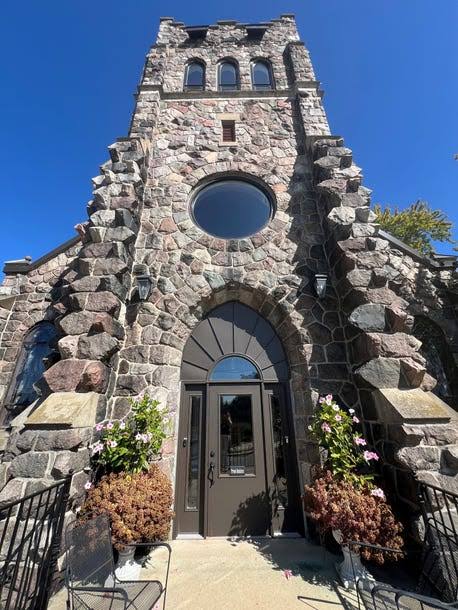
Stained Glass Over the Kitchen Sink
In Milford, Michigan, a converted Catholic church now holds six condominium units, and when Unit 1 came up for sale, it drew multiple offers within its listing period. Its spiral staircase still climbs to what used to be the bell tower. Its windows are still stained glass. The building, formerly St. Mary Our Lady of Snows, was converted into housing in 2015 and sits two blocks from Milford’s Main Street, according to Homes.com’s reporting on the sale.
The Numbers Behind the Trend
Milford isn’t an outlier. As American church attendance keeps sliding, empty and underused sanctuaries are becoming an increasingly common source of unusual, character-heavy homes. A 2020 Gallup poll found just 47% of Americans belonged to a church, synagogue, or mosque, Homes.com reported. NPR has separately reported that roughly three in ten Americans now attend religious services regularly, down from close to four in ten a decade ago.
Not a Simple Renovation
Turning a sanctuary into a living room is harder than it sounds. Churches were never designed with residential living in mind, meaning conversions require reworking soaring, open worship spaces into functional bedrooms, bathrooms, and kitchens from scratch. In Savannah, Georgia, a former Lutheran church built in 1902 sold for $380,000 after its congregation shrank below a dozen members, then was expanded and remodeled into a home now listed at $1.6 million.
Who’s Actually Buying
Agents describe buyer interest that cuts across the usual demographic lines, from retirees and downsizers to medical residents and creative professionals drawn to soaring ceilings and original architectural detail. Not every former church sells for seven figures either: a 12,000-square-foot undeveloped church in Dayton, Ohio, was listed at $129,900.
Why the Buildings Keep Emptying Out
The underlying supply problem isn’t going away. Nonprofit leader Mark Elsdon, who studies church property reuse, told NPR that even congregations motivated to do something productive with underused land run into steep practical barriers, since affordable housing is difficult to finance on land that was never zoned residential.
Leave a Reply