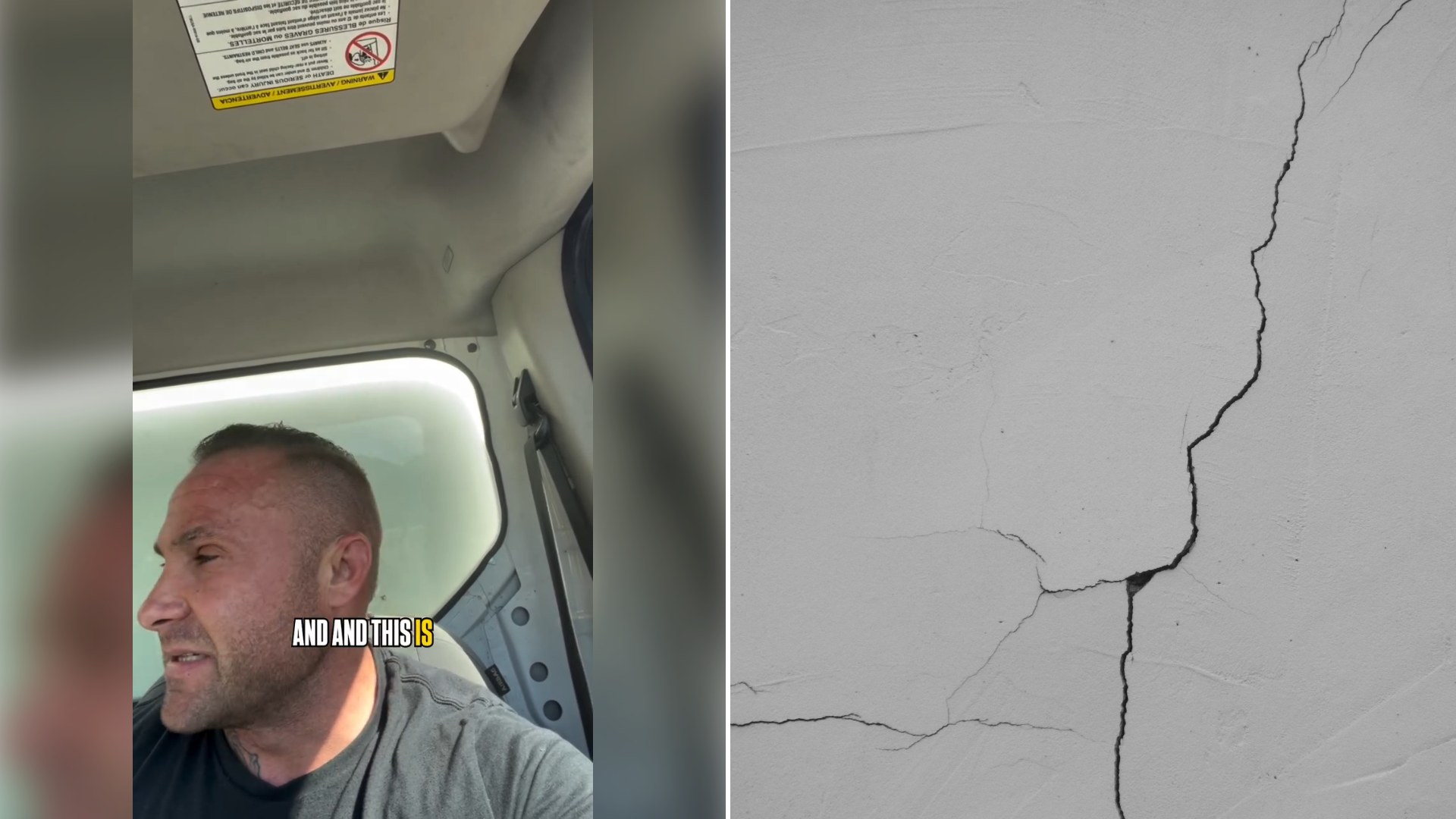
Foundation problems rank among the most feared words in all of homeownership, and @mikey_genchi documents exactly that fear made real in an Instagram post laying out detailed evidence of significant, spreading cracks in his newly built house, directly disputing the builder’s repeated insistence that nothing is actually wrong.
The decision to document the cracks methodically, rather than simply describing the problem in frustration, gives this video a kind of evidentiary weight that pure complaint content usually lacks, treating the camera almost like a deposition tool rather than a venting outlet.
New construction carries a specific, often unearned presumption of structural soundness, the assumption that a freshly built foundation should be the one part of a house least likely to develop serious problems this early, which makes a dispute like this one particularly unsettling for anyone watching who has recently bought new.
There is a real power imbalance at the center of this kind of conflict, an individual homeowner against a builder with legal resources, reputation management incentives, and far more experience navigating exactly these disputes, which is part of why public documentation becomes such an important tool for the homeowner’s side.
Spreading cracks, as opposed to small, stable hairline cracks that often appear in any new foundation as concrete cures, carry genuinely different structural implications, and a homeowner’s instinct to track that progression over time, rather than accepting a single reassurance, reflects exactly the kind of diligence a dispute like this requires.
This kind of content also serves a real consumer-protection function well beyond the single house involved, since public documentation of a builder’s dismissive response to legitimate structural concerns can inform other buyers considering that same builder before they sign a contract of their own.
There is a broader trust question here too, about what recourse an individual homeowner actually has when a builder with far greater resources insists a visible, worsening problem isn’t real, a dynamic that explains why so many of these disputes eventually end up litigated rather than resolved through simple conversation.
Audiences responding to this kind of video often arrive with their own new-construction horror stories, a pattern that reinforces a growing, uncomfortable awareness that new doesn’t automatically mean problem-free, and that a builder’s financial incentive to minimize a defect doesn’t always align with the homeowner’s interest in a safe, structurally sound property.
The willingness to film and share this dispute publicly also shifts some of the leverage back toward the homeowner, since a builder facing public scrutiny over a disputed foundation issue has different incentives than one handling the same complaint through private correspondence that never reaches a wider audience.
There’s a useful lesson embedded here for anyone currently in the new-construction process themselves, that documenting potential defects thoroughly and immediately, with dates, photos, and measurements, creates exactly the kind of record that proves essential if a builder’s initial response turns out to be dismissive rather than cooperative.
This kind of dispute also highlights the limits of a builder’s warranty in practice, since the existence of a warranty on paper means very little if the builder’s own inspectors consistently conclude that a visible, worsening problem doesn’t actually require any action.
It’s worth noting, too, how much emotional weight a dispute like this carries beyond the purely financial stakes, since a foundation crack in a brand-new home can feel like a betrayal of the basic promise new construction is supposed to offer, a clean start rather than someone else’s inherited problem.
For homeowners facing something similar, this video offers both solidarity and a rough template, methodical documentation, a clear, specific description of the problem, and a willingness to escalate publicly when private channels fail to produce a satisfying resolution.
There is also a broader industry accountability angle here, since builders operating at scale have real incentives to minimize costly remediation, which makes independent, third-party structural assessment an important check that homeowners in this kind of dispute often eventually have to pursue on their own.
There’s also a reminder here about the importance of retaining independent legal and engineering counsel early in a dispute like this, since a builder’s in-house assessment, however confidently delivered, carries an inherent conflict of interest that an outside expert simply doesn’t share.
Homeowners navigating a similar dispute can take something practical from this story: dated photographs, measured crack widths tracked over time, and a written record of every builder interaction all become essential evidence if a disagreement like this eventually requires formal resolution.
And there’s a broader warning embedded here for prospective buyers generally, a reminder that a builder’s reputation and responsiveness after the sale matters just as much as the finishes and floor plan that get all the attention during the actual purchase decision.
There’s also something worth noting about how this kind of public documentation changes the calculus for builders generally, since a developer aware that disputes may become public content has a real incentive to handle homeowner concerns more carefully from the outset.
For prospective buyers specifically, stories like this one underscore the value of researching a builder’s track record and dispute history thoroughly, treating that research with the same seriousness typically reserved for comparing floor plans and finishes.
In the end, this video endures as a cautionary case study precisely because it refuses to accept a builder’s reassurance at face value, insisting instead that visible, worsening evidence deserves a real investigation rather than a dismissive explanation offered simply to keep a homeowner quiet.
Leave a Reply