Tap on a wall and listen. Most of the time you hear a dull knock backed by drywall, studs and insulation. When one homeowner tapped on a basement wall, the sound was hollow, and that was only the beginning of a very curious afternoon.
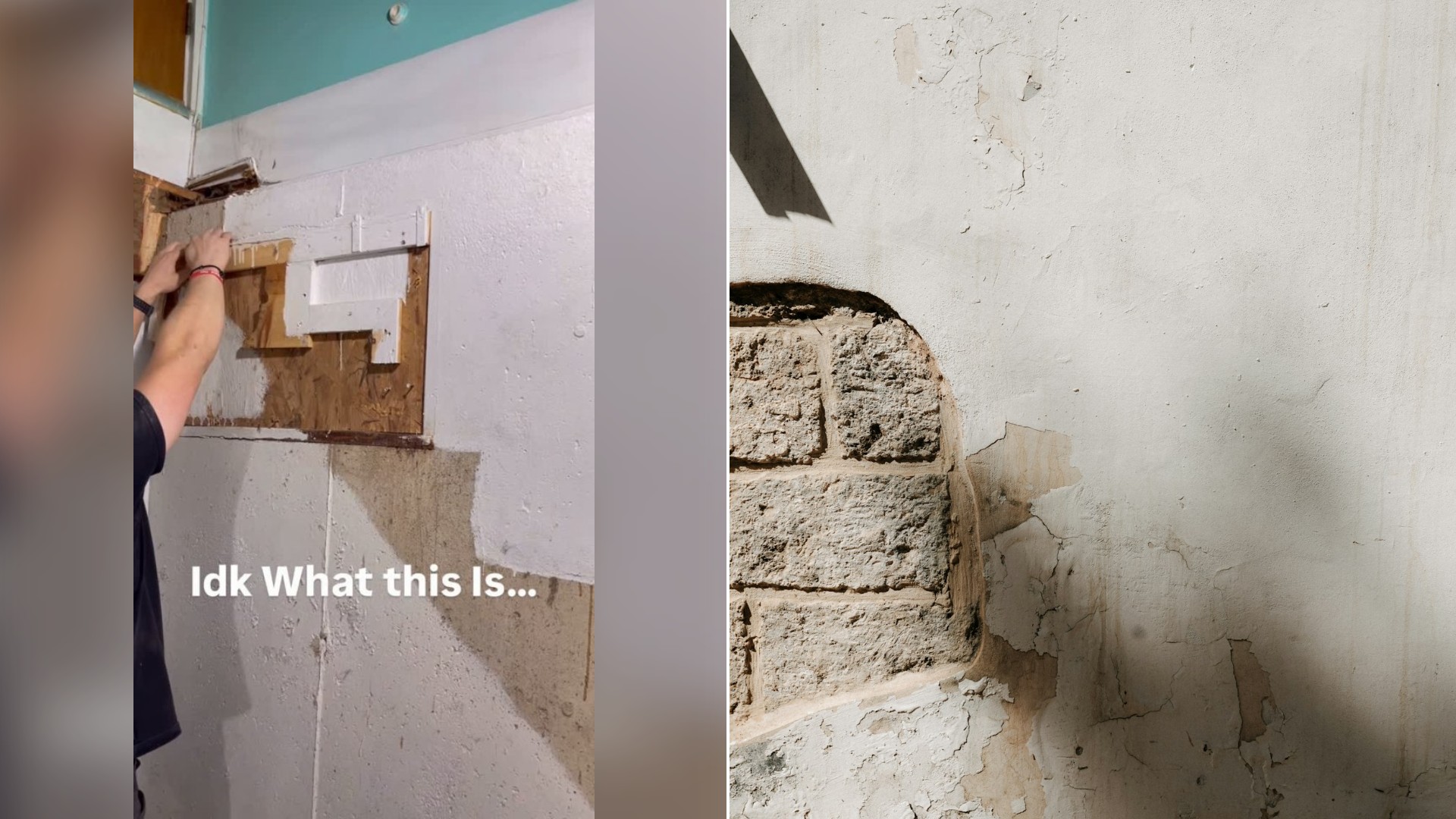
The homeowner shared the whole thing on Instagram, and the account @winni.designs posted the video that has people wondering what could possibly be behind a basement wall.
View this post on Instagram
A Hollow Wall And A Tiny Screwdriver Hole
In the video, the homeowner hears a hollow basement wall. That alone is a reason to be curious, because a solid wall should not sound empty.
Then comes a detail that is hard to ignore. The homeowner puts a screwdriver through the wall, and when it makes a small hole, they feel wind coming through it.
Air moving through a pinhole in a basement wall means there is open space on the other side, and that space is connected to somewhere else. It could be another room, a gap, a hidden cavity or a tunnel of some kind.
The Homeowner Cuts It Open And Finds Something Hidden Inside
Curiosity wins. The homeowner cuts the wall open and finds something hidden inside, and the reaction is instant. The line that gives the video its punch is a simple one: “Dude, check this out.”
It is the sort of moment that every old house owner dreams about, a surprise tucked away behind a wall. And it is the kind of find that makes people watch a video again just to see the reaction.
Why Old Houses Hide Things
Houses are full of voids. Over decades, owners remodel, close in stairs, wall off closets, cover windows and tuck away old coal chutes, cisterns and storage rooms. Sometimes it is a coverup, and sometimes it is just a shortcut by a builder who found it easier to build a new wall in front of an old one than to tear anything out.
Basements are especially likely to have this kind of mystery. They are used for storage, workshops and hiding spots, and people have been walling parts of them off for generations.
There are also practical reasons for hidden space, such as chases for pipes and ducts, crawl spaces, old doorways and root cellars. Not every empty space is a treasure chest. Many are plain gaps that a wall happened to cover.
How To Tell If A Wall Is Hollow
If you have a wall that sounds odd, a few simple tools can help.
- Knock along the wall. Solid concrete or block gives a dull, heavy sound, while a cavity gives a lighter, hollow one.
- Measure the room inside and out. If the numbers do not match, there may be space between them.
- Use a stud finder, which can show wood framing and sometimes the edge of a hidden space.
- Try a borescope, an inexpensive camera on a flexible cable that fits through a small hole and lets you look around.
- Feel for drafts with a candle flame or a strip of tissue held near suspected gaps.
Before You Cut A Wall Open
Excitement is great, but safety counts. Before cutting, do a few checks.
First, make sure there are no wires or pipes behind the spot. Turn off the power to that area and use a stud finder with a live wire detector, or drill a small test hole first. Water, gas and electrical lines run through basement walls all the time.
Second, think about the age of the house. Homes built before the late 1970s may have lead paint, and some older materials contain asbestos. If you suspect either, get testing before you cut, wear a proper respirator and keep dust contained.
Third, avoid cutting into any wall that holds up the house. A hollow wall in a basement is usually not load bearing, but if you see beams or posts, ask a professional first.
What To Do With A Surprise Space
If you do open a wall and find a hidden room or compartment, take photos before you touch anything and check for moisture, mold and critters. Ventilate the space and wear gloves and a mask.
If you find old papers, tools or other items, treat them carefully. They may have historic or sentimental value, and a local historical society can sometimes tell you about the house.
And if the opening reveals a structural, plumbing or electrical problem, call a licensed pro rather than patching it yourself.
Trust That Hollow Sound
Patience pays off, too. Mark the wall, take measurements and photographs, and plan the opening so the cut is neat and can be patched later. A clean cut with a drywall saw or oscillating tool is easy to repair, while a ragged hole is not.
Keep a bucket and a drop cloth ready, because basement walls can hold decades of dust.
This homeowner followed a hunch, a screwdriver and a breeze and ended up with a story worth sharing. The next time you are in your basement, tap a wall or two. You never know what the house has been keeping to itself.
More Stories You May Like
- Homeowner Cuts A Hole In The Side Of The House To Insulate The Attic In One Day Because The Free Blower Rental Only Lasts 24 Hours And The Hole Goes Through The Gable Wall Instead Of The Ceiling
- New York Couple Moves Into A Brand New Apartment, Then A Mystery Tapping Behind The Bathroom Wall Gets So Loud Engineers Bust Open The Shower And Find A Pipe Expanding
- About 200 Families Wake Up In March To Orders To Leave A Central Florida Apartment Building After A Resident Hears Popping And Cannot Open Her Door, And Engineers Now Say A Sinkhole Opened Underneath It
Leave a Reply