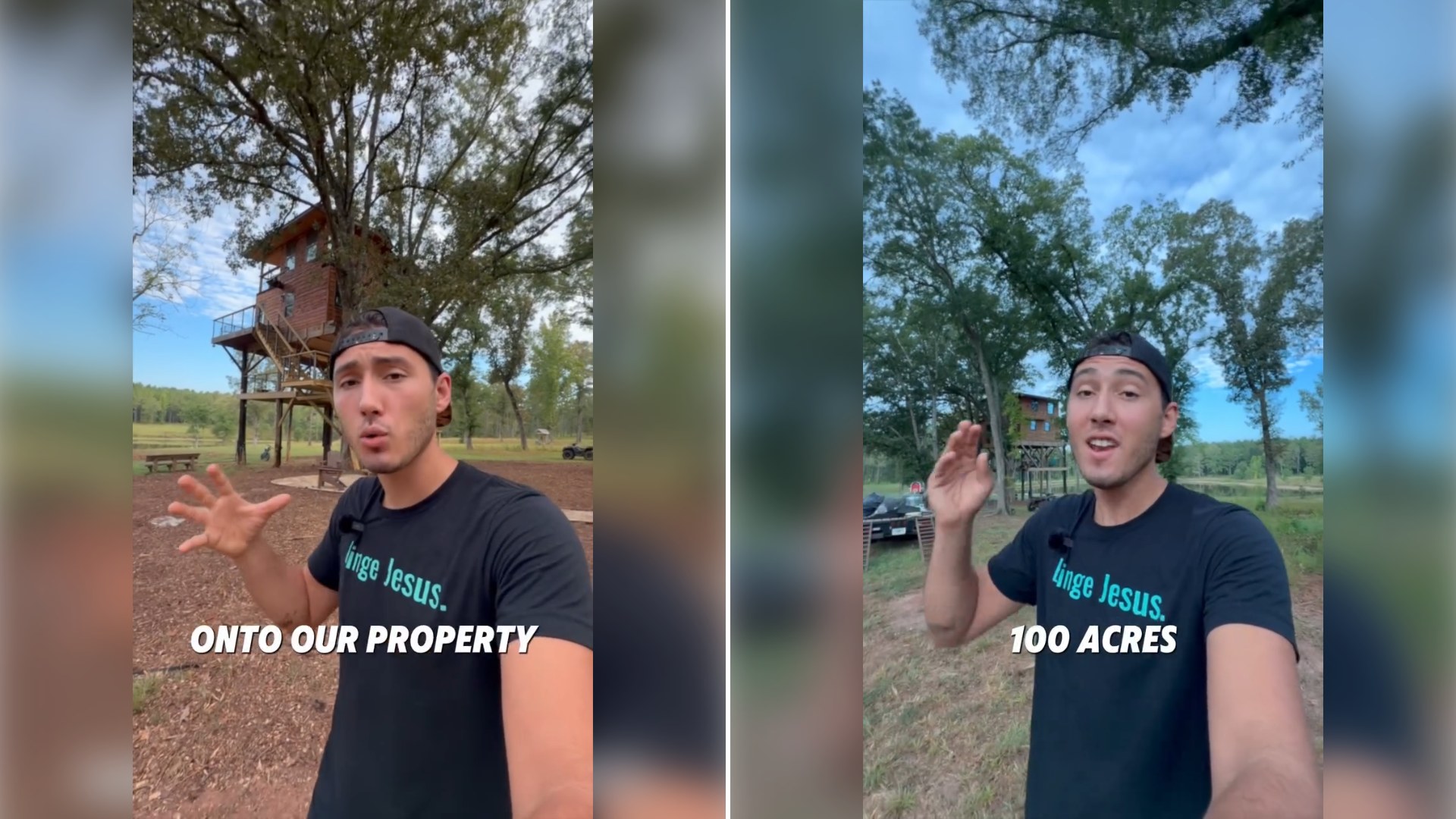
What should have been a simple personal project turned into a genuine saga, and @southernadventures__ (Instagram) recounts the whole thing, chronicling his increasingly dramatic, years-long struggle with local county officials over building permits for a personal backyard treehouse on his own property. “The longer you watch, the worse it gets,” he warns before diving into the full story.
Permitting disputes represent one of the most consistently frustrating aspects of homeownership, and a treehouse specifically occupies a genuinely ambiguous regulatory category in many jurisdictions. Depending on size, height, and permanence, a treehouse might be classified as a simple play structure requiring no permit at all, or as a full accessory structure subject to the same setback, height, and inspection requirements as a garage or shed, a classification gap that creates exactly the kind of conflict this creator describes.
There’s a reason content documenting bureaucratic battles like this one resonates so widely, well beyond anyone who’s ever personally dealt with a permitting dispute. The experience of feeling like a reasonable, good-faith project has been caught in an opaque, slow-moving process taps into a nearly universal frustration with local government systems that can feel simultaneously overly rigid and inconsistently enforced.
It’s worth understanding the legitimate reasons permitting systems exist at all, even when they produce frustrating individual outcomes like this one. Building codes and permits are designed to protect structural safety, maintain neighborhood setback and drainage standards, and ensure a county has accurate records of what’s actually built on a given property, considerations that matter even for something as seemingly harmless as a backyard treehouse.
That said, there’s also a genuine and well-documented pattern of permitting processes becoming disproportionately burdensome relative to the actual risk or impact of a given project, especially for small residential structures built by individual homeowners rather than professional developers with dedicated permitting staff and established relationships with local building departments.
This kind of story also reflects a broader cultural moment of homeowners documenting their own regulatory battles publicly, partly to process their own frustration and partly as a form of accountability, putting pressure on local officials by making an otherwise invisible bureaucratic process visible to a wider audience who can relate to and amplify the frustration.
There’s a practical educational value here too for other homeowners considering their own backyard projects. Understanding, in advance, how a specific jurisdiction classifies structures like treehouses, decks, and sheds, and proactively researching permit requirements before beginning construction, can save homeowners from exactly the kind of multi-year headache this creator is documenting in real time.
It’s also worth considering how a dispute like this one can shift a homeowner’s entire relationship with their own property and local government. What begins as excitement over a fun personal project can curdle into genuine resentment and distrust toward local bureaucracy, a a real emotional cost that doesn’t show up in any official record of the dispute but clearly shapes how this creator now talks about the entire experience.
In the end, this story resonates because it captures a genuinely common tension in American homeownership: the gap between what a person believes they should be able to do on their own property and the regulatory reality that governs even the most modest personal projects. A treehouse shouldn’t become a years-long saga, and the fact that it did says as much about the system as it does about the structure itself.
Leave a Reply