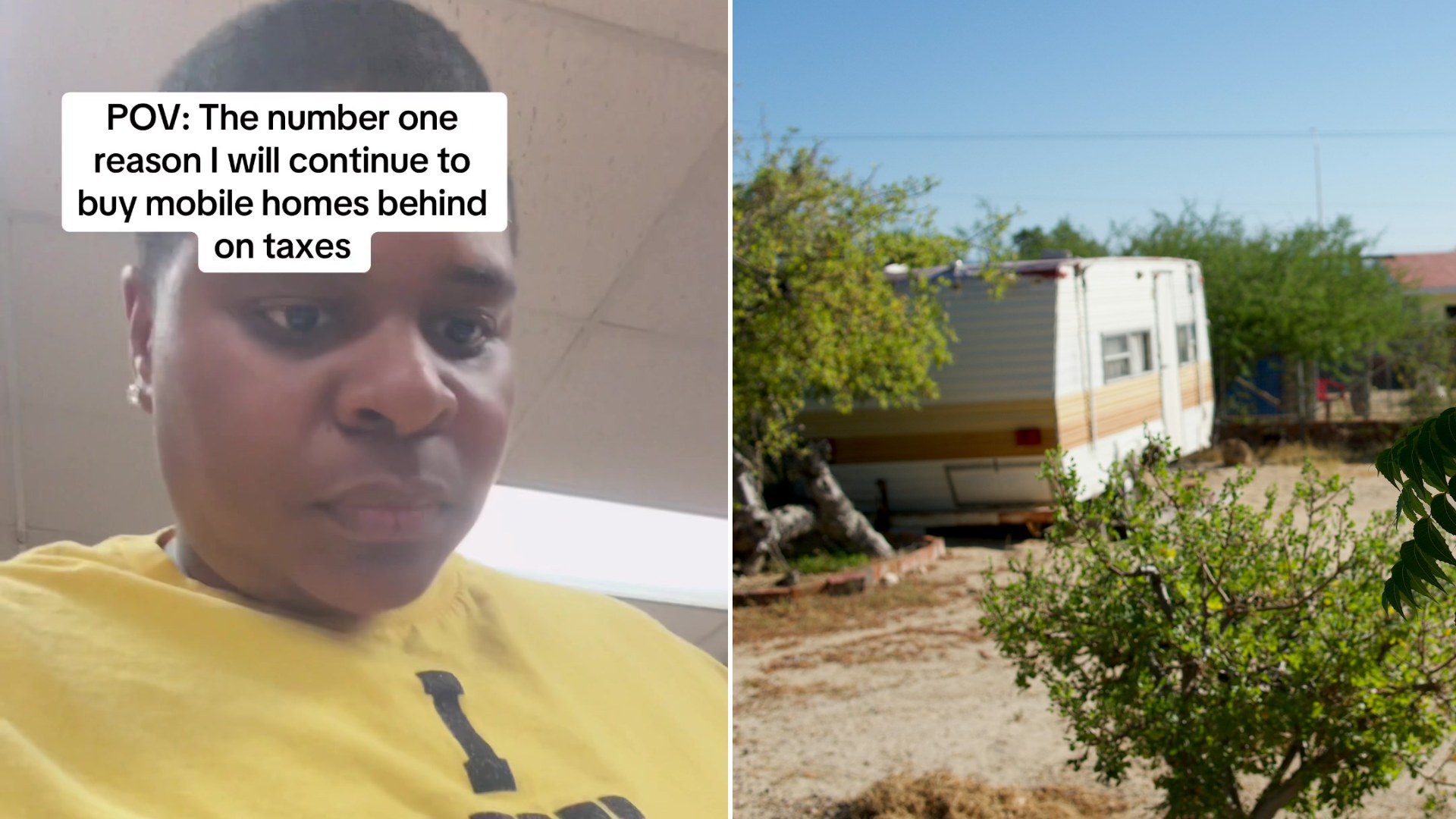
A real estate investor is walking her social media followers through one of the less glamorous corners of the property business: buying a mobile home that had fallen two years behind on its property taxes. In a video posted to TikTok, the investor films herself inside a local tax office, working through the paperwork and payments required to settle the debt, and using the moment to explain, step by step, the strategy behind the entire deal.
According to her caption, the purchase happened two years ago. She says she bought a property that was already behind on its property taxes, and that her total out-of-pocket cost for the deal was shaped directly by that delinquency. The video does not dwell on drama or conflict — instead, it functions almost like a tutorial, with the tax office visit serving as the backdrop for a plainspoken breakdown of how buying distressed property can work in practice.
Buying a home with unpaid property taxes attached is a known, if niche, strategy in the investment world. When an owner falls behind on taxes, local governments can place a lien on the property, and in some cases the debt follows the property rather than disappearing when it changes hands. Investors who understand this dynamic sometimes seek out these properties specifically, on the theory that the tax delinquency signals a motivated seller and can translate into a lower purchase price — provided the buyer accounts for the cost of bringing the taxes current.
That is precisely the mechanism the investor appears to be illustrating. By filming herself at the counter of the tax office, handling the actual bureaucratic process of resolving two years of back taxes, she gives her audience a rare look at the unglamorous administrative side of a deal that, on paper, might otherwise sound purely aspirational. Real estate content on platforms like TikTok often skips straight to the reveal — the renovated property, the profit margin — and skips past the tedious steps in between. This video leans into that in-between step instead.
Mobile and manufactured homes occupy a distinct niche within real estate investing. They are often less expensive to acquire than site-built houses, and because they can depreciate differently and carry their own set of financing and taxation rules, investors who specialize in them frequently talk about the category as its own subfield. A mobile home that is behind on property taxes can represent an entry point for buyers who might not have the capital for a more conventional distressed-property purchase, which may be part of why the creator chose to document this particular transaction for her audience.
The video’s hashtags — centered on mobile homes and investment properties — suggest the intended audience is less about spectacle and more about education. It fits into a broader wave of creators who use short-form video to demystify real estate investing for viewers who might otherwise assume the field is inaccessible without significant starting capital. Watching someone actually stand at a tax office window and settle a real, specific debt adds a level of texture that a simple explainer video wouldn’t.
It’s a reminder, too, that a lot of real estate investing happens far from the property itself — in clerks’ offices, on hold with county departments, and in the fine print of tax records. The appeal of the video, and of the strategy it documents, lies in that contrast: a process that sounds intimidating in the abstract, shown in practice as a series of manageable, if tedious, steps.
What Buyers Should Know About Tax-Delinquent Properties
Buying a property with unpaid property taxes can be a legitimate way to acquire real estate below market value, but it isn’t a shortcut. Prospective buyers should always pull a full title search before closing, since back taxes can sometimes come bundled with other liens or legal complications that aren’t immediately visible. It’s wise to get an exact payoff amount directly from the local tax office rather than relying on estimates, since penalties and interest can accrue quickly the longer a bill goes unpaid. Buyers should also budget for the worst-case scenario on total costs, since back taxes are just one of several expenses — repairs, permitting, and closing costs among them — that can turn what looks like a bargain into a break-even deal. As with any investment, patience and thorough due diligence matter far more than speed.
Leave a Reply