Sometimes the best house mysteries start with nothing more than a person walking around their own yard and noticing something that does not add up. Creator @jaystylex did exactly that, and now he is asking a question every homeowner can appreciate: how can there be a window on the outside of a house when there is no window anywhere on the inside?
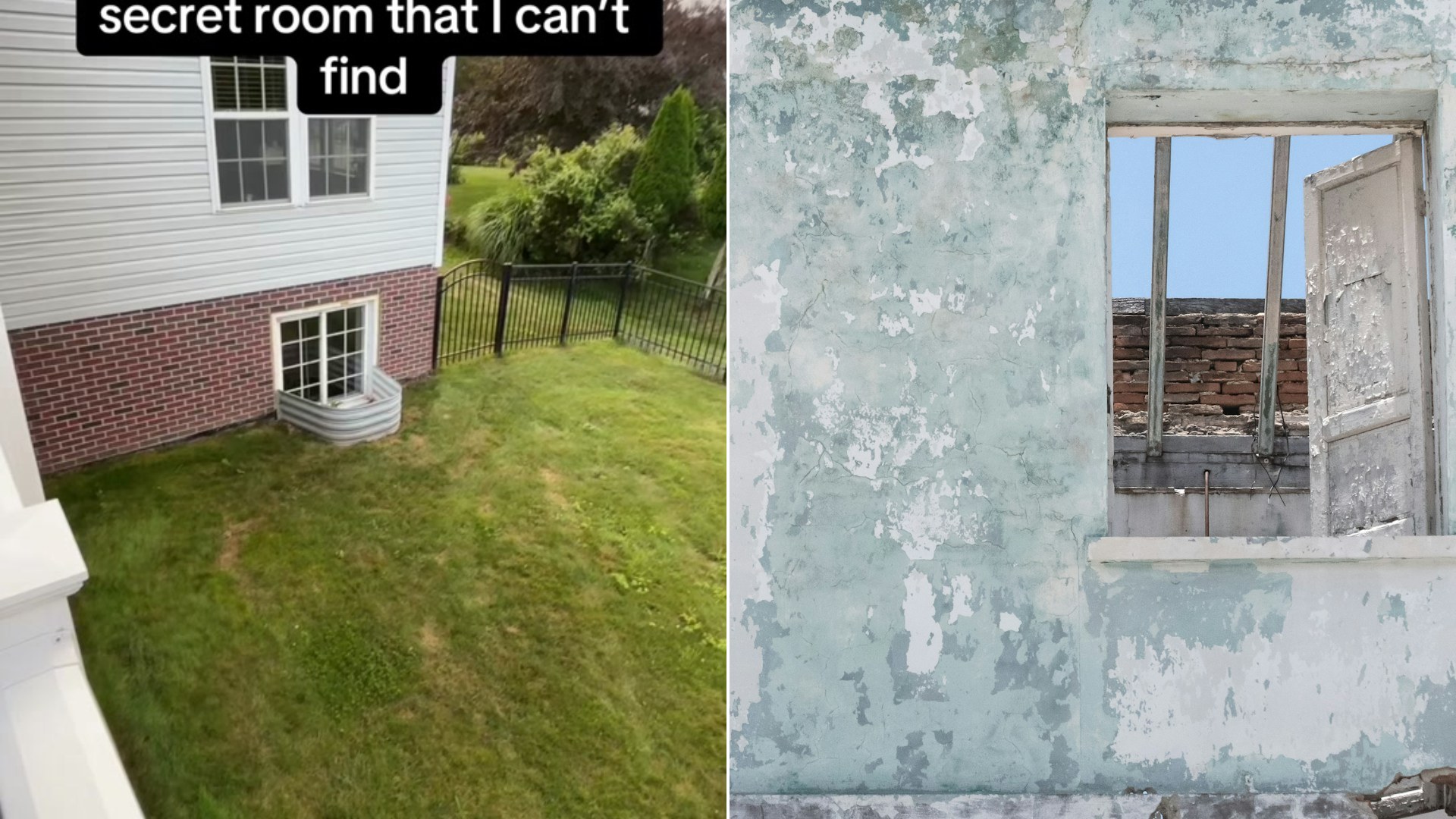
His answer so far involves a wall of concrete, a mysterious dresser and a very old children’s book. It is a short, fun story with a lot of open questions, and it is a good excuse to talk about how houses hide things in plain sight.
@jaystylex
The window that leads nowhere
The creator says he realized the other day that he could not find a certain window from the inside of his house. From the outside, the window is right there. But when he went looking for it indoors, there was nothing on the other side. By his reasoning, a wall should be standing in that spot, and that is exactly what he found: when they opened up that area, there was nothing there but concrete.
He also points out something odd jutting out from the wall in that area, though the details of what it is are hard to make out in the way he describes it. Whatever it is, it sticks out a seemingly random distance from the surface, and it was one more piece of a puzzle he could not solve.
A dresser that has never moved
Then he turned his attention to the basement. A dresser, which he calls a bureau, has been sitting in the basement since the day his family moved in. Nobody ever really thought much about it, he says, until now. He always wondered why it was nailed up against the wall, especially since it was here when nothing else was in the basement.
None of the drawers open. When he looks at the back of it, he says, you can see black where the back should be. It is open, and it leads into that room. A dresser nailed to a wall, with no drawers that open and a dark gap behind it, makes him start to think it might be a doorway into the hidden space.
He ended on a joke, nodding to the old children’s book about a lion, a witch and a wardrobe, where a piece of furniture opens into another world. At this point, the creator has not shown what, if anything, is on the other side. So the room behind the window, and the question of whether the dresser is its secret door, is still an open mystery.
Why a window can end up with no room behind it
There are a few ordinary explanations for a window that does not line up with anything inside. None of them is confirmed in this case, but they are worth knowing about.
- It was blocked on purpose. Old homes sometimes had openings filled in during remodels, additions or changes to the layout. Britain’s historic window tax is the most famous example. According to the history of the window tax, England and Wales began taxing houses by their windows in 1696, Scotland followed in 1748 and Ireland in 1799, and the tax was repealed in 1851. Assessors could count windows from the outside, so many owners bricked windows up. The same source notes, though, that blind windows were also used for appearance, to match the symmetry of a building, so not every filled-in window was about money.
- The room behind it was closed off. A house addition, a new foundation wall or a changed floor plan can leave an old opening facing a solid wall.
- It serves a space that is not a normal room. In older basements, small enclosed areas such as cold storage, coal rooms or cisterns were common, and they were often sealed or poured in concrete when they were no longer used.
How to hunt for a hidden room at home
If you have your own mystery wall, a simple method can tell you a lot before you pick up a hammer.
- Measure inside and outside. Measure the length and width of your home on the outside, then add up the rooms on the inside, including the thickness of the walls. A big gap can point to a hidden space.
- Match windows to rooms. Walk the outside and count the windows on each wall, then walk the inside and do the same. A window with no inside partner is a clue, just like the one this creator found.
- Look at furniture that does not make sense. One inspector-training article on secret rooms lists places hidden spaces have been found, including behind a decorative object on a basement wall that concealed an access panel, behind bookcases, behind a fireplace, and under stairs. A piece of furniture fixed in place can be a cover for an opening.
- Do not break into it blindly. The same article warns that unusual spaces can have mold, a single entrance and exit, and electrical modifications that were never inspected. Before you cut into a concrete or masonry wall, check what is behind it and whether it carries weight.
- Ask for records. Your county building department may have old permits or plans that explain an addition, a filled-in opening or a sealed room.
The small safety checklist
Concrete is not something to chip at casually. If a wall is poured concrete, it may be holding back soil, and removing sections can be more serious than it looks. A pro with a camera and the right tools can look through a small hole instead of opening a whole wall. If the dresser really does hide a doorway, use a flashlight first and let fresh air in before stepping inside, since closed spaces can hold stale air, dampness and mold.
For now, the story ends the way the best ones do, with a question. Is the dresser a doorway, or just a dresser somebody did not want to carry up the stairs? We hope the creator shares what he finds, and that it is something more interesting than an empty box of concrete.
In the meantime, it is worth doing your own walk-around. Count your windows from the yard, compare them with the rooms inside and see if the numbers match. You might not find a hidden world, but you may find out something new about your home.
Leave a Reply