A sign taped to the side of a big wooden entertainment center said it all: free wood cabinet. Nobody wanted the ugly old thing. One DIYer, though, looked at it and saw something else entirely, an entryway storage bench with drawers, a cabinet and a row of coat hooks.
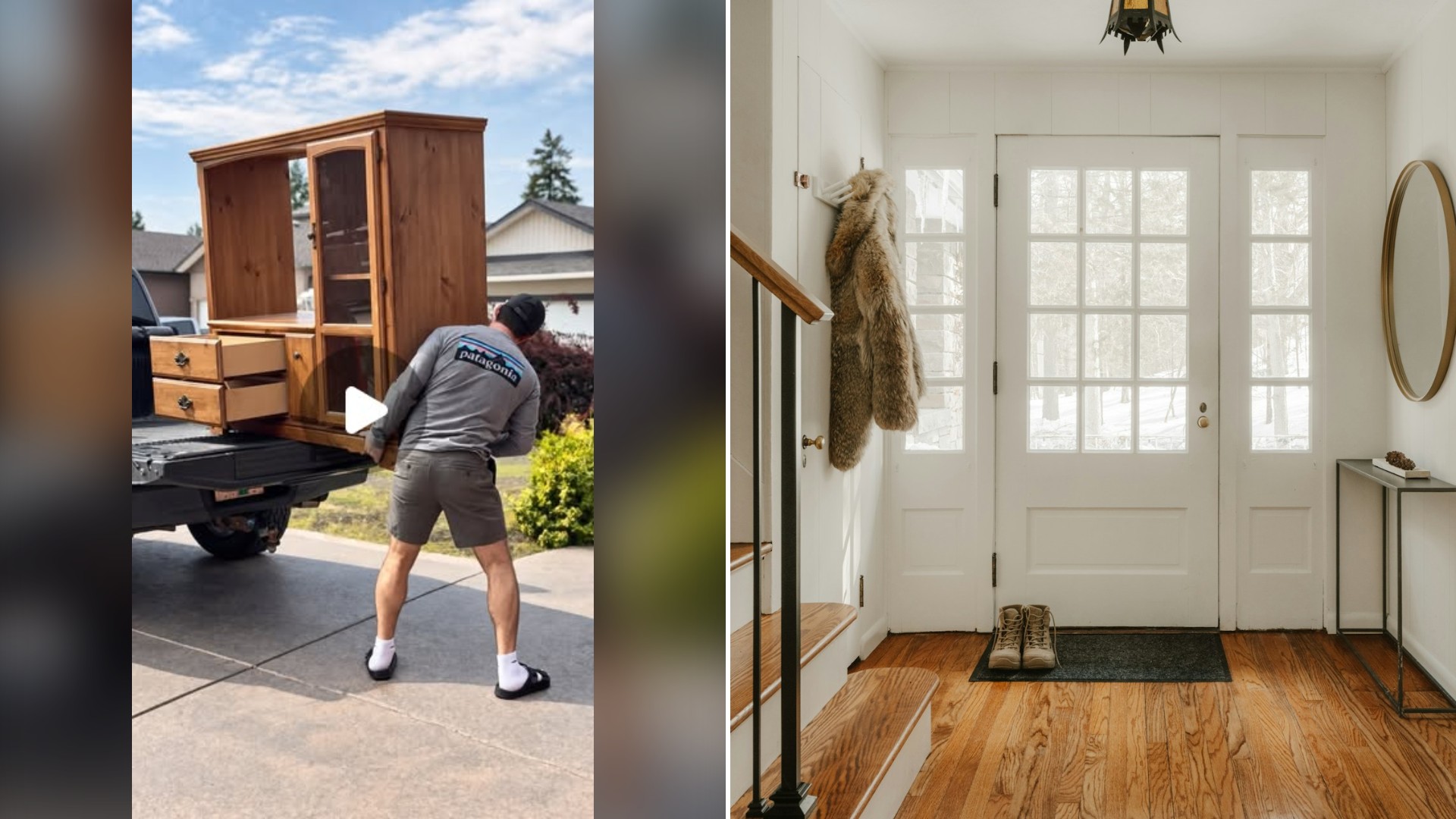
The flip is shared by @isaiahdiy, and it is a tidy lesson in looking past what a piece of furniture was to what it could be.
View on Instagram
The giveaway cabinet
The story starts with the old console sitting outside wrapped in plastic, a handwritten free sign on top. He loads the large piece into the back of a pickup truck, then rolls it into his garage workshop on a dolly while his dog wanders past. A text overlay sums up his mindset: he had a vision.
Taking it apart and cutting it down
With a power drill he removes the glass door and takes the top section apart, lifting off the large top panel. Wearing safety gear and a respirator, he uses a circular saw to cut the frame down and resize the boards. He sands the new shape and presses wood filler into holes and seams with a putty knife so the surface will look smooth once painted.
Sage green, dark stain and brass
Inside a paint tent, he sprays the console and drawers in sage green. Separate boards for the top are stained a dark wood tone and wiped down with a rag. A nail gun attaches the new top pieces to the lower bench and tall section, and modern brass knobs go onto the drawers and cabinet door. The final reveal shows the finished entryway unit with coat hooks, drawers and cabinet storage, a very different piece from the one that was sitting outside with a sign on it.
Why old entertainment centers make good raw material
Large wall units were built to hold bulky tube televisions, which makes many of them very sturdy. They often include solid framing, deep drawers and cabinet doors that can be reused. Now that flat screens have taken over, they are given away or sold cheaply, which makes them a budget friendly starting point for storage projects such as mudroom benches, bars, bookcases and craft stations.
How to plan a furniture conversion
- Sketch first. Measure the piece and your space, and decide which sections to keep before you cut anything.
- Check the construction. Solid wood and plywood take paint and fasteners well. Particleboard and laminate need more preparation and can swell if they get wet.
- Fill and sand. Old hardware holes and seams show through paint if they are not filled and sanded smooth.
- Prime for a lasting finish. A bonding primer helps paint stick to slick factory finishes.
- Add function at the end. Hooks, hardware and a stained top give a flipped piece a custom look.
Common questions
Where do I find free furniture? Curb alerts, community groups, thrift stores and moving sales are the usual places. Look for sturdy construction and flaws that can be fixed with paint or a saw.
Do I need a spray setup to paint furniture? No. A quality brush or foam roller can produce a smooth finish, though sprayers are faster on large pieces and usually need a tent or a well ventilated space.
What safety gear is worth using? Eye protection, hearing protection and a respirator rated for dust or fumes, which is exactly what you see in the workshop here. Test old finishes for lead before sanding very old pieces.
How do I anchor tall storage pieces? Use wall anchors or brackets, especially in homes with children and pets. Check your wall type first and ask a professional if you are unsure.
The takeaway
A free cabinet with an ugly finish is not a dead end. With a few tools and a plan, it can become the entryway storage most homes are missing. The next time you see a discarded piece on a curb, picture it cut down, painted and given new hardware.
Credit for the original post goes to @isaiahdiy on Instagram.
Leave a Reply