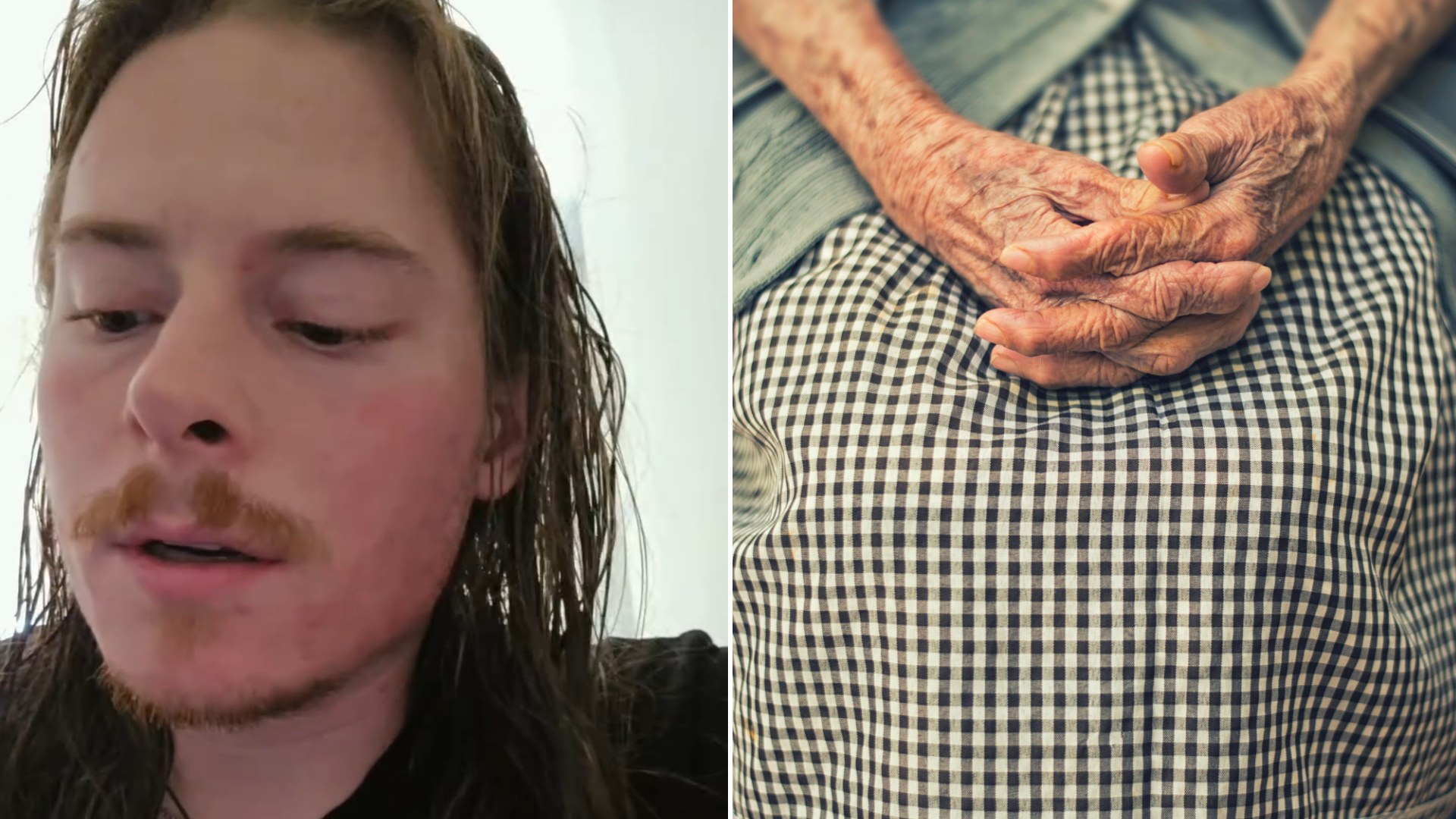
There is a particular kind of grief that comes from losing someone who was never quite family, but was never quite a stranger either — the person who held the keys to the place you came home to every night. That is the territory a creator on Instagram, who posts as @billydewitt, steps into with a video built around a single spoken-word piece.
According to the caption, the poem is simply captioned “not bad,” a low-key introduction to what turns out to be an emotionally weighty piece. In the clip, the creator shares a poignant personal anecdote about his elderly landlord’s final moments, delivering it in the cadence of spoken word rather than straight storytelling — pauses placed for effect, lines that land like a held breath.
The video does not explain who the landlord was beyond that relationship, or fill in the years that came before the ending it describes. What comes through instead is the format itself: a tenant using verse to process the passing of someone who, in a very ordinary but very real way, shaped his sense of home. It’s the kind of quiet, specific grief that a lot of renters will recognize even if their own landlord relationships never became anything like this one.
The response suggests the poem struck a chord well beyond its creator’s own following. The video has pulled in 8.1 million views, a staggering number for an account with roughly 2,600 followers — the kind of reach that happens when a piece of art taps into something a lot of people carry quietly and rarely say out loud.
Spoken word, as a form, tends to reward exactly this kind of restraint — a few carefully chosen images standing in for a much longer relationship, rather than a blow-by-blow account. Viewers are left to fill in the rest with their own memories of people who mattered to them in ways that didn’t fit a neat category, which may be part of why so many people stopped scrolling long enough to watch it through.
What makes the piece land, too, is the restraint of the form itself. A poem has to compress a relationship into a handful of lines, which forces a kind of honesty — there’s no room for filler, only the images that mattered enough to survive the editing. That compression seems to be exactly what carried the video so far past its creator’s own following.
Renting From a Person, Not Just a Property
Landlord-tenant relationships are often talked about only in terms of leases, rent checks, and repair requests, but for many renters they quietly become something more personal, especially in long-term tenancies or small buildings where an owner lives close by or checks in often. Losing a landlord you’ve known for years can carry a real sense of loss, even if it isn’t always recognized as grief in the way losing a boss or a mentor might be.
If you’re navigating a similar situation, it can help to acknowledge that the relationship mattered, rather than downplaying it because it wasn’t a family tie. Reaching out to a landlord’s family to share a memory, if that feels appropriate, can be meaningful for everyone involved. On the practical side, the death of a landlord can also raise real questions for tenants — about who now owns or manages the property, whether the lease still stands, and who to contact about repairs or rent going forward. It’s worth asking the estate, a property manager, or local tenant resources for clarity early, so uncertainty about housing doesn’t compound a loss that’s already hard enough to sit with.
Grief doesn’t always look like a funeral. Sometimes it looks like a poem recorded in a car or a hallway, posted with a caption that undersells exactly how much it says.
It’s also worth remembering that grief triggered by a piece of art or a stranger’s story online is real grief, even when it’s about someone you never met. If a video like this brings up your own unresolved feelings about a landlord, a mentor, or anyone else who occupied that in-between space in your life, it’s a reasonable and healthy prompt to reach out to someone you’ve lost touch with, or to simply sit with the memory for a moment before scrolling on.
For anyone who has lost a landlord, a longtime neighbor, or another person who occupied that particular in-between category — not family, but not a stranger — it can help simply to name the relationship for what it was, rather than downplaying it because it doesn’t fit a more conventional label of loss.
You can watch the full video and follow @billydewitt on Instagram for more.
Leave a Reply