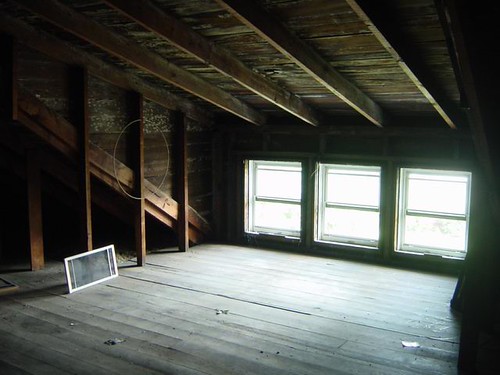
Caitlin’s new house is 100 years old, and one part of it appears to have been left completely alone for most of that time: a loft filled with old cases that nobody in her family had touched in years. Rather than diving in immediately, she’s approaching the reveal carefully, on camera, documenting the process on TikTok as @caitlin_scott123.
In her video, Caitlin introduces the untouched loft and the collection of old cases stored inside it, explaining her plan to open everything carefully and without causing damage to either the contents or the loft’s aging structure. She stops short of revealing what’s actually inside the cases, saving that discovery for a follow-up rather than rushing the reveal.
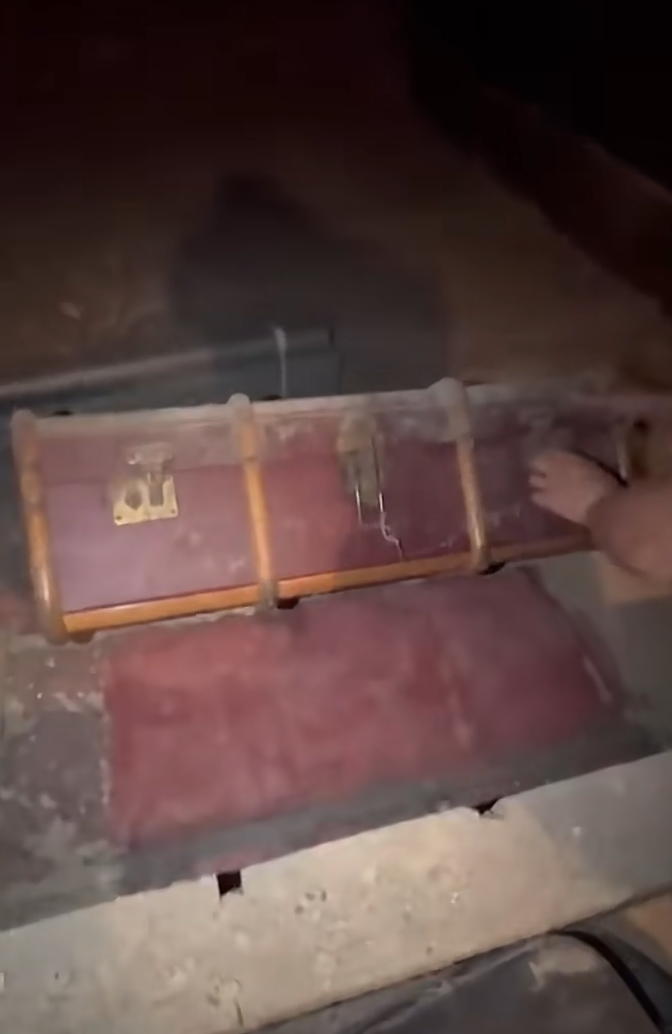
In keeping with that approach, this piece does not speculate about or describe the cases’ contents ahead of Caitlin’s own follow-up confirmation. It’s also worth flagging plainly that unstable, long-untouched lofts can pose real safety risks, from weak flooring to unknown or deteriorated materials, and any similar exploration should be approached with real caution rather than treated as a casual poke around.
What makes the setup so effective as a piece of storytelling is the patience it requires from both creator and audience. A century-old, completely undisturbed space carries genuine narrative weight before a single case is even opened, and Caitlin’s choice to slow the reveal down rather than rushing to the payoff builds anticipation that a faster approach would lose.
Old-house mystery content thrives on exactly this kind of deferred gratification, an untouched space promises something, and viewers return specifically to find out what. Whether the cases turn out to hold something remarkable or something mundane, the careful, safety-conscious approach to opening them is itself worth documenting.
Lofts in houses this age present their own particular structural concerns that go beyond the general caution a renovator would apply to any old space. Flooring in a loft built a century ago was often designed only to bear the weight of light storage rather than regular foot traffic, which means joists that look solid from a glance can still be inadequate for someone standing and moving around for an extended period. Checking for soft spots, visible sagging, or signs of water staining before committing real weight to any section of flooring is a reasonable first step regardless of how eager anyone is to get to the cases themselves.
There’s also a preservation angle worth considering before the cases are even opened. Whatever has sat undisturbed in that loft for decades has likely adapted to a stable, consistent environment, and a sudden shift in humidity, light exposure or temperature when a case is finally opened can sometimes cause more damage to fragile old materials than the decades of storage ever did. Collectors and archivists dealing with genuinely old finds often recommend opening slowly, in a controlled setting, rather than immediately exposing contents to a fully lit, climate-different room, precisely to avoid accidentally damaging something that survived a hundred years of neglect only to be harmed in the moment it’s finally found.
The Takeaway
If you discover a long-untouched space in an older home, an attic, a loft, a sealed closet, resist the urge to rush in and start digging through everything at once. Check the structural stability of the space itself first, since old, undisturbed areas can have weakened flooring or deteriorated materials that aren’t obvious at a glance. Taking the time to document a discovery like this carefully, rather than rushing the reveal, often makes for a more meaningful outcome than treating it as something to get through quickly.
Leave a Reply