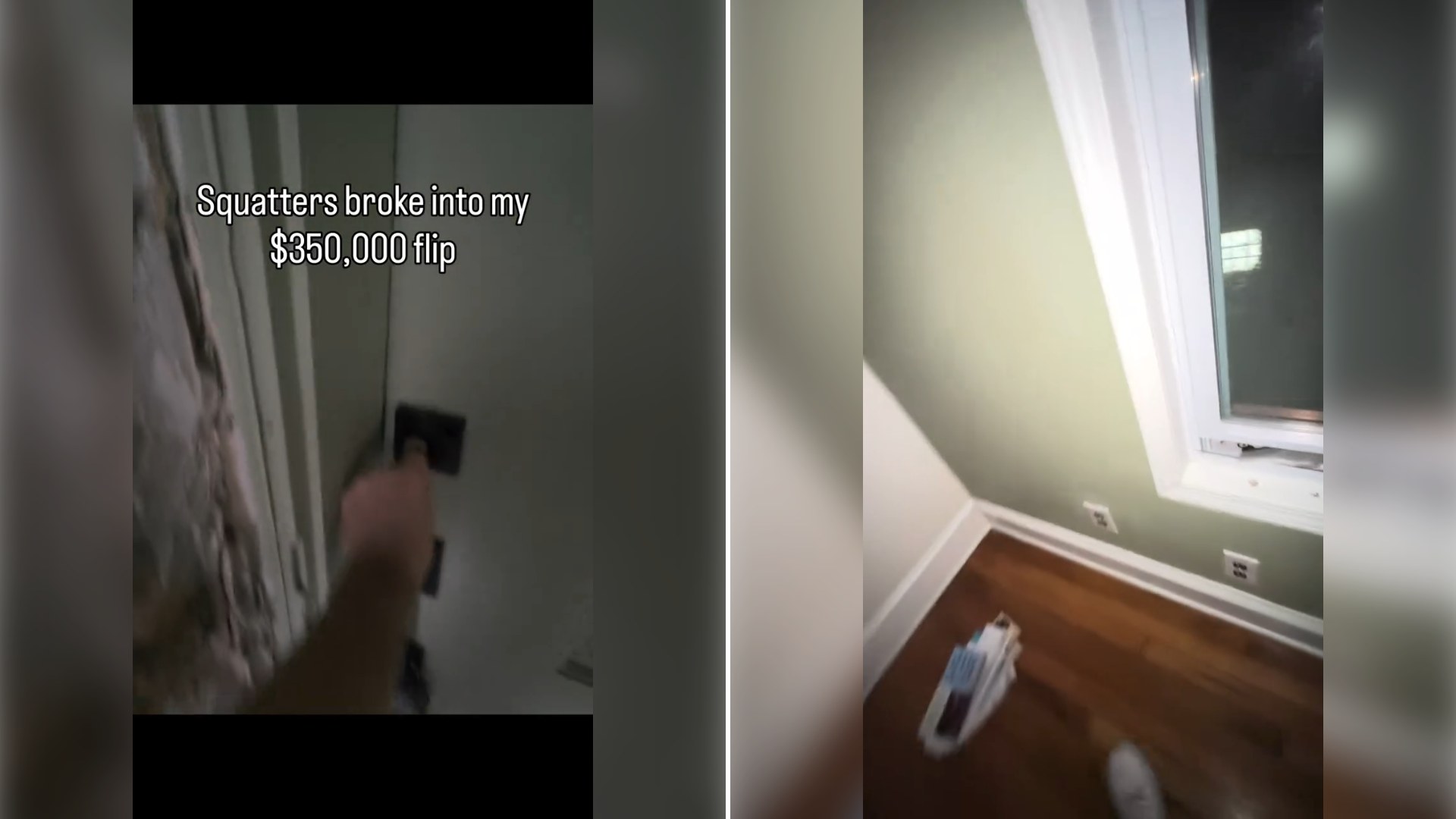
Not every renovation surprise is a pleasant one. Investor @romankatzre (Instagram) walks into a property he’s in the middle of flipping only to discover that squatters have moved in, turning a routine renovation check into a tense, unplanned confrontation. “What a mess,” he says, summing up a scene that most real estate investors dread but far too many eventually encounter.
Squatting has become a genuinely significant issue within the house-flipping and investment property world, particularly for vacant properties sitting between purchase and renovation. An empty home, especially one visibly mid-construction with limited security, can look like available shelter to someone in a desperate situation, and investors who don’t actively monitor their vacant properties can end up facing exactly this scenario.
There’s a reason content like this performs so well despite, or maybe because of, its unglamorous subject matter. Most real estate investment content online skews heavily toward the triumphant reveal, the stunning before-and-after, the closing day celebration, while the genuinely difficult, sometimes legally complicated parts of the business rarely get documented honestly. A confrontation like this one offers a far more complete picture of what investing in distressed properties actually involves.
It’s worth understanding just how legally complicated squatter situations can become, which is likely part of what makes this kind of discovery so stressful for an investor to navigate. Depending on the jurisdiction, removing a squatter isn’t always as simple as calling the police, many areas require a formal eviction process even for someone with no legal claim to a property, a legal reality that can delay renovation timelines significantly and add unexpected costs.
This kind of story also sheds light on a less discussed risk factor in the broader house-flipping business model. Much of the popular media coverage of flipping focuses on renovation budgets and market timing, but property security during the vacant period between acquisition and construction represents a genuine, often underestimated line item that experienced investors have learned to budget for, whether through security systems, regular check-ins, or temporary fencing.
There’s also a human dimension to squatting situations that’s worth acknowledging even within a real estate content context. Squatting is frequently a symptom of a genuine housing affordability crisis and inadequate shelter options, and while an investor absolutely has legitimate interests in protecting their property, the broader phenomenon reflects systemic pressures that extend well beyond any single flip project or confrontation caught on camera.
It’s also worth noting how this kind of content functions as genuinely useful risk education for newer investors entering the house-flipping space with unrealistic expectations. Seeing an experienced investor face this exact scenario, and presumably navigate it to some resolution, offers more practical preparation than any amount of purely aspirational renovation content focused only on the glossy final result.
There’s a broader lesson here too about the gap between real estate investing as it’s often marketed, a relatively passive path to wealth, and real estate investing as it actually operates on the ground, a business that requires active management of genuinely unpredictable situations, legal complexity, and occasionally outright conflict that no amount of market research can fully prepare someone for.
In the end, moments like this one matter because they’re honest. Flipping houses involves far more than demo days and reveal videos, and an investor willing to document the genuinely difficult parts of the business is offering a far more useful, far more complete education than the curated highlight reels that dominate most real estate content online.
Leave a Reply