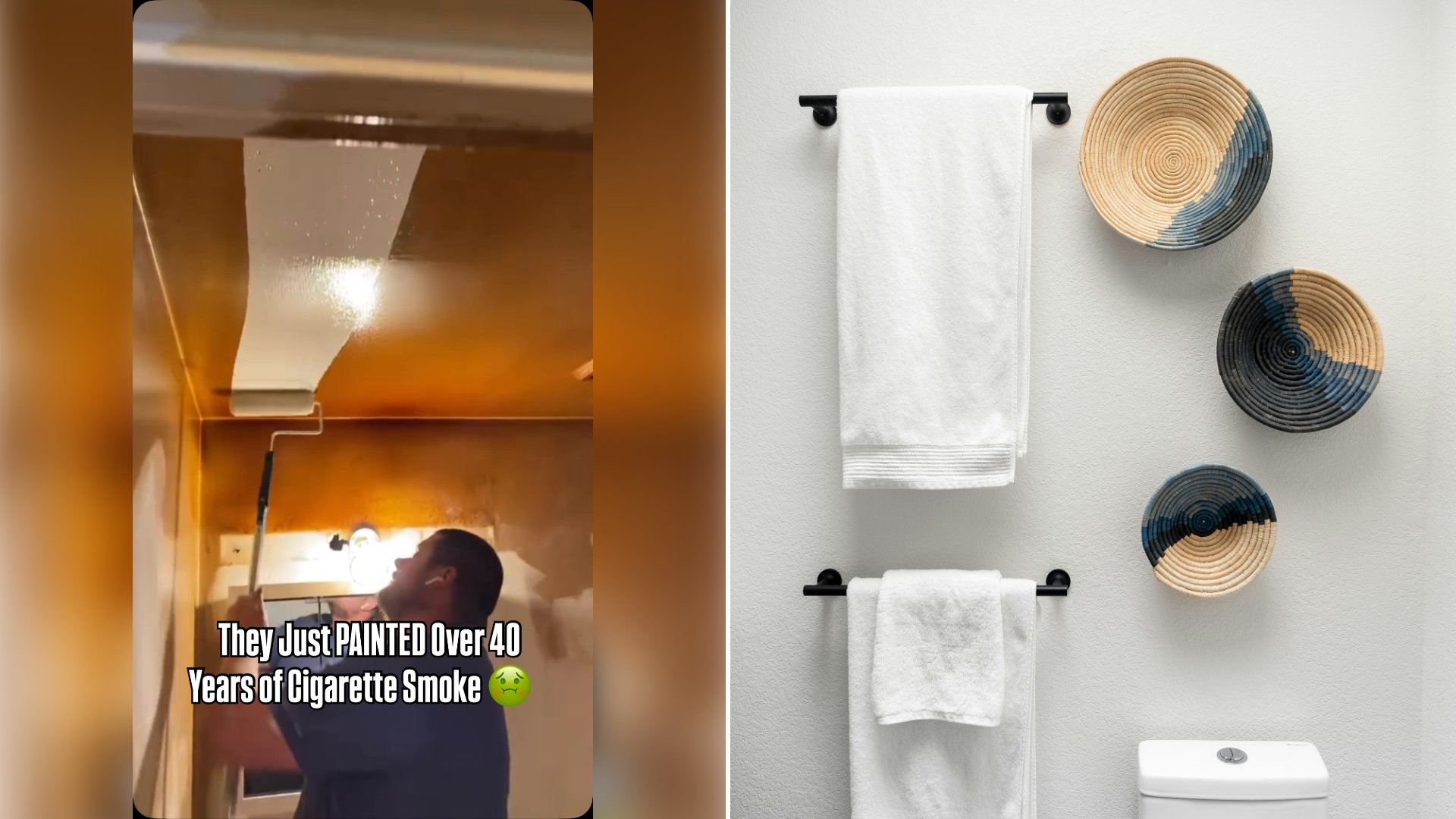
The 48 second Instagram reel from @adhdrealtor.sandiego starts with a clip of a painter standing on a ladder and rolling bright white paint across a ceiling and wall that are stained a deep amber brown. Text across the bottom reads “They Just PAINTED Over 40 Years of Cigarette Smoke.” About ten seconds in, the video cuts to the creator herself, filming in her kitchen in glasses and a dark hooded sweatshirt.
Her caption opens with the complaint: “Watching them paint WHITE PAINT directly over this without even attempting to clean it first.” She says the yellow and brown coating is not just dirty walls, and that the bathroom shown has what she describes as decades of cigarette smoke residue built up on its surfaces. She adds that someone may have been smoking in that bathroom for 30 to 40 years. The painter’s footage is someone else’s, and the reel does not say where the bathroom is.
The core of her argument is that smoke damage cannot be solved with a coat of paint. The caption says the residue and odor can be on and in the drywall, cabinets, flooring, subfloor, trim, ceilings and even the ventilation system, and that in a room as heavily affected as this one she would be concerned about what is inside the bathroom exhaust vent too.
She lays out what she believes the right order of work is. Proper smoke remediation, she says, starts with cleaning and removing contaminated materials where necessary, not “covering everything with fresh white paint and pretending it’s gone.” With damage this extensive, she says some materials may need to be completely removed and replaced before anyone seals, primes and repaints. Her closing line is that fresh paint might make a room look better temporarily but does not make decades of residue disappear.
For anyone doing the work themselves, her sequence is easy to follow. Wash and clean the surfaces first. Remove materials that are soaked with residue when cleaning is not enough. Seal and prime before the finish coat goes on. She also points to the exhaust vent, which is easy to forget because it sits above eye level, and says a heavily affected room is a reason to look inside it.
Public health guidance supports washing before painting. A Los Angeles County public health fact sheet on thirdhand smoke says nicotine and tar cling to walls and ceilings, and advises thoroughly washing walls and ceilings with detergent and very hot water to remove as much residue as possible. It warns that if walls are not thoroughly washed before repainting, nicotine can seep through even multiple layers of paint. The fact sheet also says the cleaning steps it recommends cannot remove all of the potential problems, though they can reduce the residue and some of the off-gassing, and it recommends cleaning ducts and replacing filters because heating and air conditioning systems recirculate stale smoke through a unit.
Leave a Reply