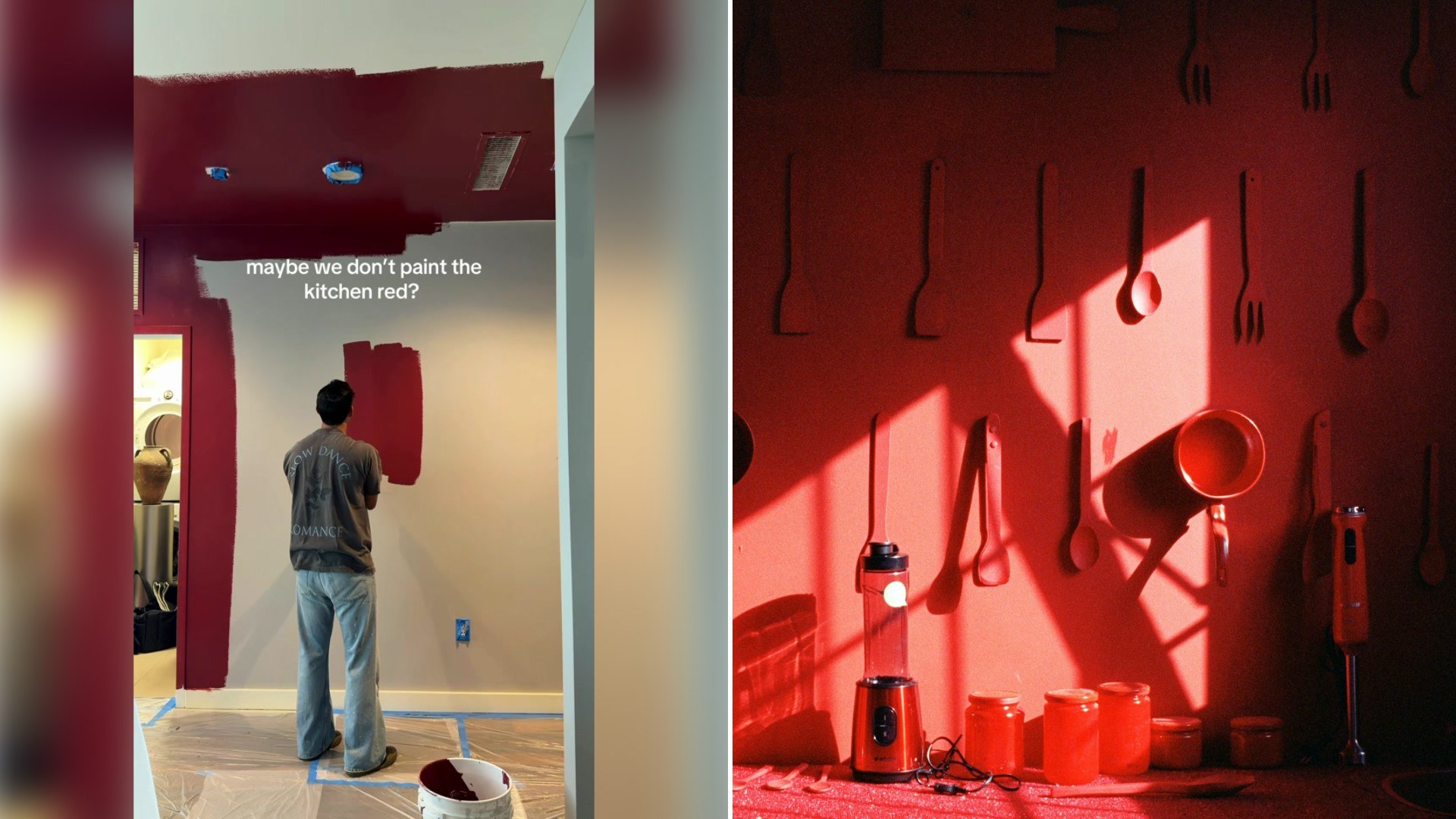
A creator debates whether to paint a kitchen and ceiling a deep red color, then goes ahead with the bold choice, documenting the labor-intensive painting process and the finished result, declaring “zero regrets” despite the risky color choice. It is the kind of clip that stops a scroll not because of a dramatic twist, but because of how ordinary its starting point is, right up until the moment everything changes on camera.
There’s a rawness to how the moment is captured, nothing about it reads as overly rehearsed, and that unpolished quality is a big part of why it plays as believable rather than performative. Viewers aren’t just being shown an outcome, they’re being walked through the process that produced it.
@donborsch 0 regrets by the way 😍 #kitchen #paint #interiors #apartment ♬ original sound – Luis Arturo
As @donborsch tells it, the story is grounded in specifics rather than generalities, and that groundedness is exactly what separates a clip like this one from the more staged, aspirational content that tends to circulate in the same corners of social media.
The broader trend of real, unpolished home content standing in for the more staged version of the same subject says something about where audience taste has shifted in recent years. A decade ago, the dominant home-related content online leaned heavily on glossy, magazine-style photography; today, the videos that travel furthest tend to be the ones willing to show the mess, the delays, and the moments that didn’t go according to plan.
None of this happens without real financial stakes sitting just underneath the surface of the video. A renovation, a purchase, a repair, whatever the specific project, it almost always represents a meaningful chunk of someone’s savings or time, and that sense of real stakes is part of what keeps a thirty-second clip from feeling disposable the way so much other short-form content does.
What separates the clips that actually spread from the ones that don’t usually comes down to specificity rather than production value. A viewer doesn’t need cinematic lighting to stay engaged, they need a clear sense of what changed, why it mattered, and what it took to get there, and the videos that nail those three things tend to outperform far more polished content that skips past them.
There’s also a quieter pattern running through this kind of content: the way it treats a home less like a static asset and more like an ongoing project that’s never quite finished. Each reveal, each reno, each discovery becomes one chapter in a longer story about a property, and that serialized, ongoing quality is part of why audiences keep returning to the same accounts long after the first viral clip fades from their feed.
It’s easy to forget, watching a sped-up transformation, just how much of the actual work happens in stretches that never make it to video at all, the waiting on permits, the back-and-forth with contractors, the slow accumulation of small decisions that only look inevitable once the project is finished. The condensed version trades all of that friction for a clean narrative arc, which is part of the appeal and part of the distortion.
For anyone who has gone through a similar project themselves, watching someone else’s version play out on a screen can double as a kind of validation, a reminder that the frustration, the unexpected costs, and the long stretches where nothing seemed to be happening were a normal part of the process rather than a sign that something had gone uniquely wrong.
The home-improvement corner of social media has also become something like a public record of how tastes and priorities are shifting in real time, house by house, as more people document their own choices rather than relying solely on professionally staged listing photos or polished renovation shows to set the tone for what a home is supposed to look like.
For anyone watching and wondering what, if anything, applies to their own home or their own plans, the lesson is rarely about copying the exact project shown. It’s more about the mindset behind it: being willing to document the unglamorous middle of a project, being specific about costs and timelines rather than vague about them, and treating the finished result as the payoff for a process that was messier and slower than any thirty-second clip can fully capture.
However the story continues from here, the clip has already done what it set out to do: give viewers a genuine, specific look at a moment most people only ever imagine from the outside.
Leave a Reply