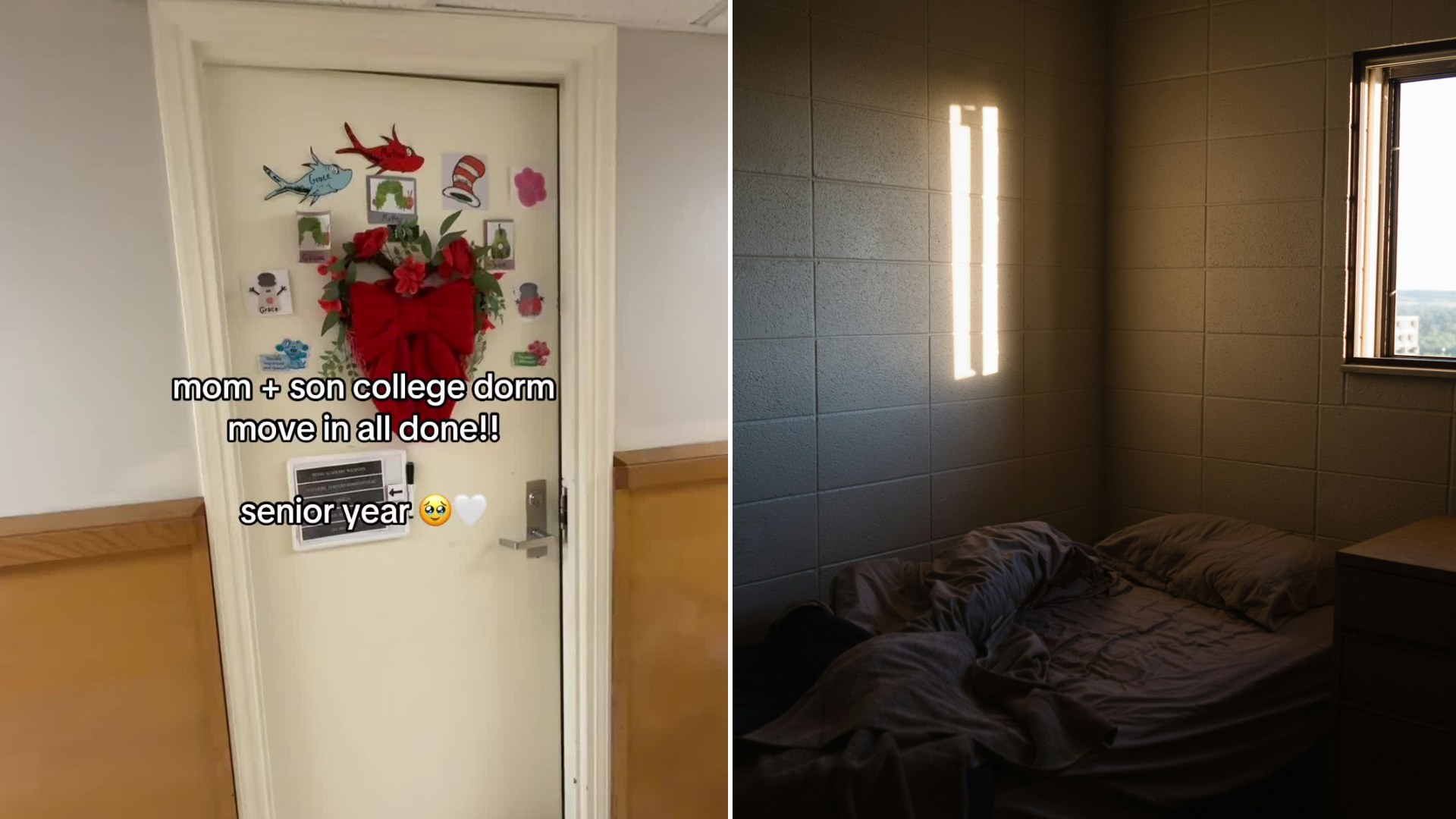
Most college dorms are built for one kind of resident: a single student living alone or with a roommate. But Grace D’Amato, a senior working toward her degree, and her 6-year-old son Matteo share a room inside a very different kind of campus housing — one specifically designed for parents attending college with their children. D’Amato, who posts as @gracie.angela on TikTok, has been showing followers what that daily life actually looks like, after some critics questioned whether a dorm was any place to raise a child.
D’Amato and Matteo, who recently started first grade, live through the university’s Single Parent Scholar Program, a housing initiative built specifically for student parents rather than a general accommodation any student can request. It’s an important distinction: this isn’t a standard dorm room a family talked their way into, but a purpose-built program with its own eligibility, layout and community — one of a small but growing number of similar efforts at colleges around the country aimed at making higher education more accessible to parents. Housing through the program is free for full-time students, and families are able to stay on through summer break rather than having to find alternative housing when the semester ends, which D’Amato says removes one of the biggest logistical headaches student parents typically face.
The physical setup reflects that intent. D’Amato’s floor is shared with two other mothers and their children, along with a dedicated playroom where the kids can spend time together outside of anyone’s individual room. She describes the program as “a community specifically designed to allow parents and children to live, learn, and grow together,” a description that shapes everything from the floor plan to the daily rhythm of who’s watching whose kid at any given moment.
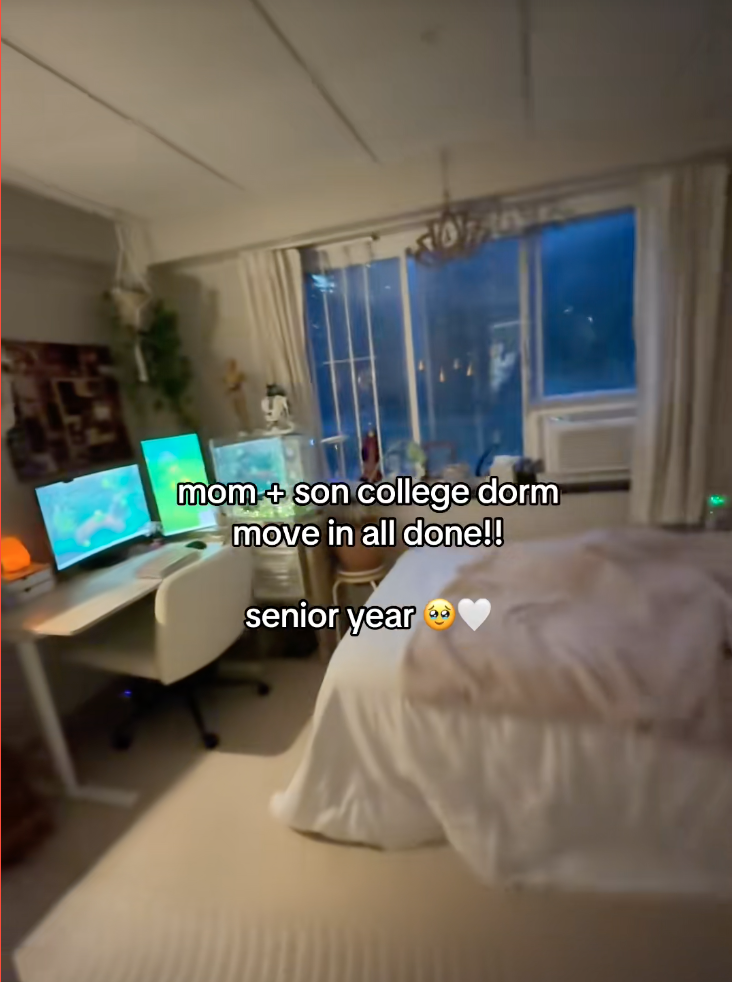
That rhythm, as D’Amato has shown online, looks more like a structured family routine than a typical dorm schedule. Mornings start with breakfast together before she walks Matteo to the bus for school. During the day, D’Amato arranges her own class schedule around his — a level of coordination that student parents without this kind of support often have to manage without any institutional help at all. Evenings bring what the floor calls “family dinner,” with the moms and children from D’Amato’s floor cooking and cleaning up together rather than each family fending for itself. Afterward, the kids play together in each other’s rooms or in the shared playroom. D’Amato has said the children on her floor have grown close enough that they think of each other more like siblings than friends who happen to live nearby.
It’s that closeness — the built-in community of other parents facing the same juggling act — that D’Amato points to when addressing critics who’ve suggested a dorm is an unstable or inappropriate place to raise a young child. Rather than isolating Matteo from a conventional childhood, she says the program has surrounded him with playmates, consistent routines and adults who understand exactly what her days look like, in a way an apartment off campus, absent that community, might not.
Programs like the one D’Amato is part of remain relatively rare, and she has been careful in her videos to frame it as a specific opportunity at her school rather than something available to every college parent. For now, though, it’s given her a way to finish her degree without choosing between her education and her son’s day-to-day stability — and a daily life that, by her account, looks less like a compromise and more like a small, built-in village.
The Takeaway
Student parents face a specific set of obstacles — inflexible schedules, expensive childcare, housing that assumes no one on campus has a kid — and programs built around those realities can make finishing a degree possible instead of theoretical. If you’re a parent weighing a return to school, it’s worth researching whether your college or a nearby one offers dedicated student-parent housing, family-friendly financial aid, or on-campus childcare, since these programs aren’t universal and often aren’t advertised prominently. Building a small community of other parents in similar situations, even outside a formal program, can also make the logistics far more manageable. The bigger lesson here isn’t that a dorm is the right setting for every family — it’s that the right kind of institutional support can turn an overwhelming juggling act into something sustainable.
Leave a Reply