
When Amber Moriah Jones’s father died unexpectedly in 2020 after a blood clot reached his heart, the 35-year-old senior marketing manager and national gymnastics judge says her sense of what mattered most changed overnight. So when her mother, who had been living in Houston, needed a new place to land after the loss, Jones invited her into her own home in Atlanta — an arrangement she has documented on TikTok as @itsambermoriah, and one she describes in her videos as a source of comfort rather than compromise.
Jones has never married and does not have children, and by her own account could afford to live independently. That’s part of what makes her choice a talking point online: this isn’t a story about financial necessity, but about a deliberate decision to prioritize time with an aging parent after losing another one without warning. “I’ve already lost one parent. I don’t want to look back on these years and wish I’d spent more time with her,” Jones says, describing the mindset that followed her father’s death. She adds simply, “Tomorrow is never promised.”
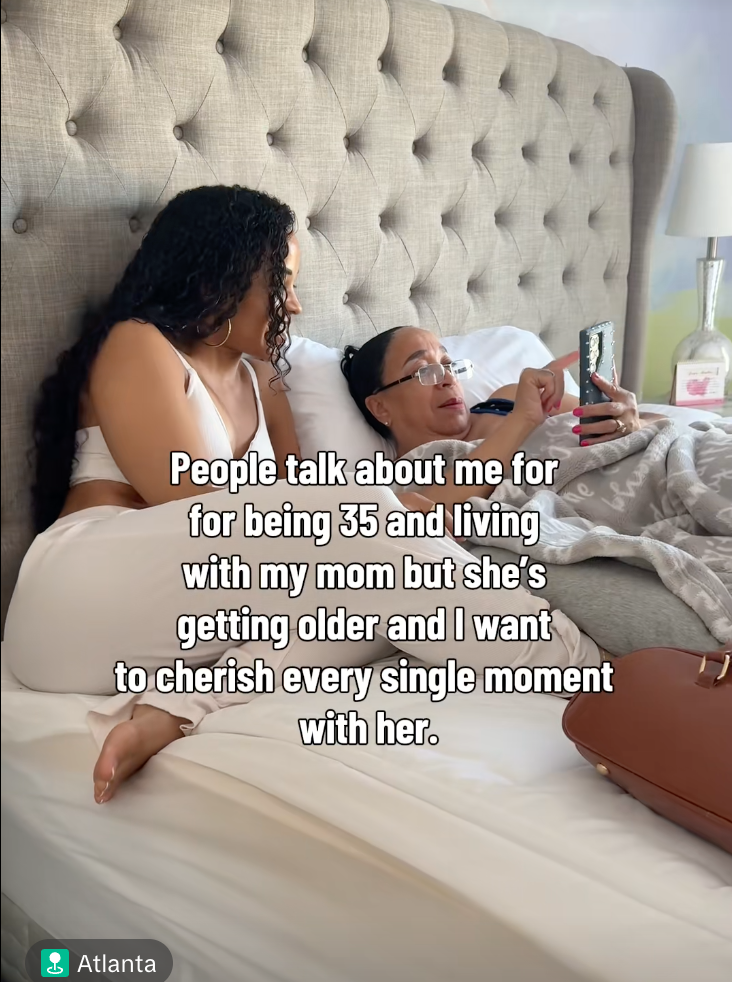
That perspective didn’t arrive fully formed. Jones says the first two years of living with her mother again were an adjustment for both of them — two adults with their own routines and independence learning to share a household after years apart. Grief complicated the transition further; both women were mourning the same loss while trying to build a new day-to-day rhythm together. Over time, though, Jones says the relationship settled into something neither had expected: a close, easy companionship. “My mom is my mom, but she’s also my best friend, and living together is peaceful,” she says.
Much of that peace, Jones says, comes down to how the household actually runs. Her mother volunteers weekly at a local food bank and has taken on cooking and grocery shopping for the home, giving the arrangement a sense of mutual contribution rather than one-directional caretaking. The two share low-key routines that Jones describes as some of her favorite parts of the day: watching shows like Bridgerton and Ginny & Georgia together, running errands, shopping, and praying. It’s a domestic life built less around obligation and more around the kind of companionship Jones says she didn’t fully appreciate before her father’s death forced a reckoning with how quickly time with a parent can run out.
Jones has been candid that not everyone understands the choice. Moving a parent in — or moving back in with one — still carries a stigma in a culture that tends to treat independent living as the default marker of adulthood, especially for someone in her mid-30s with a stable career. But Jones pushes back on the idea that the arrangement reflects any kind of setback. For her, it’s the opposite: a proactive decision made with clear eyes about mortality, grief, and what she actually wants her life to look like right now, rather than a fallback forced by circumstance.
The story lands at a moment when multigenerational households are becoming more visible, if not yet fully normalized, in American life — driven by everything from housing costs to eldercare needs to, as in Jones’s case, grief and a desire for connection. What distinguishes her account is that it isn’t framed as a burden shouldered reluctantly. It’s framed as something closer to a gift: more time, more routine togetherness, and — for two women who lost the same person — a shared home to grieve and heal in rather than doing it apart.
The Takeaway
Losing a parent has a way of reordering priorities, and for some families, that reordering means living together isn’t a step backward — it’s a conscious choice. If you’re weighing a similar decision, it helps to separate the stigma from the substance: ask whether the arrangement actually serves the people in it, not whether it matches an idealized image of independence. Set expectations early on daily responsibilities like cooking, chores, and space, since friction often comes from logistics rather than the decision itself. And give the adjustment time; even close relationships need a runway when living arrangements change, especially amid grief. Multigenerational living isn’t right for every family, but when it’s chosen deliberately and built with mutual give-and-take, it can become less about need and more about the time you get to keep.
Leave a Reply