A man set out to give back to his wife’s grandparents by building them a brand new handicap ramp, and true to form, her grandmother ended up pitching in to help, just as she’s apparently done on countless projects before. In the video, @caleb.dailyy documents the build and frames it as a chance to finally return years of support from a family member who’s always been willing to lend a hand.
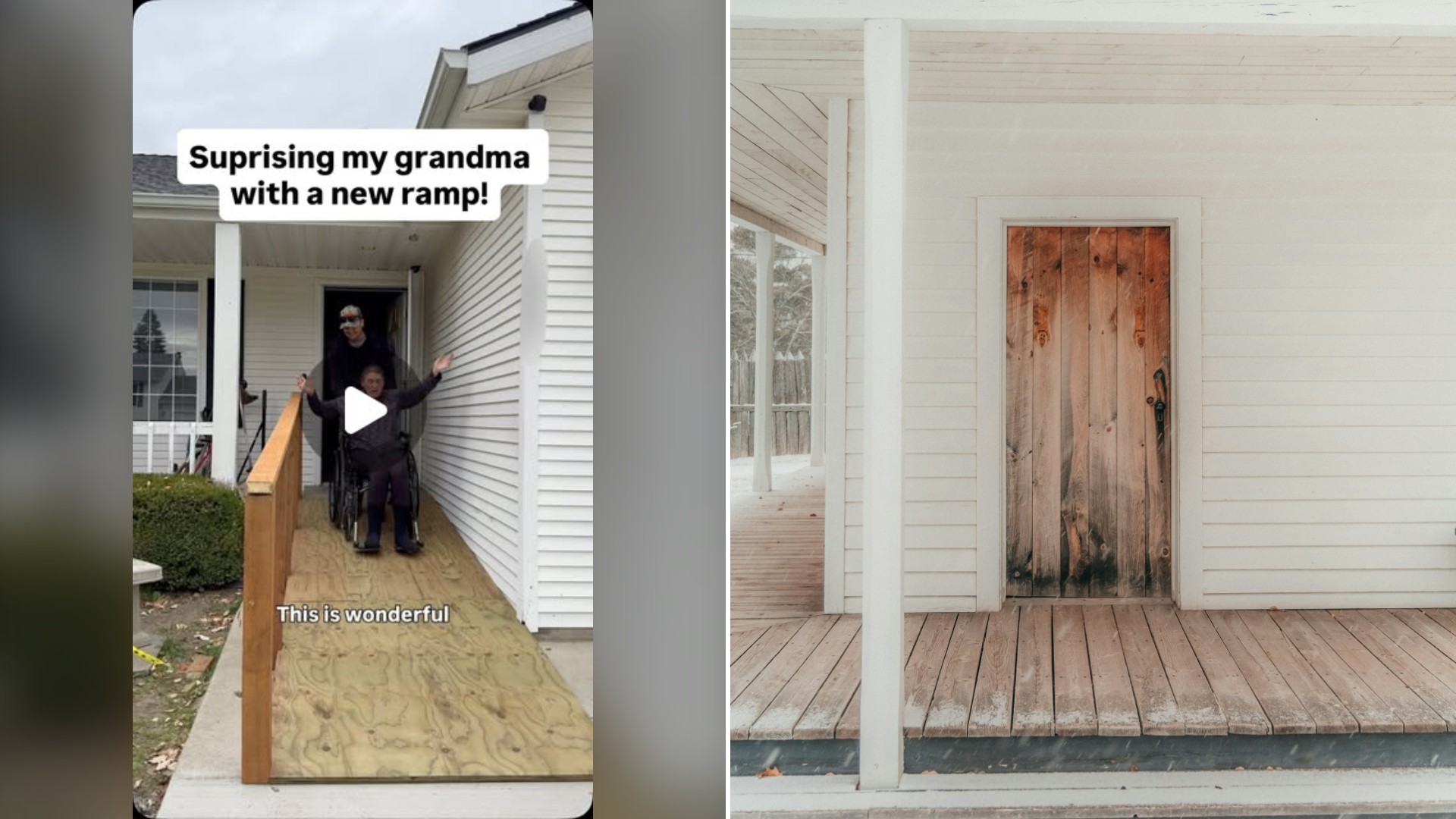
There’s a nice symmetry to the story: a project built specifically to make life easier for an older family member, with that same family member showing up to help build it anyway. It’s the kind of detail that turns a practical home-improvement project into something warmer, and it’s clearly resonated with viewers who’ve seen their own family dynamics reflected in it.
Building a residential wheelchair ramp is one of the more code-sensitive home improvement projects a DIYer can take on, since the slope has to be gentle enough to be safely navigable. The widely cited standard from the Americans with Disabilities Act calls for a maximum slope of 1 inch of rise for every 12 inches of ramp length, meaning a ramp rising just 2 feet off the ground needs to run at least 24 feet to meet that guideline, a length that often surprises first-time builders who initially picture something much shorter.
Material choice typically comes down to a tradeoff between cost and longevity. Pressure-treated wood remains the most common and most affordable material for a DIY ramp build, generally running a few thousand dollars total for materials on a modest residential project, while aluminum ramp systems cost considerably more but require far less ongoing maintenance and tend to hold up better against weather over many years. Concrete ramps sit at the top end of the cost range but are typically the most durable long-term option for a permanent installation.
Beyond slope, a handful of other details separate a ramp that merely works from one that’s genuinely safe for daily use by an older adult. Non-slip surface treatments, sturdy handrails on both sides, and a landing platform at the top that’s large enough to maneuver a wheelchair or walker safely are all standard recommendations from accessibility specialists, and skipping any of them is a common mistake in first-time DIY ramp builds.
For families considering a similar project, several nonprofit and community organizations across the country offer free or low-cost ramp-building assistance for elderly or disabled homeowners who can’t afford the materials or labor themselves, a resource that’s often underused simply because people don’t know it exists. For those building it themselves, as this family did, local building departments can typically confirm whether a permit is required, which varies depending on the ramp’s size and whether it’s a permanent or temporary structure.
Projects like this one are a reminder that accessibility upgrades don’t have to feel purely clinical. A ramp built by family, with a beloved grandmother on site helping out, becomes part of the home’s story in a way a contractor-installed version rarely does, even if the end result serves the exact same practical purpose.
More from Willow and Hearth
- Husband quietly built his wife’s dream home library from scratch as a surprise and the final reveal of the finished space has become one of their most cherished renovations
- Creator filmed herself getting ready on the exact day she signed the papers on her very first home and could not hold back the emotion in the middle of it all
- Landlord Says Tenants Moved Out After 27 Years, Then Walks the Empty House for the First Time and Finds Good Floors, Stained Bedroom Carpet and a Bare Garage
Leave a Reply