Apartment hunting in New York City is never easy, but @gailthegirl thought she had seen every hoop landlords make renters jump through. Then she and two friends found a $7,000-a-month apartment in Manhattan’s East Village and were told what it would take just to apply. Together, they would need to earn 103 times the monthly rent. That works out to roughly $720,000 a year.
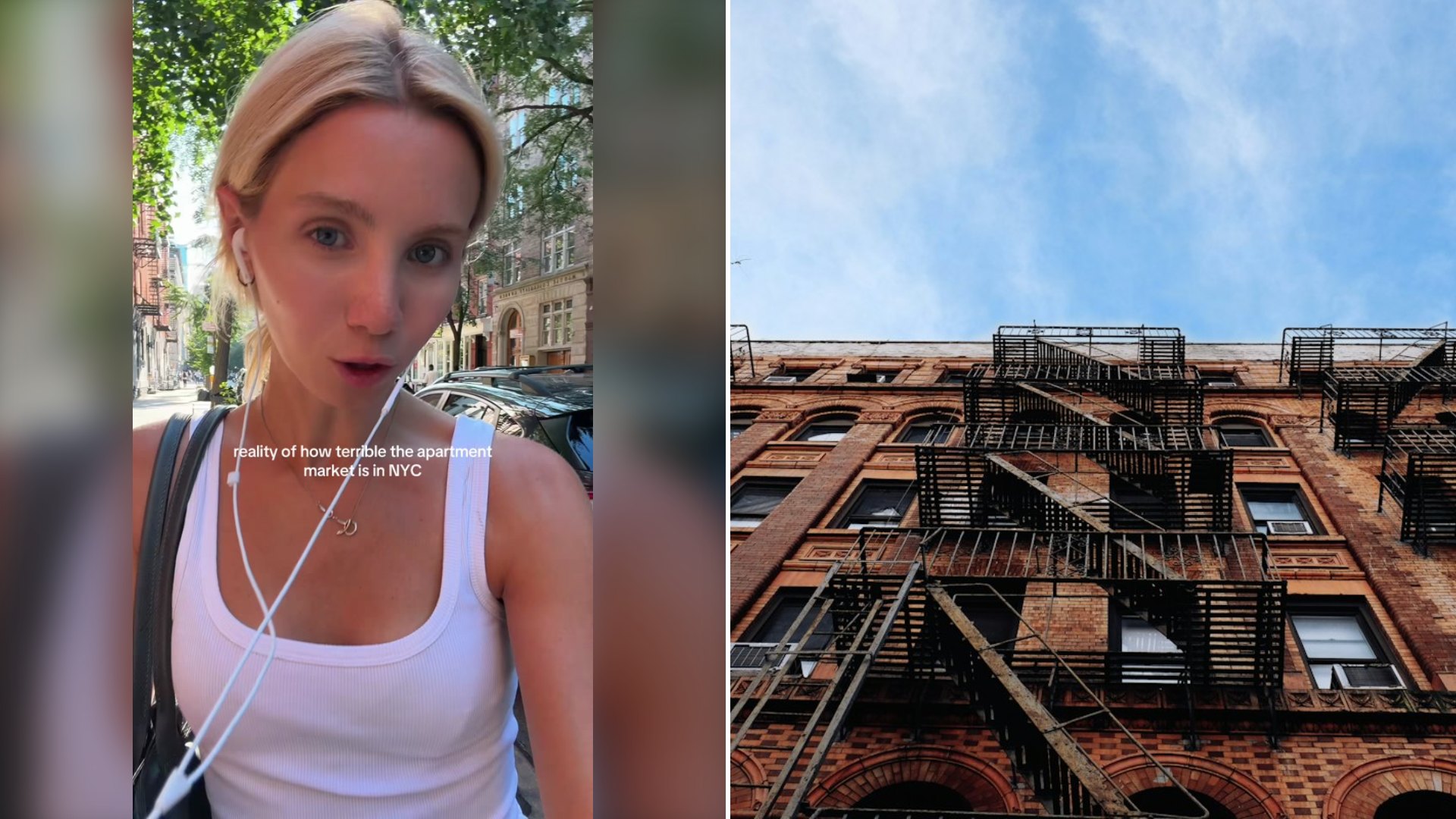
“I’m sorry, but at 24 years old I’m not making $700,000 yet,” she says in her video, part rant, part disbelief.
She explains that the woman showing the apartment laid it out plainly: if she and her two roommates wanted to move in, they had to make 103 times the monthly rent “to even apply.” The location only added to her shock. “Also, it’s in the East Village,” she says. “Are we serious?”
She is not refusing to play by the usual rules. In fact, she offers to. New York renters are used to a common standard where a tenant’s yearly income should be about 40 times the monthly rent. For this apartment, that would be $280,000 a year combined, which is still steep but at least familiar territory. “Sure, we will gladly pay your 40 times the rent,” she says. “103 times? I’m gagged.”
Her caption puts it simply: “I’m used to seeing 40x the rent but 103x is actually absurd.”
@gailthegirl
Where the 40 Times Rule Comes From
For readers who have not rented in a big city lately, the “40 times” rule can sound strange. It is a screening shortcut many New York landlords and management companies use. Multiply the monthly rent by 40, and that is the annual income they want to see. It is roughly the same idea as the old guideline that rent should not eat up more than about 30 percent of your gross pay.
For a $2,500 apartment, 40 times the rent means earning $100,000 a year. For a $7,000 apartment, it means $280,000. Renters who fall short are usually asked to bring a guarantor, a person who agrees to cover the rent if the tenant cannot. Guarantors are often expected to earn around 80 times the monthly rent, which is why many parents have been surprised to learn that their own income does not qualify them to back a grown child’s lease.
A requirement of 103 times the rent is far outside the usual standard. The video does not explain how the landlord arrived at that figure, and it is possible the requirement was meant to be split or calculated in some other way. As described in the video, though, it would price out almost anyone.
Know the Rules Before You Hand Over Money
Renting rules vary by city and state, but New York has added several tenant protections in recent years that are worth knowing about, especially if you are helping a child or grandchild hunt for a place there.
Application fees are capped. In New York State, landlords generally may not charge more than $20 for a background and credit check, and that fee is waived if the applicant provides a recent copy of their own report.
Security deposits are limited. New York generally caps a security deposit at one month’s rent.
Broker fees have changed. In New York City, a 2025 law generally requires whoever hires the broker, usually the landlord, to pay that broker’s fee instead of passing it to the tenant.
If a landlord or agent asks for something that seems out of line, ask for the requirement in writing and check it with the city or state housing agency or a local tenant organization.
Smart Moves for Roommates and Their Families
If you have a young person in your life trying to rent in an expensive city, a few practical steps can help.
Ask about income rules before the showing. A quick question by phone or email can save a wasted afternoon and an application fee.
Ask whether incomes are combined. Some landlords add roommates’ incomes together. Others require each person to qualify separately. That one detail can change everything.
Look into third-party guarantor companies. Several companies act as a paid guarantor for renters who do not meet income rules, usually for a one-time fee based on a portion of the yearly rent. Read the terms closely, since the fee is generally not refundable.
Gather paperwork early. Pay stubs, an employment letter, the last tax return, bank statements and a photo ID are standard. In a competitive market, the first complete application often wins.
Consider other neighborhoods. Popular areas carry a premium. Neighborhoods a few subway stops farther out can offer more space for less money and more reasonable screening.
Watch for scams. Never wire money or pay a deposit for an apartment you have not seen in person, and be wary of anyone who rushes you.
For now, @gailthegirl and her friends are back to scrolling listings. Her reaction will feel familiar to anyone who has watched rents climb faster than paychecks. They are willing to pay a lot. They are just not willing to pretend they make three-quarters of a million dollars a year at 24.
More From Willow and Hearth
- Man Keeps Seeing Mysterious Yellow Drips on His New Apartment’s Bathroom Walls, So He Grabs a UV Flashlight From Work and Finds the Marks Run All the Way Around the Room
- Small Landlord With Just Nine Units Says More Than Half His Tenants Have Stopped Paying Rent and He May Have to File Five Evictions at the Same Time
- Couple Closes on a Log Cabin Set on 78 Acres in the Woods, Camps Out in the Living Room on Night One and Spots the Sunset Over Her Gardens From the Kitchen Sink, Calling the Whole Thing a Longtime Dream
Leave a Reply