A storm knocks out the power with no warning. There is no heat, no hot coffee, and the stairs are dark. A DIY creator who goes by DIY mr.T says he has a small answer for that: two old buckets, some broken brick and a pair of beeswax candles.
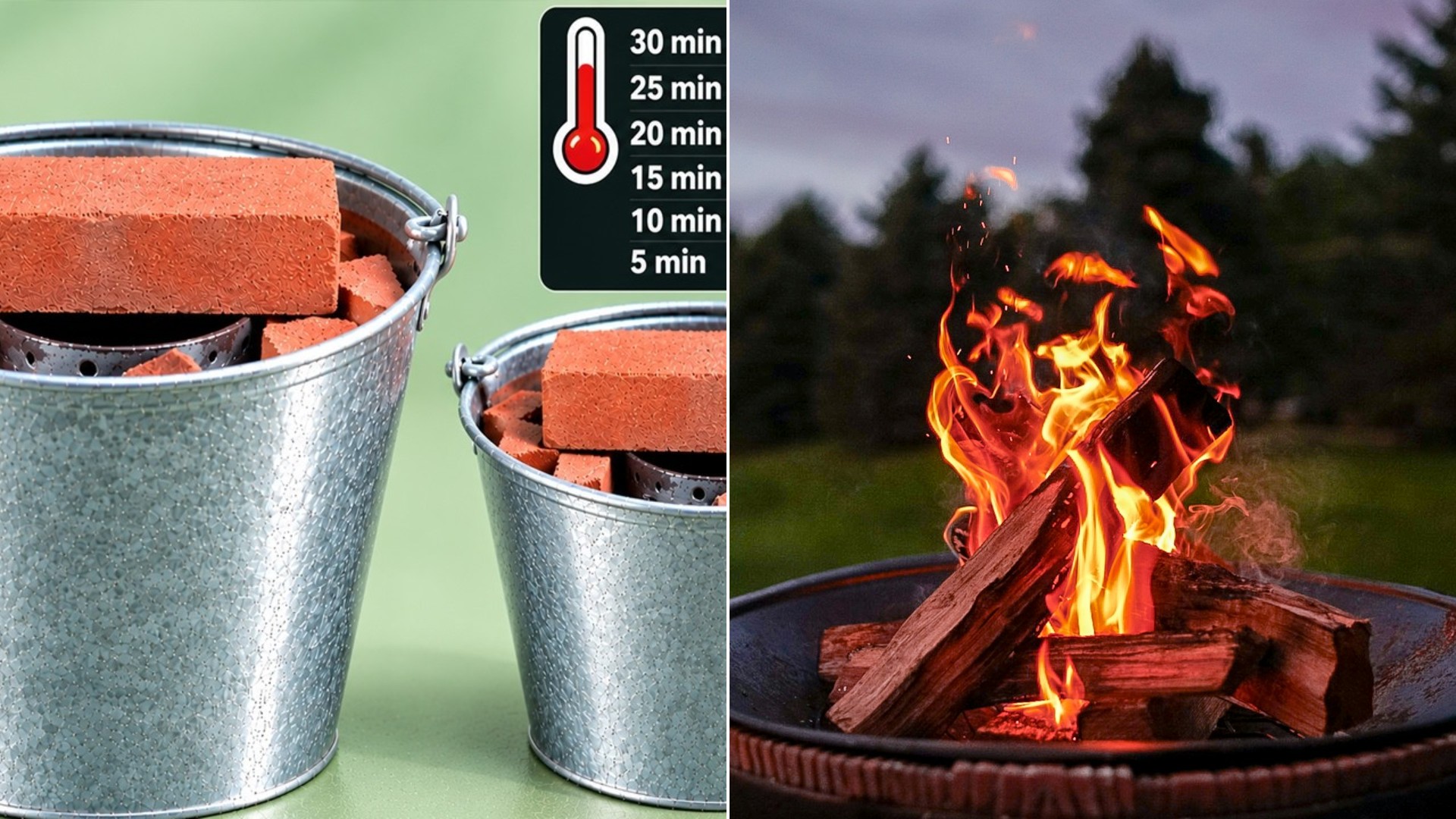
He calls it “a small pocket of warmth that doesn’t quit when the power does.” Here is how he builds it, what temperatures he measured, and the safety rules he stresses along the way.
Two Plain Metal Buckets, One Sliding Inside The Other
You need two plain metal buckets, one smaller so that it slides inside the bigger one with a gap all around. They must be bare metal with no paint or plastic coating, since coatings can give off fumes when they warm up.
You also need a pile of old bricks, two small metal cups for fuel, and something solid to set it all on. “Never a carpet, never a cushion,” he says.
Break The Brick Outdoors Wearing Glasses, Gloves And A Dust Mask
Safety comes first with the bricks. He says to work outdoors in glasses, gloves and a dust mask.
His old trick is to wrap the brick in a feed sack or old towel before you swing, so the chips stay put. Use dry, unpainted brick and break it into pieces about the size of a walnut, with some bigger and some smaller. “A mix packs best,” he says.
A Layer Of Brick On The Bottom Matters Most
First, put a layer of brick across the bottom of the big bucket. Then set the small bucket in the center and fill the gap with broken brick, layer by layer, tapping the bucket on the ground so it settles.
“Every empty pocket is air, and air slows heat down,” he says. Keep packing until nothing shifts when you press.
Why brick instead of sand? It is free, it doesn’t spill, and you can find it just about anywhere. He is careful to add, “I won’t say it beats sand.”
Beeswax Burns Clean, With No Smoke And No Black Soot
His wish list for fuel was no bad smell, no smoke, no black soot and a flame that lasts longer than 10 minutes. His answer is beeswax, one of the oldest candle materials around. He says churches have burned it for generations, and a local beekeeper or the farmers market is a good place to ask for some.
If you melt your own, use a water bath, which is a small pot inside a bigger pot of hot water. Wax can catch fire if it gets too hot, so never melt it over a flame and never walk away. If it ignites, don’t use water. Put a lid on the pot.
Two more tips: if the flame smokes, the wick is likely too thick or too long. And use metal cups, not glass, since glass can crack from the heat.
Two Cups, Two Jobs: One For Heat, One For Light
The first cup goes down inside the small bucket in the middle. That is the heater. The second sits on top, set firmly on the brick, and that is the light, just enough to find your way on the stairs but not enough to read by.
Keep both out of drafts. Not much happens at first, because the heat has to travel from the flame into the metal, through the brick and out.
The Inner Bucket Read 122 F After 5 Minutes, The Outer Hit 176 F
About 5 minutes after lighting, the inside of the small bucket reads around 50 C, about 122 F. At 10 minutes, the outside of the big bucket reads around 80 C, about 176 Fahrenheit.
That is hot enough to burn skin, he warns. “Look, don’t touch.”
A Warning For Older Friends With Diabetes Or Poor Circulation
He says a word to his older viewers with care. If you have diabetes or poor circulation, you may not feel heat as quickly as you should.
Sit farther back than you think you need to, never rest your hands or feet on the metal, and never drape a blanket over the buckets.
Where It Works, And Why The Brick Protects A Wooden Chair
He says it is best for small spaces at close range, such as right beside your chair, at a workbench in a cold shed, or on a porch with the door open to the air.
His demonstration sits on a sturdy wooden chair. Normally he would say no, but it is okay here only because the layer of brick at the bottom keeps heat from reaching the wood. He urges you to check yours with a thermometer. If the bottom gets hot, use a concrete paver instead.
Charcoal Is A Different Animal Because Of Carbon Monoxide
He also tried the same brick bucket with wood charcoal in his storage shed, and it held the heat too. But charcoal burns much hotter and gives off carbon monoxide, which you can’t see or smell.
If you try it, he says, only do so where fresh air moves freely with the door wide open and a carbon monoxide alarm on. And never while you sleep.
Your First Hour When The Power Goes Out
His checklist is simple. Pick one room, bring in water, a flashlight and your medications. Put on layers and set everything up before dark. Then check on your neighbors, especially anyone living alone.
“Every flame uses air and gives off carbon monoxide, even a small one,” he stresses. Keep fresh air coming in, never sleep with it burning, and keep it away from anything that can burn. Get a battery-powered carbon monoxide alarm, and change the battery every time you change your clocks.
The total cost, he says, is almost nothing. It’s just two buckets, packed brick and two beeswax candles.
More Stories You May Like
- Scary Home Inspection Report Does Not Mean A Bad House Says Expert Who Explains The Three Buckets That Decide When To Negotiate Or Walk Away
- Mixing Bleach With Ammonia Or Vinegar Can Release Dangerous Fumes And Natural Cleaners Can Damage Granite And Hardwood So Read The Label First
- Holiday Hosting Blows Up The Grocery Bill When You Cook Too Much And Buy Premade Trays So Plan Portions And Start A Potluck Signup
Leave a Reply