On the morning of October 30, plumber Steven Lavimoniere headed out to winterize a house he knows well. He has done it pretty much every year, but for a couple of years the owner had someone else do the job. Now the owner called him back.
“Sometimes people find someone else to do it cheaper or they do it themselves and sometimes they come back,” he says. His attitude is simple: “I try to stay in my lane and do my thing. If people want to hire me, they can. If not, that’s okay.” He shared the whole job on his plumbing, heating and AC video channel.
Why A House That Sits Empty All Winter Needs This Job
The point of winterizing is to get every drop of water out of the pipes so nothing can freeze and split. Lavimoniere says it is smart for any house nobody will be in all winter.
The power often goes out in his area for three or four days at a time. With no one home and no heat, “the house can freeze up.” Come summertime, he goes back and “livens it back up” for the owner.
Step One Is Shutting Off The Power To The Water Heater
He starts by killing the electricity to the big 220-volt items. The water heater is the one he cares about most, and he makes sure the breaker actually shuts off. If the power stays on to a drained heater, he says, there is no sense in going on.
He also unplugs the refrigerator, the humidifier and the dehumidifier. The power will be off all winter, which he notes saves the owner money.
Blowing The Water Out Of The Heater And Every Faucet
Next he blows out the hot water heater first. He runs air through the cold water line to the tank, which pressurizes both the hot and the cold side.
Once the tank is empty, he shuts the valve at the bottom and pressurizes hot and cold together. Then he goes around with a compressor and blows air out of every faucet. “Gets all the water out of the piping,” he says. He goes around a couple of times to make sure all of it is out.
The toilets get pumped out, and he likes a small pump for the job. Outside, he finds a hose still hooked up to a faucet. “He had this hose on there, which wasn’t good,” he says. It has been getting down into the 30s at night.
He Skips The Curb Stop And Pays The Water Department Instead
One thing Lavimoniere never does is shut off the water main in the street himself. The shutoff, called a curb stop, sits about four feet down in the ground. If he broke it, he would have to dig it up and replace it, and “for me, it’s not worth taking the risk.”
Instead the water department comes out for about $35, charged to the homeowner, and shuts the water off at the main. It stays off all winter. “There’s no chance of it filling the house up with water,” he says.
He also shuts the valve inside the house as a second layer, so if someone turns the water back on by accident, it will not flood the place.
Antifreeze Goes Into Every Trap, Drain And Appliance
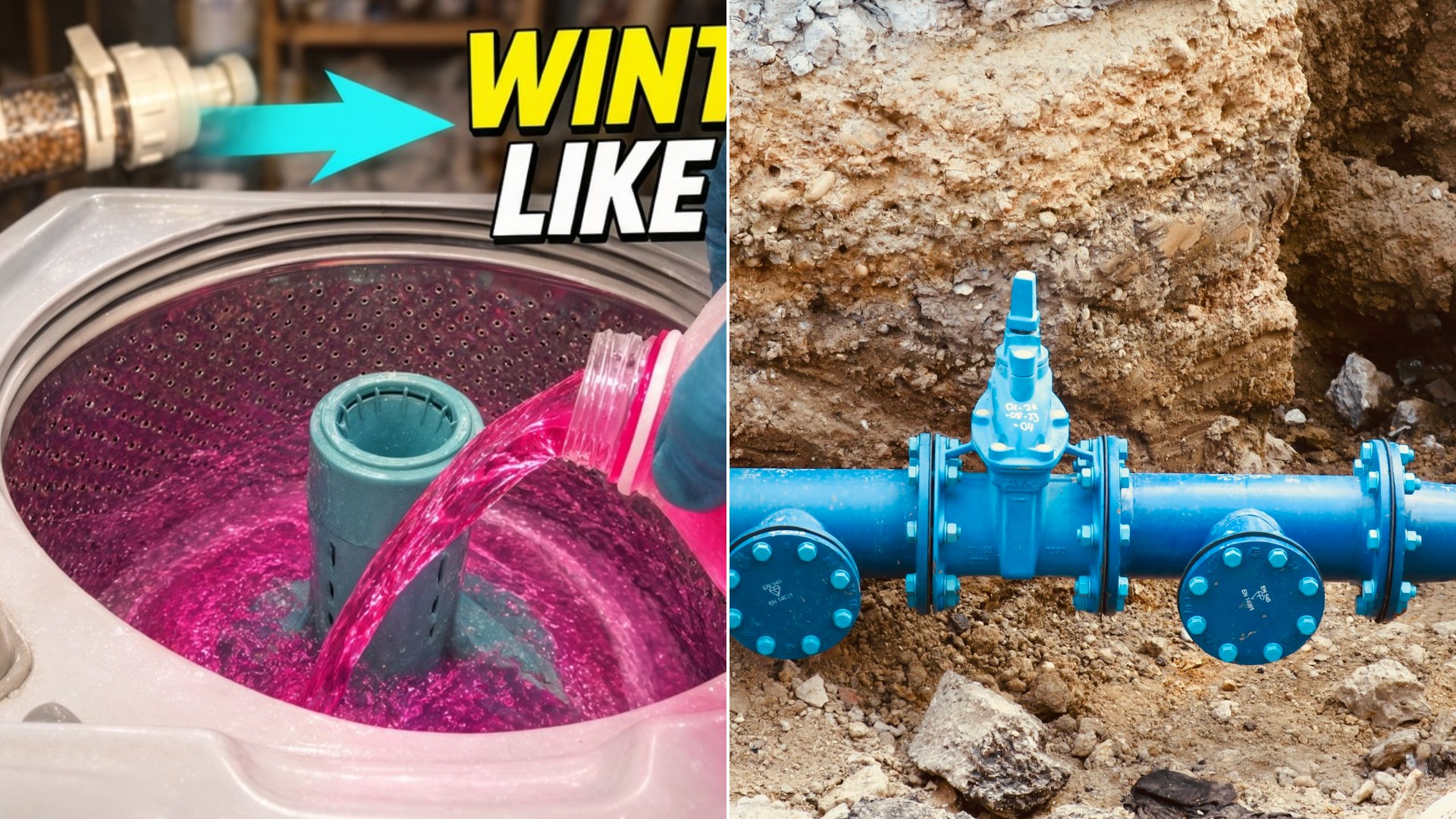
After the lines are blown out, he winterizes the traps, the washing machine and the dishwasher. He pours antifreeze into the washer, runs a short cycle to move it through, then cancels and dumps the water.
He leaves the washer door open so moisture does not sit inside. Kitchen traps and the garbage disposal get a pour as well. He pulls apart unions and dumps the water from the traps. “You’ll see the holes turn pink,” he says, which shows the antifreeze has reached the trap.
The boiler also needs attention. He found a boiler at this house and says there is often glycol, a type of antifreeze, in that system already.
Where Things Usually Go Wrong
He says he usually has good success and doesn’t have a lot of problems. A few spots can hold water and crack, though.
- Shower valves.
- The diverters at the bottom of a tub spout.
- Kitchen sink sprayers, which must be disconnected.
Outside faucets and vacuum breakers also need to be drained or disconnected. He bleeds the outside faucet and puts the vacuum breaker back in once it is dry.
Why Ask A Pro, And What To Do If You Go It Alone
If you do the job yourself, the biggest takeaways from his work are to start with the power, drain the heater, clear the lines with air, protect every trap, and keep the water off at the street.
Before winter, check for hoses left on faucets, since a connected hose can trap water and freeze. And plan for the unexpected: even a short outage during a cold snap can freeze an empty house.
When he finished, he put the pieces back together, left the faucets open and confirmed the water stayed off. The owner’s house was ready for winter.
More Stories You May Like
- Maintenance Tech Called Back To A Toilet That Still Would Not Flush After Snaking And Plunging Fills A Bucket To Check Whether It Is Actually Clogged
- Landlord Gets the Keys Back After Twenty Seven Years of Renters in the Same House and Walks Through to See Whether the Place Held Up and Calls It a Success Story
- Property Manager Says The House Is Newly Renovated So The Inspection Should Be Quick But The Inspector Finds Rot, A Loose Gas Line And Bare Wiring
Leave a Reply