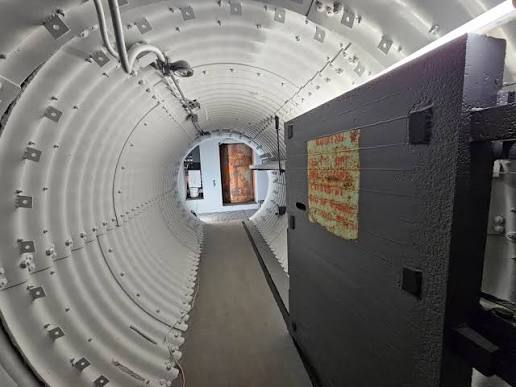
A decommissioned Atlas F nuclear missile silo in Lincoln County, Kansas is on the market for $1.3 million, and the listing includes two 7,000-pound steel blast doors and a set of massive concrete launch doors that once sealed a live intercontinental ballistic missile underground during the Cold War.
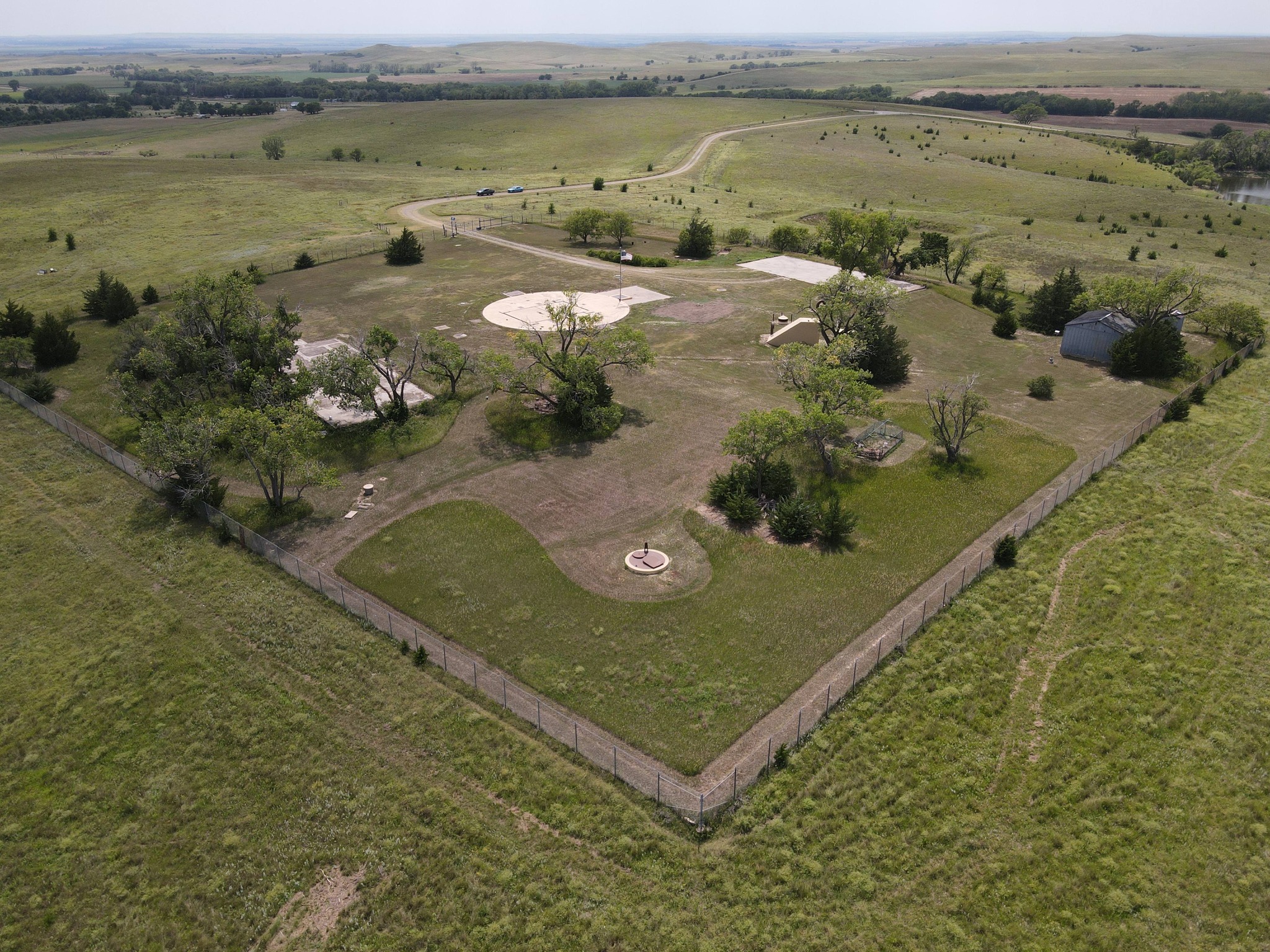 photo credit: unsplash
The property, marketed as Rolling Hills Missile Silo and owned by BTB Ranch LLC, sits on roughly 8.5 acres about 30 miles northwest of Salina. It was built in 1960 as part of the Atlas missile program, went operational in 1962, and was decommissioned by 1965, according to Homes.com’s reporting on the listing. Constructing it in 1960 cost nearly $190 million in today’s dollars, per the same report.
What is actually still down there
The numbers involved are hard to picture from ground level. The silo shaft itself runs roughly 182 feet deep with a 52-foot diameter, built from 9-foot-thick, 5,000-psi reinforced concrete designed to survive a near-direct nuclear strike and winds up to 500 miles per hour, according to the official property site. A two-story former command center, with roughly 2,500 square feet of usable underground space, connects to the silo by tunnel and still holds original structural brackets and steel doors, reports KCTV5, which toured the site.
Underground, the temperature holds steady between 54 and 62 degrees year-round regardless of the Kansas weather overhead, a detail multiple outlets covering the sale have confirmed. The site is being shown by listing agent Terra Martin of Real Broker, and the property’s own site describes it simply as “recently renovated and ready for sale.”
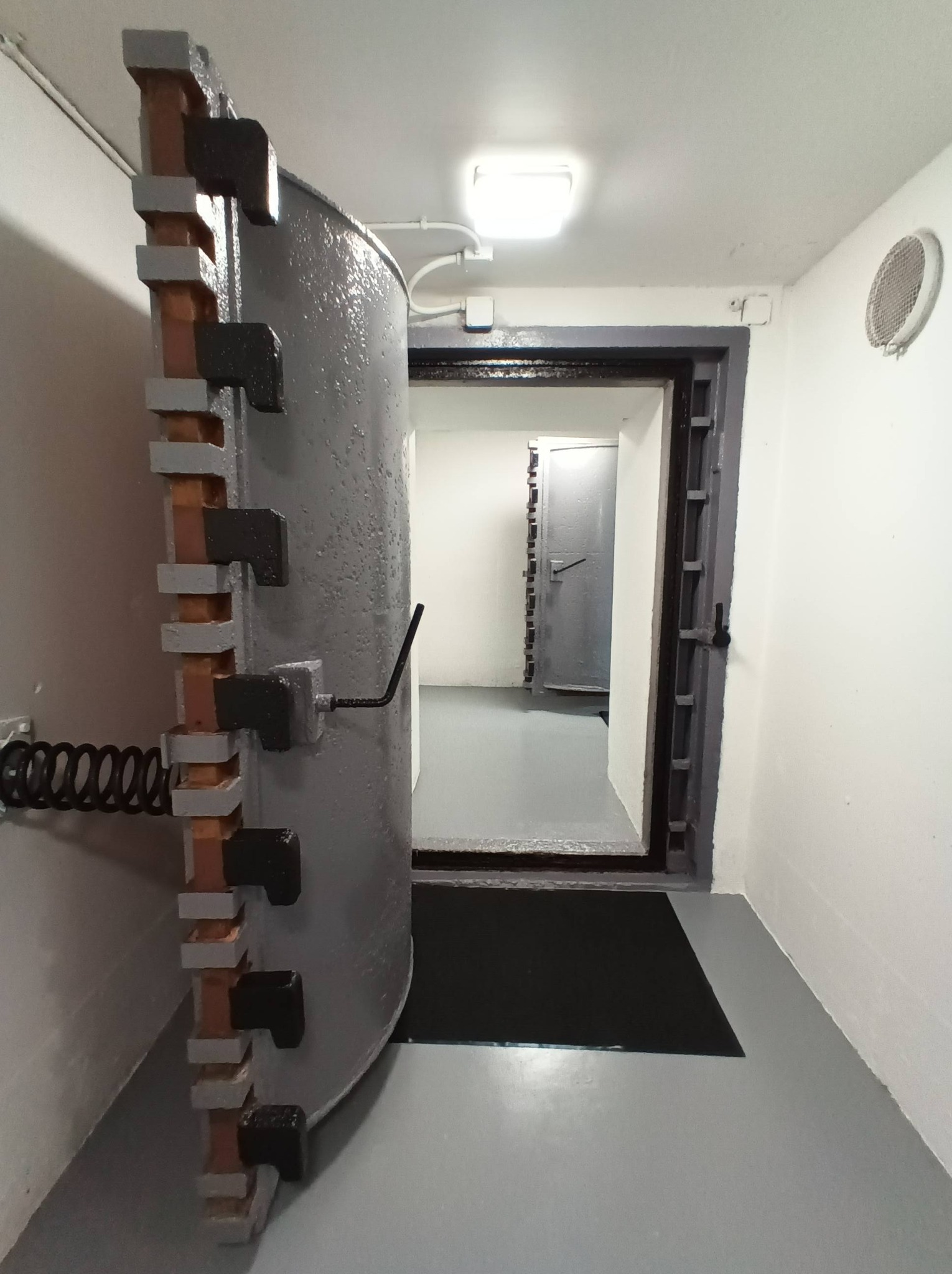 photo credit: unsplash
Not exactly move-in ready, but not raw concrete either
This is not a finished house in the conventional sense. There’s no listing photo of a kitchen or a furnished bedroom, and the space is better described as a shell with extraordinary bones than a turnkey home. What buyers are actually purchasing is a fully intact Cold War bunker complex: the entry sequence of steel blast doors, the tunnel, the command center, and the silo itself, all still standing exactly as the Army Corps of Engineers built them six decades ago.
That has made it a magnet for buyers with fairly specific plans. Coverage of the listing has floated everything from a private residence to a mushroom farm, a wine cellar that needs no refrigeration, or an event and tourism space built around the Cold War history itself. The 8.5 acres above ground, described by KSAL as having no neighbors in sight, would support a conventional house as well, with the silo functioning as basement, storm shelter, and curiosity rolled into one.
What a finished version of this looks like
Rolling Hills is being sold largely as raw infrastructure rather than a finished home, which puts it well below what fully converted silos have sold for elsewhere. In Kansas, developer Larry Hall’s Survival Condo project turned a 15-story former Atlas silo into 12 private residential units spanning 54,000 square feet, complete with a pool, a movie theater, and its own water storage and air filtration systems; those units sold for between $2.4 million and $3 million each. A converted Atlas E silo in Washington state, with two finished living areas totaling more than 2,700 square feet, has been listed around $1.2 million, roughly comparable to Rolling Hills despite being move-in ready.
That gap between raw shell and finished product is where a buyer’s own renovation budget comes in, on top of the purchase price, along with the practical hurdles of the site itself: a structure extending nearly 200 feet down needs engineering review, new mechanical systems, and a plan for water intrusion before anyone could comfortably live there full time.
Part of a small but real market
Rolling Hills is not the only former missile site on the market this year. Decommissioned Atlas and Titan silos across Kansas, Arizona, Washington, and elsewhere have quietly changed hands or come up for sale over the past several years, drawing buyers ranging from preppers to architects to people who simply want the most unusual basement in America. What sets this one apart is how much of the original hardware is still in place rather than stripped for scrap: the blast doors, the launch doors, and the command center are described by multiple outlets as intact rather than reconstructed.
For $1.3 million, a buyer in most major metro areas is shopping for a mid-size single-family home with a normal foundation and a normal basement. In Lincoln County, that same budget buys a piece of nuclear infrastructure engineered to outlast almost anything short of a direct hit, sitting quietly under a Kansas hillside and waiting for someone to decide what a missile silo is supposed to become next.
Leave a Reply