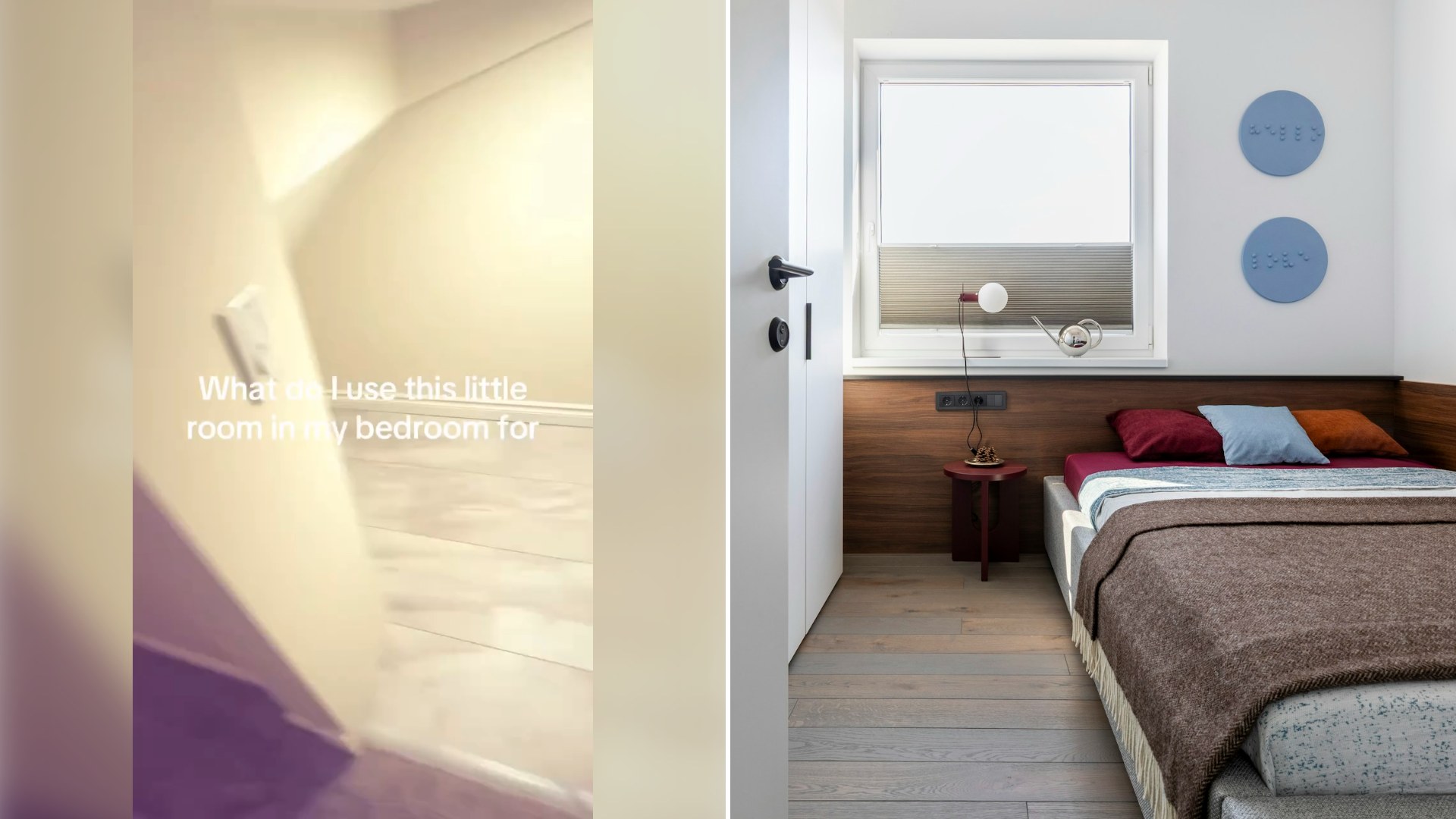
Every home with a small, unexplained door built into a wall collects the same question eventually, and @bylunadecor (Instagram) finally answers it for good, revealing exactly what’s behind the tiny door tucked into her bedroom wall: a fully finished, attic-like crawl space that she insists has everything she actually needs, despite its modest size.
There’s a specific kind of curiosity that small, unexplained architectural features generate, one that’s completely out of proportion to their actual size. A tiny door built into a bedroom wall practically dares anyone who sees it to ask what’s behind it, and creators have learned that answering that exact, universally relatable curiosity is one of the most reliable ways to turn an everyday home feature into genuinely engaging content.
Crawl space access doors like this one are a common feature in homes with knee walls or partial attic structures, particularly in houses with pitched rooflines where usable headroom tapers off toward the eaves. What makes this particular example compelling isn’t the structural explanation though, it’s the decision to actually finish that typically overlooked space rather than leaving it as unused, insulation-packed storage.
This reflects a broader and genuinely useful trend in small-space living: treating every available cubic foot of a home as potential usable space rather than dead zone. Crawl spaces, under-stair nooks, and knee-wall attics have traditionally been written off as structurally necessary but functionally wasted, and creators finishing out these spaces are quietly proving that assumption wrong, one small, cleverly outfitted nook at a time.
There’s also a practical design lesson in how to make a genuinely tiny, irregular space feel intentional rather than cramped. Built-in lighting, soft furnishings sized specifically to the space’s awkward proportions, and a clear single purpose, whether that’s storage, a reading nook, or simply overflow space, all help a small finished area read as a thoughtful feature rather than an afterthought squeezed into leftover square footage.
It’s worth noting the specific appeal of “it’s small but it has everything I need” as a framing, too. In a design media landscape often dominated by sprawling, aspirational spaces most viewers will never have access to, content that celebrates a genuinely modest space done well offers a refreshing counterpoint, proof that satisfaction in a home doesn’t require square footage most people simply don’t have.
There’s also something worth appreciating about how frequently homeowners field this exact question from guests and visitors. A tiny door is an irresistible object of curiosity in person just as much as online, and finally answering it on camera does double duty, satisfying the creator’s own community while also, presumably, putting an end to having to explain it in person over and over again.
For anyone with an unused crawl space or attic access of their own, this kind of reveal offers a genuinely actionable idea rather than just entertainment. A small investment in lighting, flooring, and simple finishing work can convert what’s currently dead storage space into something with real daily function, without requiring a major renovation budget or structural changes to the home.
In the end, what makes this reveal satisfying isn’t the scale of the space, it’s the confirmation that curiosity about our homes rarely goes unrewarded. Every strange little door, every oddly placed nook, has an explanation, and sometimes that explanation turns out to be a genuinely well-used, well-loved corner of the house hiding in plain sight.
Leave a Reply