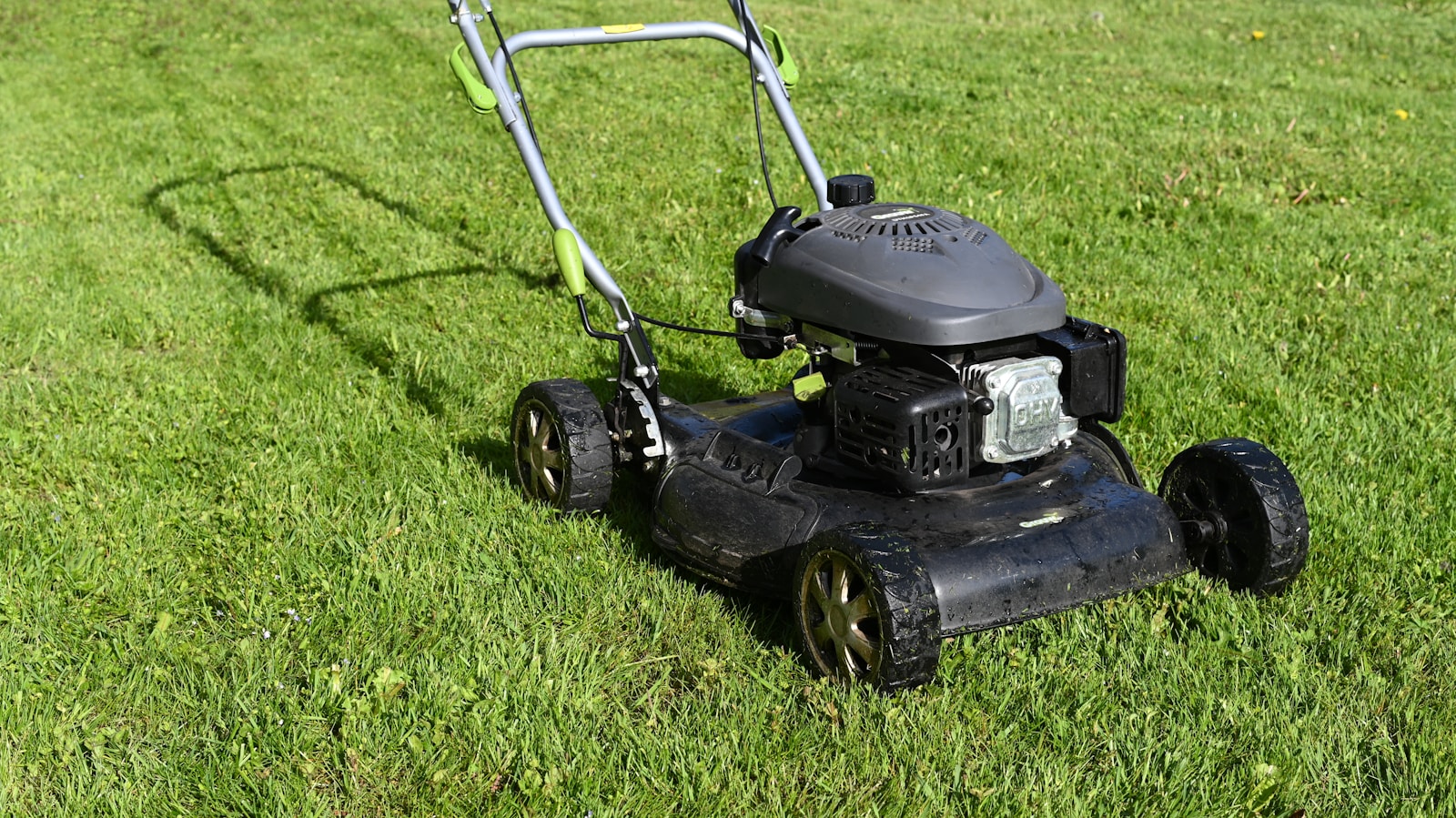

Gasoline left sitting in a lawn mower’s tank starts degrading within 30 days, according to both Briggs & Stratton and Toro, two engine manufacturers that rarely agree on marketing copy but state the identical number about fuel shelf life in their own maintenance guidance. That timeline means the gas you ran your mower on over Labor Day weekend is already breaking down by the time the first hard frost hits. Left untreated, that degrading fuel leaves gum and varnish behind in the carburetor, and by spring the engine either won’t start or runs rough until someone tears the carburetor apart to clean it. The fix costs about $10 in stabilizer and five minutes of running time. Skipping it is why so many mowers refuse to start on the first warm Saturday of spring.
Why Gas Goes Bad in the Tank
Both manufacturers point to the same mechanism: gasoline’s volatile compounds evaporate first, making an engine hard to start, and what’s left behind eventually turns into gum and varnish that clogs carburetor passages, leading to surging, stalling, power loss, or fuel leaks, according to Toro’s fuel guidance. Briggs & Stratton puts a hard number on it in its own maintenance materials: fuel begins degrading in as little as 30 days. That’s not a worst-case estimate; it’s the standard timeline for any gasoline sitting unused, mower or not.

E15 Is the Fuel Mistake That Does the Real Damage
Toro’s list of approved fuels tops out at E10, 10 percent ethanol, and the company explicitly warns against E15, E20, or E85 blends, which can cause performance problems and engine damage that voids warranty coverage, per its own fuel facts page. Briggs & Stratton is more direct about why in its fuel stabilizer guidance: E15 “attracts moisture that separates from the ethanol,” leaving a layer of water and alcohol sitting at the bottom of the tank where it corrodes fuel system components from the inside. Even approved E10 isn’t fully immune, since gas tanks and carburetors are vented to the atmosphere, so any ethanol blend absorbs some moisture over time.
Stabilizer Buys You Months, Not Days
A fuel stabilizer forms a protective layer over the gasoline that slows evaporation of volatile compounds and reduces moisture absorption. Briggs & Stratton rates its own treated fuel as good for up to 24 months in general storage, or up to three years with its dedicated fuel-preserver product, per its storage guidance. Toro recommends adding stabilizer to a full tank on the day you buy gas, not just before winter storage, since the same 30-day clock runs all season long, not only after Labor Day.
The Winterizing Steps That Actually Matter
Briggs & Stratton’s own storage instructions are straightforward: top off the tank to limit the air space where condensation forms, add stabilizer per the label, and run the mower a few minutes so treated fuel circulates through the entire system before it sits idle for the winter. The alternative, draining the tank completely and running the engine until it stops on its own, works too, but it’s the harder path, and it’s the one most homeowners skip, which is exactly how a mower ends up needing a carburetor cleaning that costs more than a bottle of stabilizer ever would have.
Fuel Is the First Step, Not the Only One
Briggs & Stratton’s storage guidance covers more than the tank. The company recommends changing the oil and filter while the engine is still warm from its last run, since contaminants stay suspended in warm oil and drain out more completely than they would from a cold engine. It also advises disconnecting and removing the battery on any mower that has one, storing it somewhere cool and dry, and cleaning the terminals before reconnecting in spring. None of these steps takes more than a few extra minutes tacked onto the fuel treatment, and skipping them tends to show up the same way skipping stabilizer does: a mower that cranks weakly or not at all on the first mow of the season.
The engine doesn’t care whether the gas sat for one long winter or one long weekend; thirty days is thirty days, and the manufacturers building these engines have been saying so for longer than most owners have been checking the label on the gas can.
Leave a Reply