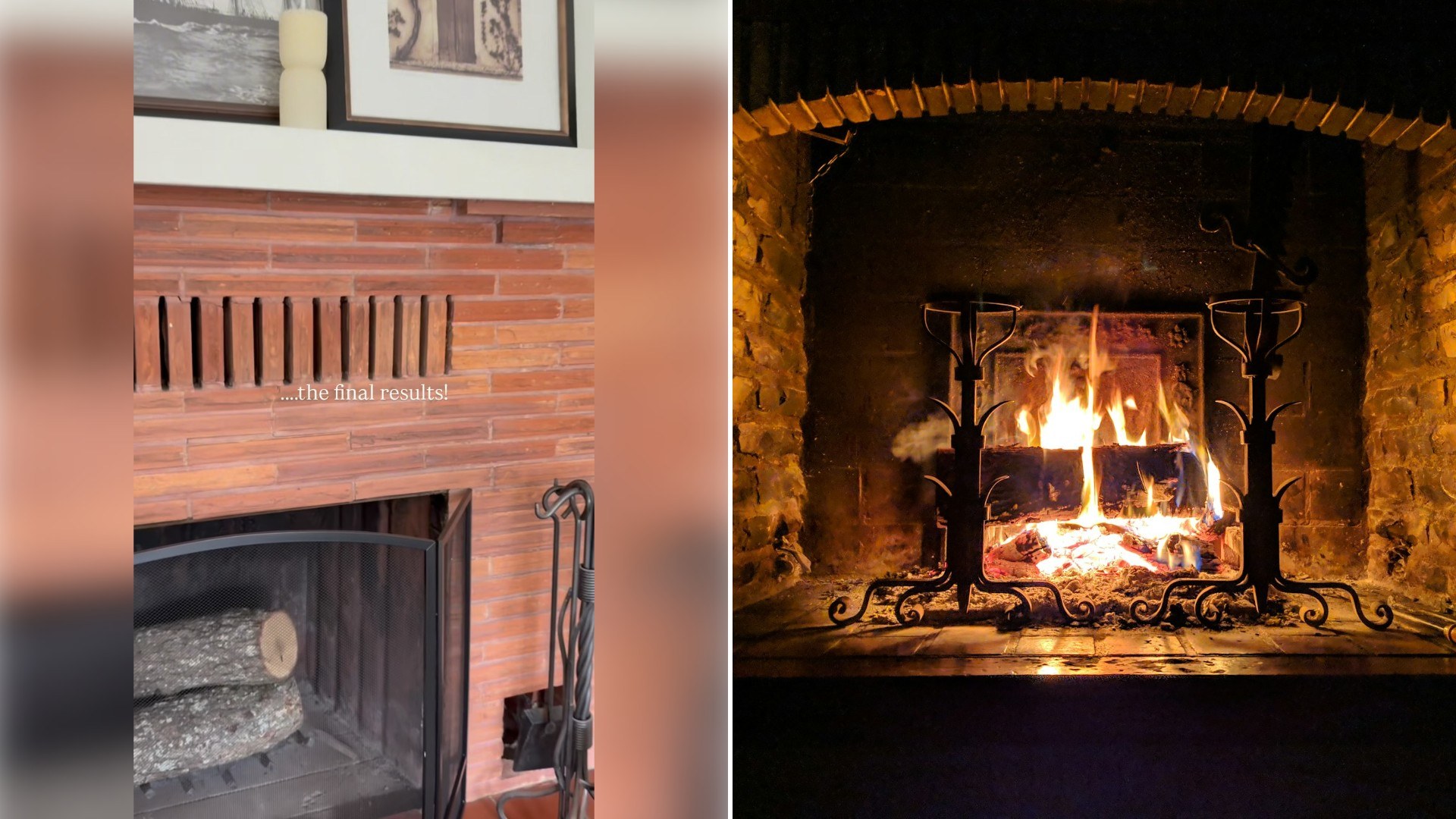
While flipping a former hoarder’s house, the creator and partner pull down a wooden panel covering part of a wall and discover an original 1958 brick fireplace that had been hidden for decades. They restore it as the centerpiece of the renovated room, presenting the finished result as the emotional payoff of the flip. A hoarder’s house carries a specific kind of baggage in renovation content, not just clutter but years of a home being effectively sealed off from its own bones, which makes a discovery like this one land differently than a standard demo surprise.
The panel itself looks unremarkable in the footage, plain wood paneling of the sort that got nailed up over fireplaces across entire decades whenever a homeowner decided brick had gone out of style. Nobody watching would have guessed what was underneath until the moment it came down, which is exactly the kind of mundane-looking obstacle that makes a reveal like this effective rather than staged.
View this post on Instagram
@jolierichardsbroker is working a listing where the backstory is arguably more compelling than the finished photos alone would be, since a buyer touring the finished space has no way of knowing it sat concealed behind plywood for the better part of seventy years unless someone tells them. Putting that history on camera turns a routine demo moment into something closer to an archaeological find.
1958 is specific enough to do real work here. It places the fireplace in the postwar building boom, a period when brick surrounds and built-in hearths were standard in a huge share of American houses, which means the design underneath the panel likely wasn’t a one-off custom feature but a reflection of exactly how that generation of homes was originally built, before later owners decided to cover it.
Hoarder-house flips carry a particular reputation in renovation content, often leaning on the shock value of clutter and decay rather than what’s structurally salvageable underneath it. This video flips that emphasis, treating the hoarding history as a footnote and the brick fireplace as the actual story, which is a more unusual choice than it might first appear.
There’s also a quiet argument embedded in the choice to restore rather than replace. A new brick veneer or a gas insert would have been faster and arguably simpler than resurrecting a decades-old original feature, but the video treats the fireplace’s age as the entire reason it’s worth keeping, prioritizing authenticity over the easier renovation path.
The emotional beat of the video depends heavily on the gap between what the panel suggested and what was actually behind it. A plain wood panel promises nothing. A fully intact mid-century fireplace delivers far more than the setup implied, and that mismatch between expectation and payoff is a big part of why the clip resonates beyond people specifically interested in flipping.
For anyone who has lived in or worked on an older home, the discovery also serves as a reminder that previous owners’ cosmetic decisions aren’t always permanent verdicts on a house’s original character. A panel put up decades ago to chase a passing trend can, with the right demo day, simply be undone, restoring a feature that outlived the fashion that buried it.
Whatever becomes of this particular listing, the fireplace has already given the flip a story that a finished photo alone couldn’t have told, turning what might have been a routine hearth upgrade into the one detail viewers are most likely to remember.
It helps that the reveal arrives at a natural low point in the renovation timeline. Demo day on a hoarder’s house is typically the least glamorous stretch of any flip, hauling out decades of accumulated belongings before a single cosmetic decision gets made. A discovery like an intact 1958 fireplace landing in the middle of that grind gives the footage a turning point it otherwise wouldn’t have had, a moment where the unglamorous labor suddenly produces something worth slowing down to film properly.
The brickwork itself tells its own quiet story to anyone who knows what to look for. Mortar styles, brick coloring, and the proportions of a built-in hearth all shifted across decades, and a fireplace surviving intact behind a panel for this long means it also survived whatever renovations happened in the house in the years since, each of which could easily have ripped it out rather than covering it up.
There’s a reason restoration moments like this tend to outperform straightforward before-and-after flips in terms of how long people linger on them: a full renovation shows a team’s taste and budget, but a hidden original feature shows a piece of the house’s own history reasserting itself, something no amount of money could have simply recreated from scratch if it had been lost.
The panel’s removal also raises an obvious question the video doesn’t need to answer directly for it to land: why did a previous owner choose to bury a usable fireplace rather than keep it visible. Fireplaces fell in and out of fashion repeatedly across the back half of the twentieth century, and plenty of homeowners covered them up chasing whatever look was current at the time, never imagining someone decades later would uncover the choice, tear the panel down, and present the very thing they hid as the single best-looking, most talked-about feature in the whole finished room.
For anyone currently weighing whether to flip or pass on a property that’s spent years buried under a previous owner’s clutter, this particular discovery is a useful data point. Hoarder-house listings often scare off buyers who assume decades of neglect means the underlying structure must be compromised too, but neglect and damage aren’t the same thing, and a house that simply wasn’t maintained cosmetically can still be hiding original, structurally sound features that a more actively “updated” property might have lost entirely during an earlier remodel.
Leave a Reply