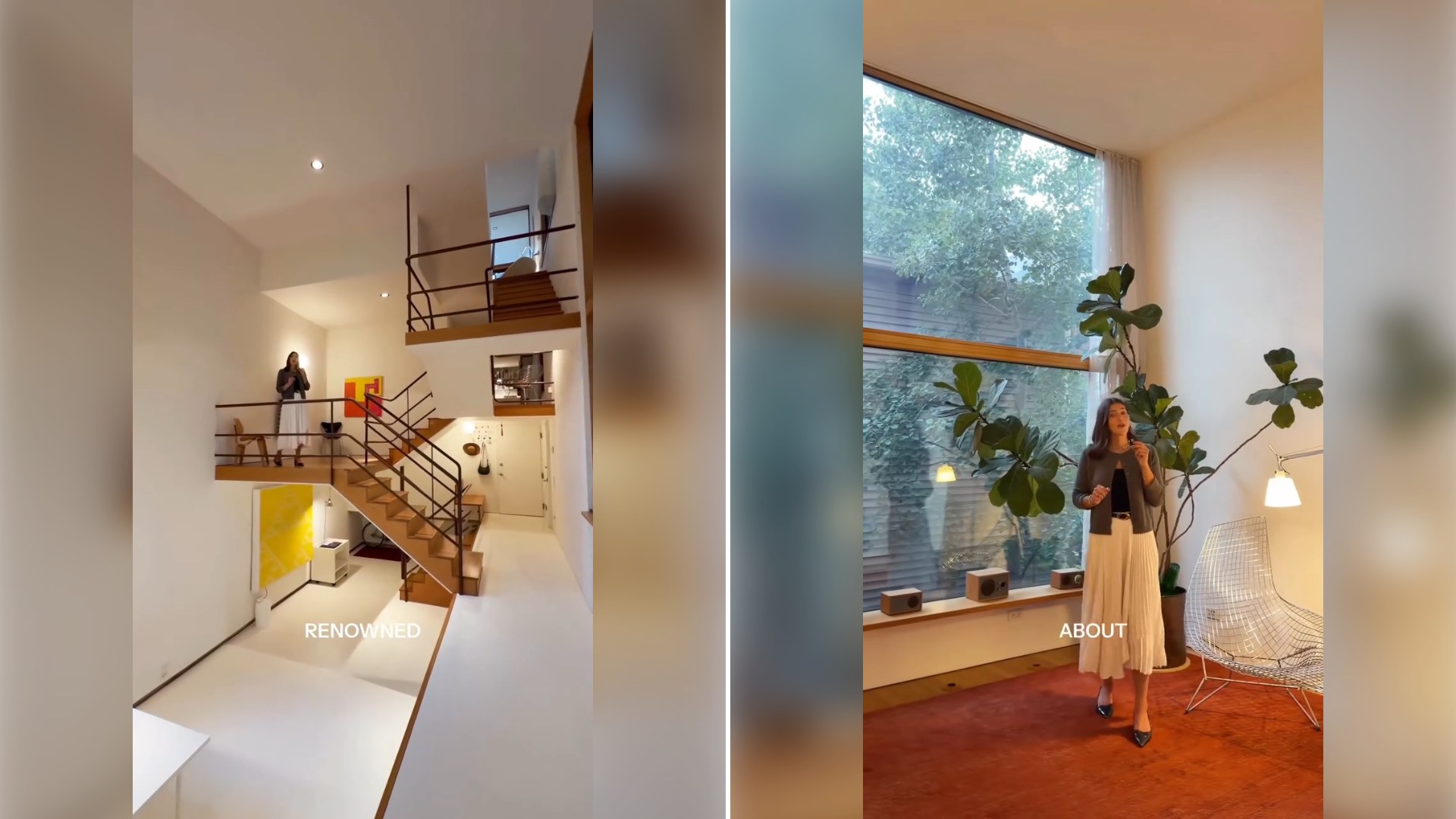
Some of the most compelling real estate content doesn’t come from brand-new construction or sprawling estates, it comes from buildings that have been quietly sitting in a neighborhood for years, fully appreciated by exactly no one passing by. That’s the case with a recent reel from @gracelamoureaux (Instagram), who gave followers a tour of the Pfanner House, an award-winning piece of Chicago architecture tucked into West Town, teased as a “coming soon” listing.
West Town is one of those Chicago neighborhoods that has undergone enough transformation over the past two decades that even longtime residents sometimes lose track of what’s architecturally significant and what’s simply old. An award-winning home hiding among more ordinary housing stock is a quietly powerful real estate hook, because it reframes a familiar block as a place worth a second, closer look.
There’s something particularly compelling about architecture that earns recognition from design juries or preservation bodies but still lives an ordinary residential life, used, lived in, occasionally listed for sale, rather than cordoned off as a museum piece. That tension between “award-winning” and “someone’s actual house” is part of what makes a tour like this land so differently than a typical listing video. It suggests that exceptional design isn’t reserved for the ultra-wealthy or for public institutions, it can exist quietly on a residential block.
Chicago itself deserves some credit here as a backdrop. Few American cities have as deep or as consequential a relationship with architecture, from the fire that cleared the way for a new generation of builders to the School that still bears the city’s name. A single home in West Town earning design accolades sits within that larger lineage, part of a city where ambitious, well-considered residential architecture has long been treated as a point of civic pride rather than a niche interest.
It’s also worth examining why real estate agents have leaned so heavily into architectural storytelling rather than straightforward listing features. A tour that opens with “this home won an award” does more narrative work than one that opens with square footage or bedroom count, it gives a prospective buyer, or simply a curious scroller, a reason to care about the building as an object, not just as inventory. That shift toward narrative-driven real estate marketing has become one of the more interesting developments in how homes get sold online.
There’s a design lesson in here too, for anyone renovating a city rowhouse or infill lot of their own. Award-winning architecture in a dense urban neighborhood usually isn’t about scale, it’s about how skillfully a design responds to constraint: a narrow lot, a tight setback, limited light from only one or two exposures. The most memorable urban homes tend to be the ones that turn those limitations into defining features rather than fighting against them.
The “coming soon” framing also reflects a savvy, patient approach to real estate marketing. Rather than dropping the full listing details immediately, building anticipation around a home’s architectural pedigree lets interested buyers, and plenty of simply curious design fans, start forming an emotional connection to the property before price ever enters the conversation. By the time the listing goes live, the home has already built its own audience.
This kind of content also speaks to a growing public appetite for architectural literacy generally. More people are learning to recognize design movements, construction eras, and regional building traditions just from scrolling home content, which means a home’s design pedigree has become a genuine selling point rather than a detail only architects would notice or care about.
In the end, tours like this one do something valuable beyond simply marketing a listing: they recalibrate how we look at the neighborhoods we think we already know. A block in West Town that most people would walk past without a second glance turns out to be hiding a piece of recognized design excellence, and that’s a reminder worth carrying well past the scroll.
Leave a Reply